China-US Ties Stay Stable, Boeing Orders in Focus

China’s top diplomat said ties with the US remain “stable,” underscoring Beijing’s effort to keep the world’s most important bilateral relationship from slipping into a broader economic confrontation just as both sides weigh fresh trade and industrial risks.
That matters because even a modest cooling in US-China tensions can ripple through everything from tariffs and aircraft orders to supply chains, commodity demand and China-sensitive equities. For investors, the message is less about diplomacy than about whether the two sides can preserve enough predictability to support cross-border trade, corporate planning and risk appetite.
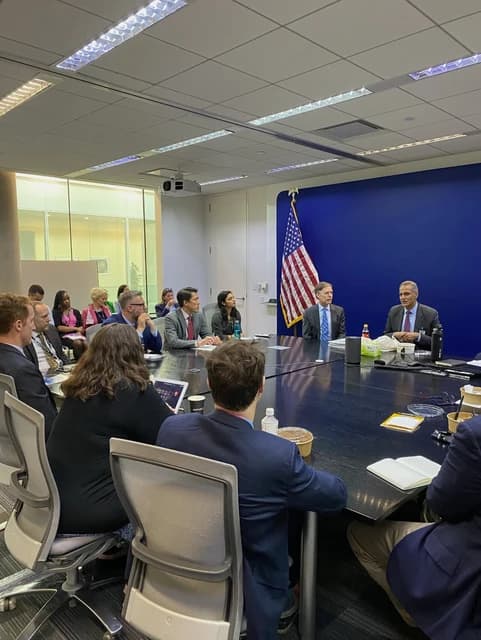
Foreign Minister Wang Yi told a bipartisan US congressional delegation that contacts between President Xi Jinping and President Donald Trump have helped steer the relationship through “critical moments.” Senator Steve Daines, who was in the meeting, said stability matters and suggested there may be room for new economic deals, including possible Chinese purchases of Boeing aircraft.
The timing is what gives this weight. The meeting comes as trade, energy security and Middle East tensions continue to shape the geopolitical backdrop for the two largest economies. A stable US-China channel does not erase strategic rivalry, but it can slow the pace of escalation and buy time for business. That is especially important for sectors exposed to tariffs, export controls and travel or aviation demand.
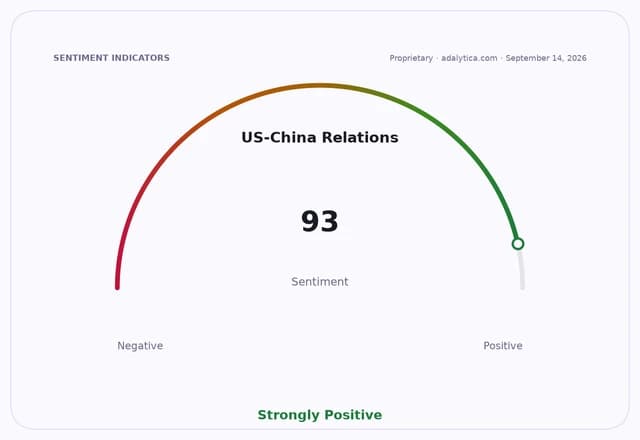
Markets are already pricing a mix of hope and caution. The iShares China Large-Cap ETF, FXI, has been hovering just below its 50-day moving average, while the broader China ETF, MCHI, has remained under its 200-day moving average. The leveraged China bull fund, YINN, has also been weak, reflecting skepticism that diplomatic warmth alone will deliver a durable rerating without concrete policy gains or stronger growth.
Even so, the setup argues for a selective read-through. If dialogue holds and trade frictions ease at the margin, the earliest beneficiaries are likely to be China-linked industrials, airlines, chip equipment names less exposed to restrictions, and US exporters with high China exposure. Boeing is an obvious potential winner if aircraft purchases return to the table, while investors in Chinese equities would likely welcome any sign that the policy overhang is becoming more manageable.
The broader thesis is that stability itself has become an investable catalyst. In an environment where geopolitical fear has been a persistent drag on China risk assets, any credible sign of de-escalation can unlock upside faster than consensus expects. The market is still treating US-China relations as a binary threat. It may be missing the more profitable reality: even limited stability can support a tactical rebound in beaten-down China exposure, and a longer-cycle reopening in sectors tied to trade, travel and capital goods.
| Entity | Gains | Losses |
|---|---|---|
| Boeing | ▲Possible aircraft sales | ▼Delayed orders if talks stall |
| China equities | ▲Lower risk premium | ▼Earnings if tensions re-escalate |
| US exporters | ▲Better access to demand | ▼Tariff and policy uncertainty |
| Geopolitical shorts | ▲Lower volatility | ▼Less benefit from conflict fears |