China Yellow Sea drills raise South Korea risk
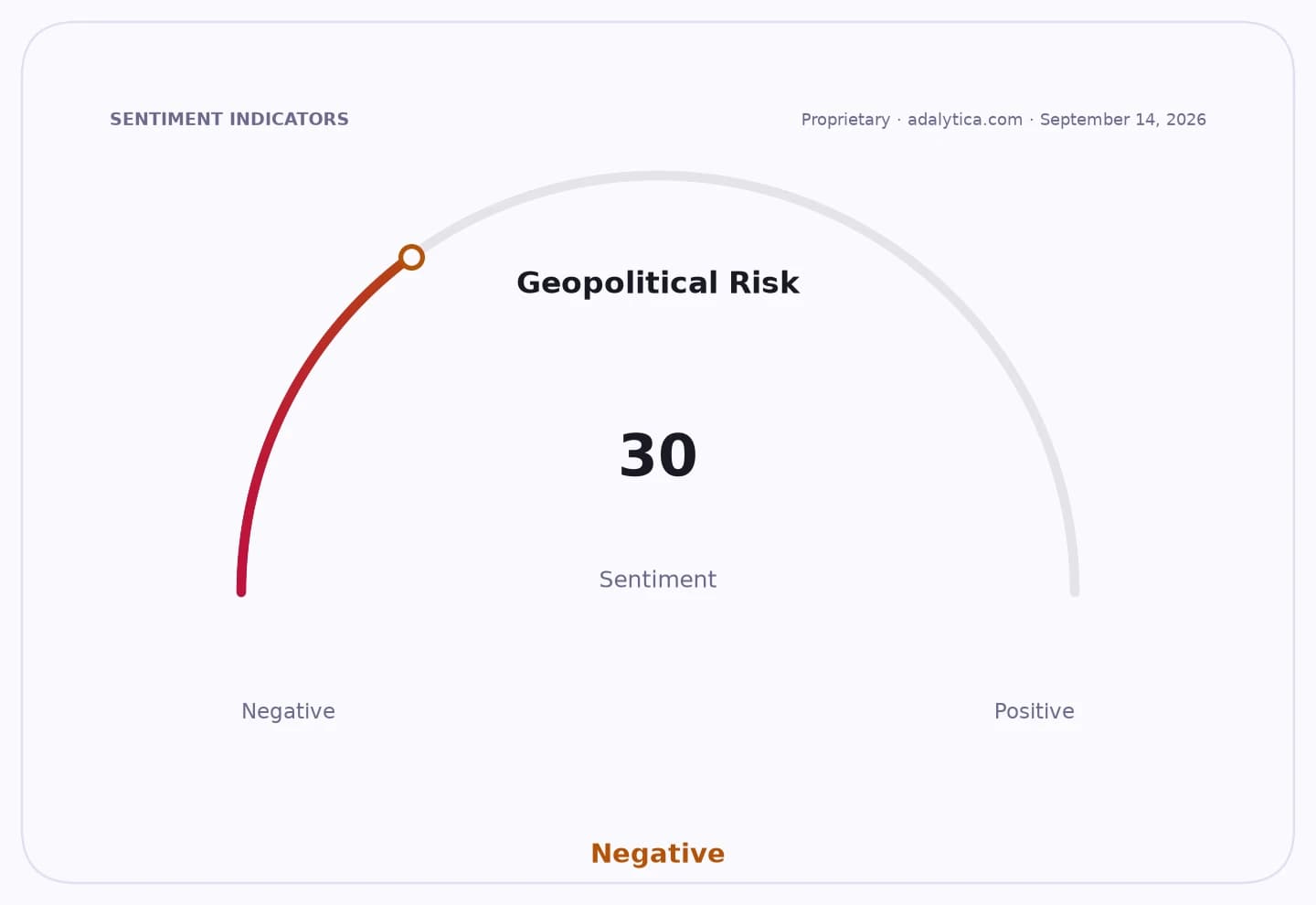
China’s plan to conduct large-scale military exercises in the Yellow Sea is the most important new development because it directly heightens geopolitical risk in one of Asia’s busiest maritime corridors and comes at a moment when investors are already pricing in sharper US–China tensions.
For South Korea, the immediate concern is not just the symbolism of Chinese naval activity near its waters, but the potential for disruption to trade, shipping lanes and military readiness. The Yellow Sea sits between China and the Korean peninsula and links factories, ports and energy flows that matter to the region’s export engine. Any escalation, even if temporary and largely demonstrative, can lift insurance costs, weaken risk appetite and force market participants to reassess exposure to Northeast Asia.
That matters economically because South Korea is deeply trade-dependent. Shipping, semiconductor supply chains and industrial exports are vulnerable to any rise in maritime tension, even when the drills are routine on paper. Investors tend to treat these episodes as a reminder that geopolitical shocks in the region can feed quickly into freight rates, hedging demand and currency volatility. A sharper security backdrop can also make corporates more cautious about capital spending and inventory planning, especially when external demand is already uneven.
The market reaction in South Korea has been relatively contained so far, but the tone has shifted. The iShares MSCI South Korea ETF, EWY, fell to $178.89 on Sept. 14 from $188.72 on Sept. 11, after briefly trading as high as $211.45 in mid-June. The pullback has left the fund below its recent peak but still well above its 200-day moving average, suggesting the broader uptrend is intact even as momentum has cooled. Technical indicators show RSI easing to 54.6 from 60.0 a few sessions earlier, while MACD remains positive, indicating investors have not abandoned the trade but are becoming more selective.
Chinese equities have also been softer. The iShares China Large-Cap ETF, FXI, ended Sept. 14 at $34.94, after closing at $34.49 on Sept. 11 and $35.88 on Sept. 4. The fund remains below its 200-day moving average, a sign that sentiment toward Chinese assets is still fragile despite intermittent rallies. The KraneShares CSI China Internet ETF, KWEB, was even weaker, finishing at $24.83 on Sept. 14 versus $24.60 on Sept. 11 and $26.05 on Sept. 4, reflecting persistent caution around China’s growth outlook and policy risk.
The wider backdrop is that geopolitical stress is no longer an abstract overlay; it is part of the pricing framework. Adalytica’s Global Stability Sentiment gauge sits at 30, in “Fear,” down 42 points over the past 30 days, while its US–China Relations Sentiment measure remains elevated but volatile, underscoring how quickly headlines can move risk appetite. For investors, that means defense spending, shipping, insurers and regional havens may see periodic support, while Korea-sensitive cyclicals, exporters and China-proxy assets remain vulnerable to further headlines.
The key question now is whether the Yellow Sea exercises remain a contained show of force or become part of a broader pattern of military signaling around trade routes and contested waters. If they stay limited, markets may move on quickly. If they are paired with tougher rhetoric or additional deployments, the premium for Northeast Asia risk could rise again, with South Korean assets among the first to reflect it.
| Entity | Gains | Losses |
|---|---|---|
| China | ▲military signaling | ▼regional trust |
| South Korea | ▲defense readiness | ▼trade stability |
| Shipping firms | ▲higher security demand | ▼higher insurance costs |
| Risk assets | ▲limited support from calm | ▼volatility from escalation |