China Yuan Nears 3.5-Year High as Trade Improves

China’s yuan strengthened to within reach of a 3-1/2-year high, a move that underscores how improving trade flows and firmer domestic price data are reshaping expectations for the currency and for Beijing’s policy room.
That matters because a stronger yuan is not just a foreign-exchange headline. It can ease imported inflation, support consumer purchasing power and signal that Chinese exporters are still generating enough hard-currency demand to offset broader growth anxiety. For investors, it also changes the risk calculus for everything from offshore China equities to carry trades and commodities exposed to Chinese demand.

The offshore yuan was last around 6.71 per dollar, according to the data provided, after trading at levels that put it near the strongest since early 2023. The move comes alongside signs that China’s export engine is still doing enough to anchor the currency, while inflation data have kept alive hopes that policymakers can avoid an outright deflation trap without resorting to aggressive stimulus.
That combination is important. A currency that firms on the back of exports rather than speculative inflows suggests the move is tied to real economic activity, not just positioning. It also gives Beijing a little more breathing room: a steadier yuan can help restrain imported price pressures and reduce the need for abrupt policy shifts, even as officials continue to balance growth support against financial stability.
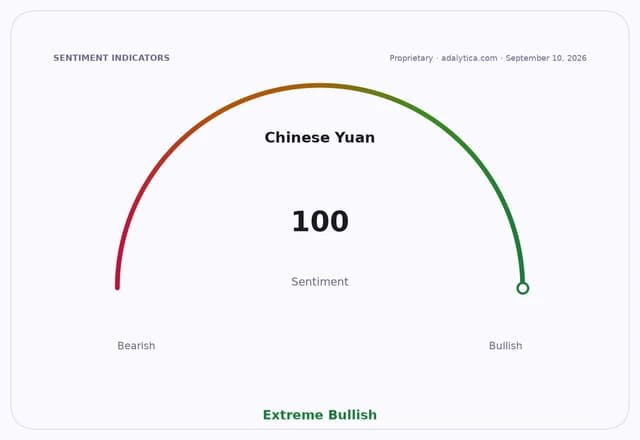
Markets are already reflecting that tension. FX carry sentiment remains elevated, pointing to strong appetite for yield-seeking trades, while the yuan’s own trading signals in Adalytica data show extreme greed after a sharp rally. In technical terms, the offshore yuan has been hovering near its lower Bollinger Band and well below its 200-day moving average on some measures, a reminder that the currency’s recent strength has come after a prolonged period of weakness rather than from a broadly bullish longer-term trend.
For investors, the better read is second-order. A firmer yuan can be a tailwind for China-facing consumer names, commodity importers and multinationals with exposure to mainland demand. It can also pressure hedged exporters and reduce the appeal of short-yuan positioning if the recovery in trade data persists. Chinese equities traded through the FX channel, including the FXI ETF, may benefit if currency stabilization starts to draw global capital back toward China assets.
The bigger story is that the yuan’s rebound is becoming a macro signal, not just a currency move. If export resilience holds and inflation stops drifting lower, the market may have to price in a more durable floor for the yuan — and with it, a less desperate policy backdrop for Chinese assets. That is where the asymmetric opportunity lies: not in chasing the move after it has happened, but in positioning for a China market that is finally being pulled higher by currency stability rather than held back by it.
| Entity | Gains | Losses |
|---|---|---|
| Chinese yuan | ▲Stronger exchange rate | ▼Short-yuan traders |
| China policymakers | ▲More policy flexibility | ▼Deflation bears |
| FXI / China equities | ▲Capital inflows potential | ▼Hedged exporters |
| Importers / consumers | ▲Lower import costs | ▼Export-focused firms |