Chinese yuan strengthens to highest since July 2022
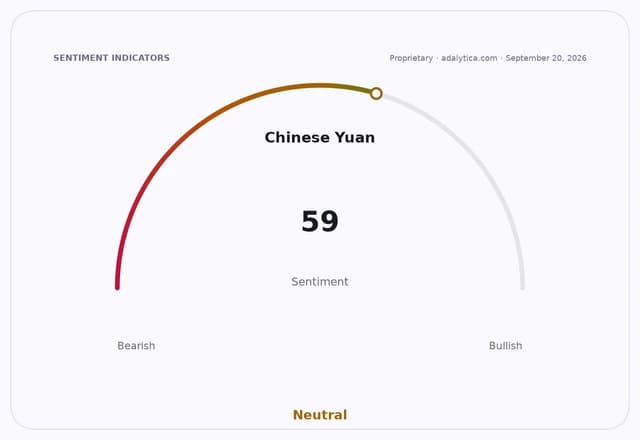
The Chinese yuan climbed to its strongest level against the dollar since July 2022 after the People’s Bank of China extended a run of firmer daily fixings, signaling tolerance for a gradual appreciation as exports stay resilient and markets brace for higher US yields.
The offshore yuan rose as much as 0.1% to 6.6967 per dollar on Friday, putting it on course for a seventh straight quarterly gain and making it one of Asia’s better-performing currencies this year. The move reflects a mix of domestic support — particularly robust export receipts and conversion flows — and policy management from Beijing, which has now raised the official reference rate for eight consecutive sessions, the longest such streak since 2023.
For policymakers, the rally is not just a market move but a balancing act. A stronger currency can help reduce imported inflation and signal confidence in China’s external position, but a rapid appreciation would risk tightening financial conditions and squeezing exporters at a time when trade remains a key support for growth. By keeping the fixing weaker than the spot market, the PBOC is allowing the yuan to rise without endorsing a one-way bet.
That stance matters for investors because it suggests Beijing is trying to shape expectations rather than resist the move outright. Analysts say the repeated narrowing of the gap between the fixing and market rate points to an official preference for controlled gains. “Further gains are likely if the fixings continue on their recent trend,” said Khoon Goh of ANZ, adding that the authorities appear intent on aligning the daily reference rate more closely with spot trading.
The macro backdrop makes the move more notable. The yuan has advanced even as traders price in tighter Federal Reserve policy, lifting Treasury yields and the dollar and widening the China-US yield gap to a record. Under normal circumstances, that divergence would pressure the Chinese currency. Instead, export strength and official guidance have overridden the rate disadvantage, underlining how China’s external surplus and capital flow management can still dominate pure interest-rate logic.
The timing also carries geopolitical weight. The firmer fixings suggest the PBOC is comfortable with a stronger currency heading into a meeting between President Donald Trump and Chinese leader Xi Jinping in the US, reducing the risk that foreign-exchange policy becomes another flashpoint. For global investors, the message is that Beijing appears willing to allow modest yuan strength while preserving stability, rather than defending an explicit ceiling or forcing a sharp rerating.
That leaves the key question for the weeks ahead: whether the central bank keeps leaning in the same direction. If the fixing remains stronger than in recent months and export inflows stay firm, the yuan could extend its climb. But any renewed dollar surge, weaker Chinese trade data or signs the PBOC is uncomfortable with faster appreciation could quickly slow the move, making this latest rally more of a managed adjustment than the start of a new regime.
| Entity | Gains | Losses |
|---|---|---|
| Chinese exporters | ▲Cheaper foreign earnings hit limited | ▼Stronger yuan |
| PBOC | ▲More policy flexibility | ▼Rapid currency appreciation |
| Yuan bulls | ▲Trend-following gains | ▼Dollar strength risk |
| US dollar / rate-sensitive carry trades | ▲— | ▼Firmer China FX stance |