Circle Ends USDC Minting on Noble in 2027

Circle’s decision to end USDC minting and legacy CCTP V1 support on Noble by January 2027 matters less as a narrow blockchain housekeeping move than as a sign the $74.31 billion stablecoin issuer is pruning weaker corridors while pushing users onto its newer interoperability stack.
For investors, the key issue is not whether USDC remains stable — it does, trading essentially at parity with the dollar — but how Circle is managing liquidity, distribution and protocol risk as it tries to cement USDC as the preferred institutional digital dollar. The Noble wind-down gives users more than a year to migrate, but it also removes a Cosmos-linked route that Circle no longer wants to maintain once CCTP V2 becomes the standard.
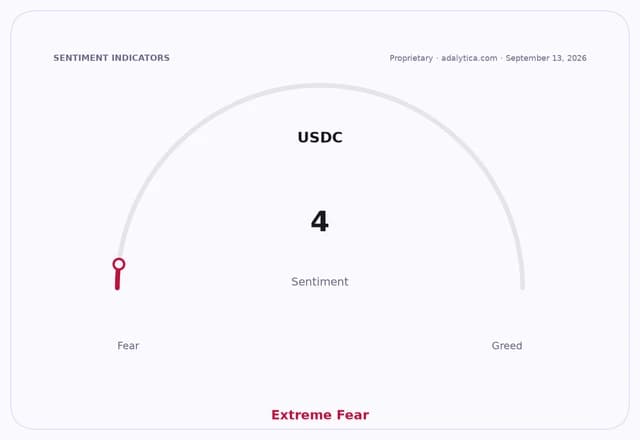
Circle said new USDC minting on Noble through Circle Mint will stop on Oct. 13, 2026, redemptions will remain open until Jan. 12, 2027, and a manual redemption portal will follow for stragglers. Burn limits on CCTP V1 will then be progressively tightened, limiting exit routes for institutional and self-custody holders unless they move funds to supported chains or exchanges in advance. That sequencing reduces the chance of a disorderly unwind, but it also creates a hard deadline for Noble liquidity and any applications that rely on it.
The broader significance is strategic. Circle is migrating to CCTP V2 because it offers faster finality and stronger security, and the company is clearly willing to leave behind chains that do not fit that upgrade path. Noble’s exclusion suggests Circle is concentrating resources on infrastructure with larger commercial payoff, even as it says it remains committed to the Cosmos ecosystem through other IBC-connected partnerships such as Injective.
That combination — expansion at the platform level, retrenchment at the chain level — is what investors should focus on. Circle is still building: it has lined up a planned acquisition of Singapore-based payments platform Tazapay and expanded its partnership with BNY Mellon to support digital asset custody for USDC. Those moves reinforce the thesis that Circle wants USDC embedded in regulated financial plumbing, not merely circulating across every available blockchain.
The bear case is that the Noble exit underscores how fragmented stablecoin distribution still is and how dependent Circle remains on counterparties that can leave users exposed to migration risk. The bull case is that pruning low-priority venues improves execution, security and brand credibility, especially if CCTP V2 becomes the default standard for moving USDC across both EVM and non-EVM networks.
For Coinbase, which remains closely tied to USDC’s ecosystem economics, the change is a reminder that stablecoin competition is increasingly about rails, not just reserves. For Circle, the question is whether tighter protocol discipline expands USDC’s institutional footprint enough to offset any loss of reach on older or less strategic chains. The answer will matter most if CCTP V2 adoption accelerates and Circle can show that fewer supported routes produce deeper, more durable liquidity rather than simply less optionality.
| Entity | Gains | Losses |
|---|---|---|
| Circle | ▲Cleaner protocol stack | ▼Noble-specific reach |
| USDC users on supported chains | ▲Faster transfers | ▼Legacy migration burden |
| Noble ecosystem | ▲Short-term migration activity | ▼USDC liquidity and support |
| Competing stablecoin rails | ▲Less immediate disruption | ▼Opportunity if users stay put |