Circle USDC Expands Into OKX X Layer
Circle is pushing USDC deeper into crypto trading infrastructure through OKX’s new X Layer network, a move that matters less as a product launch than as a fight for where the next dollar of stablecoin liquidity settles.
The economic significance is straightforward: stablecoins are becoming the plumbing for digital commerce, exchange settlement and on-chain payments, and the winners will be the issuers that secure the broadest distribution across exchanges, wallets and payment rails. By extending USDC into the OKX ecosystem, Circle is trying to lock in transactional demand at the point where traders and users actually move capital, rather than relying only on brand strength or issuer-level adoption.
That is the part investors should focus on. The market has often treated stablecoins as a thin-margin, low-growth corner of crypto, but the real value is in network effects, float, and embedded usage across venues that can turn USDC into default collateral. Circle’s stock has been volatile, with CRCL recently trading around $66.67 after a brutal run from above $130 earlier in the year, while its 50-day moving average remains well above the current price. That tells you sentiment is still damaged even as product expansion continues. If USDC keeps gaining usage across major ecosystems, the market may eventually have to reassess Circle not as a one-off issuer, but as a payments infrastructure company with recurring transaction utility.
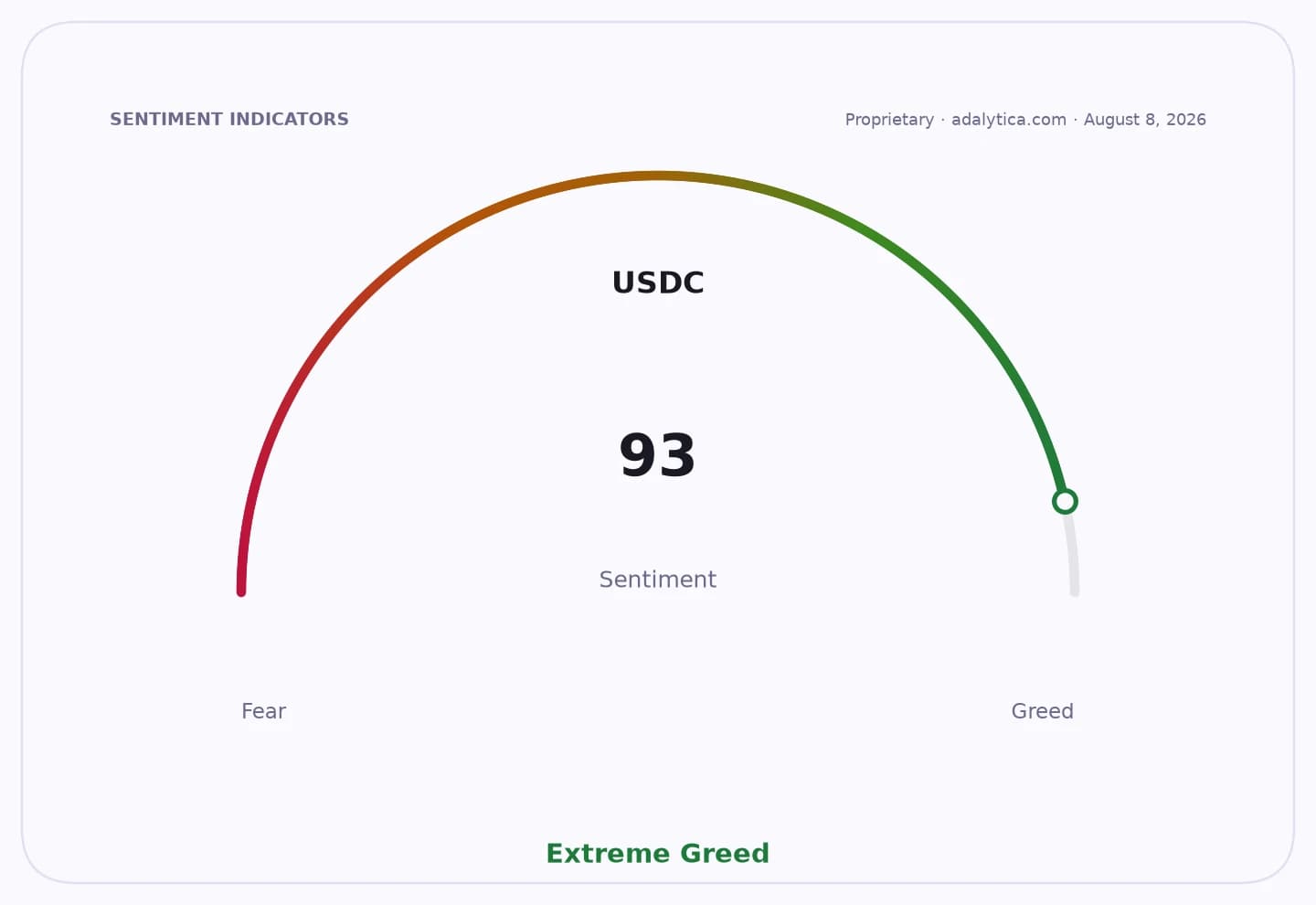
The broader backdrop is more important than the one deal. USDC trade signals on Adalytica.com show extreme greed and extreme awareness, with the 30-day change surging 70%, while USDT shows similar heat. That points to a stablecoin market that is still expanding and concentrating attention, even as Bitcoin sentiment is stuck at extreme fear. In other words, capital is not leaving digital assets; it is rotating toward the settlement layer. That is a constructive setup for the largest stablecoin platforms and for exchanges that can offer deeper liquidity and lower friction.
Coinbase also remains central to the thesis. COIN has recovered to about $153.60 from its early-August low near $145, but it is still far below its 200-day moving average, showing the market has not fully priced in a stablecoin-led rebound in exchange activity. Circle’s USDC expansion into OKX could support both issuers and venues if it increases transaction velocity, trading pairs and on-chain usage. It also reinforces the idea that stablecoin growth is increasingly about distribution partnerships, not just reserve backing or regulatory headlines.
The real investment takeaway is that the market underestimates the toll-road nature of stablecoin infrastructure. If USDC keeps expanding across large trading ecosystems like OKX’s X Layer, the long-term winners are Circle, Coinbase and the exchanges that control user flow, while legacy payment intermediaries and weaker stablecoin alternatives risk being sidelined. For investors, the asymmetric bet is on the rails, not the coins.
| Entity | Gains | Losses |
|---|---|---|
| Circle / CRCL | ▲Wider USDC distribution | ▼Reliance on market sentiment |
| OKX / X Layer | ▲Deeper liquidity and usage | ▼Pressure to compete on incentives |
| Coinbase / COIN | ▲More USDC activity, higher volume | ▼Exposure to crypto volatility |
| Rival stablecoins | ▲— | ▼Share loss to USDC |