Coal prices rise as China reviews imports

Coal prices strengthened over the past week as China again stepped up research into imports, a sign the world’s biggest consumer is still willing to lean on seaborne supply even as its domestic energy mix evolves.
That matters because every fresh round of Chinese buying interest can reset the pricing power of global producers, especially at a time when metallurgical coal demand is also being supported by India and other industrial buyers. For miners, the shift can quickly translate into better realized prices, stronger cash flow and bigger dividends. For investors, it is a reminder that coal remains a high-beta commodity trade tied not just to weather and output, but to Chinese import policy, logistics and geopolitical supply disruptions.

The latest move comes against a backdrop of firmer coal market conditions and renewed attention on seaborne flows. Thungela Resources said half-year profit more than doubled on higher coal prices and improved rail logistics, while also lifting its interim dividend. That is the kind of operating leverage the market tends to underestimate when prices turn higher: a relatively small move in the commodity can produce a much larger change in earnings for producers with export exposure.
The broader setup is supportive for the better-positioned names. China’s steel mills still need metallurgical coal, India’s industrial demand remains sturdy, and supply has been periodically constrained by rail bottlenecks, geopolitical tensions and uneven export availability from key origins such as Russia, Colombia, South Africa and Australia. Even where power coal demand is more mixed, tighter seaborne availability can lift the whole complex.
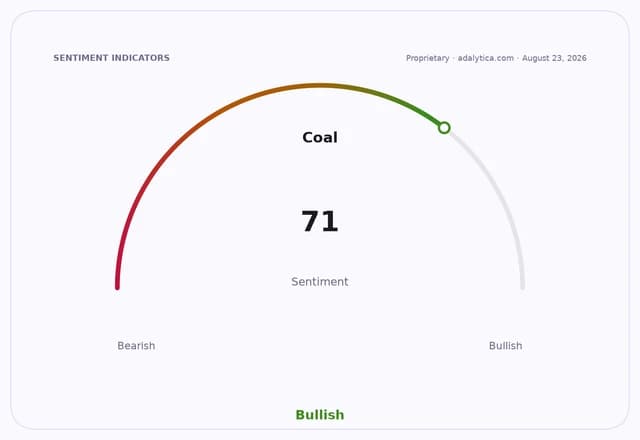
Peel back the tape and the market is already telling the story. BTU, Peabody Energy’s stock, has climbed to $27.61, up sharply from $25.53 in late September and well above its 50-day moving average of $23.80. Its RSI reading of 82.8 points to overbought conditions, but the message is clear: investors are chasing coal exposure into a stronger price backdrop. At the same time, the stock remains below its 200-day moving average of $28.85, leaving room for another leg higher if coal pricing and Chinese imports stay firm.
My view is that the market still underprices the durability of this setup. Coal is not a clean-energy growth story, but it is still a cash-flow story, and in commodity markets cash flow is what drives multiple expansion, dividends and buybacks. The real opportunity is in the names with export leverage, logistics improvements and disciplined capital returns, not in chasing the commodity blindly.
If China keeps intensifying import research and seaborne prices hold, the next move could favor miners with the best mix of metallurgical exposure, port access and balance-sheet strength. That makes coal one of the more asymmetric tactical plays in the market right now: unpopular structurally, but powerful when the cycle turns.
| Entity | Gains | Losses |
|---|---|---|
| Coal miners | ▲Higher prices, stronger cash flow | ▼- |
| Chinese buyers | ▲Supply optionality, price leverage | ▼Higher import costs |
| Export rail/logistics providers | ▲More shipment volumes | ▼Bottlenecks if capacity tightens |
| Short coal positions | ▲- | ▼Mark-to-market losses |