Coal subsidy cuts pressure BTU shares
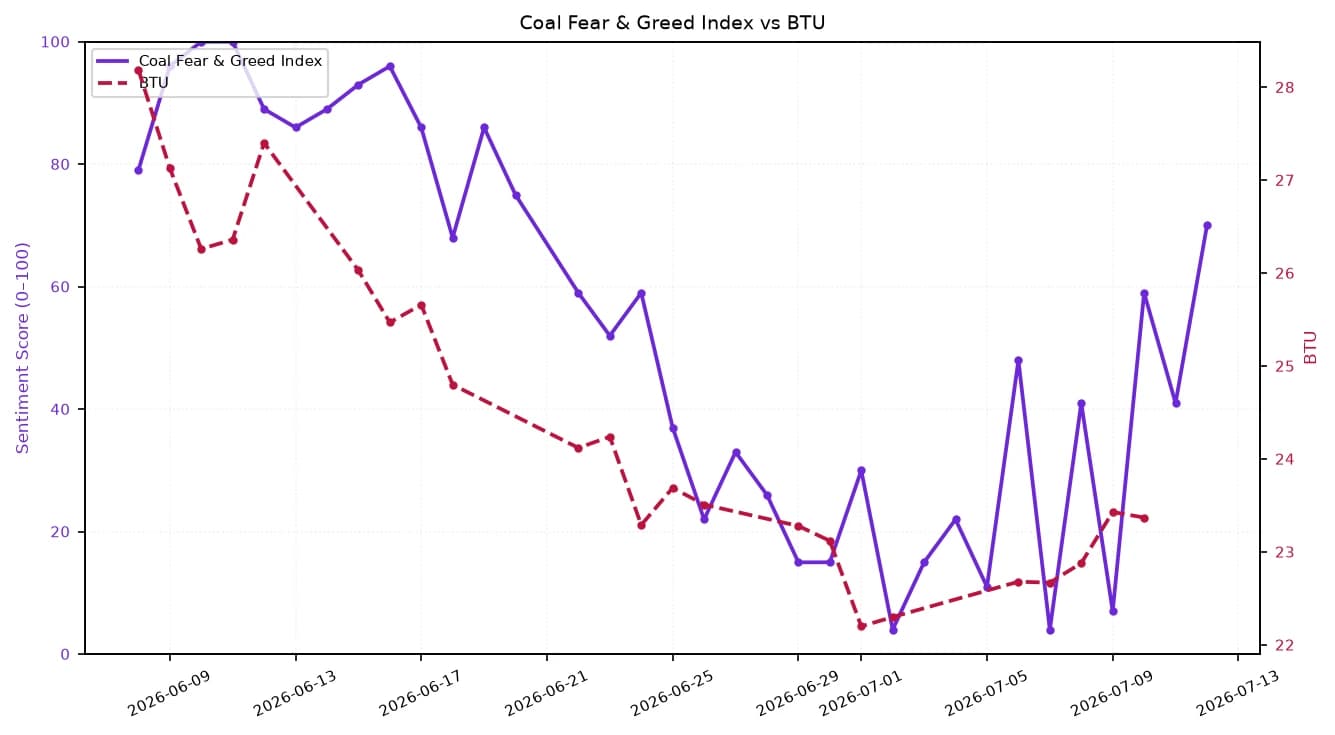
Coal-producing regions in the northwest and south are set to go without benefits, signaling a policy shift that could tighten margins across the sector and deepen pressure on already volatile coal markets.
The move matters economically because subsidies and related support can keep marginal mines operating, hold down supply costs and protect local employment. Pulling that support away raises the risk of higher production costs, slower output and more uneven regional investment at a time when coal demand is still being shaped by regulation, export competition and safety concerns.
For investors, the message is that policy risk in coal remains elevated. BTU shares have already swung sharply, with the stock falling to $23.37 from $39.38 in late March before rebounding from a $22.88 low on July 8. The latest move leaves the stock well below its 200-day moving average of $29.73, while the 50-day average at $25.27 shows the rebound is still fragile. RSI readings near 35.6 suggest the shares are no longer deeply oversold, but the MACD remains below the signal line, pointing to lingering downside pressure.
The broader coal backdrop is mixed. Adalytica’s Coal Fear & Greed Index shows sentiment at 70, labeled neutral, after a 44-point jump over the past week, even as awareness stays muted at 37. That disconnect suggests traders are watching policy headlines closely, but conviction remains thin.
The news also lands against a tougher structural picture for coal exporters. Queensland’s steep royalty burden has already been linked to a 40 million tonne drop in coking coal exports over six years, with competitors such as Russia and Mongolia taking share. Add in mine safety incidents, crackdowns on coal theft and corruption-related outages, and the case for government support becomes more politically fraught and financially uncertain.
For now, the key catalyst is whether the withdrawal of benefits feeds into lower production, weaker regional volumes and fresh volatility in coal equities. Any follow-through from regulators or local governments will be the next test for miners, utilities and traders positioned around the sector.
| Entity | Gains | Losses |
|---|---|---|
| Governments cutting support | ▲Fiscal discipline | ▼Regional political backlash |
| Low-cost competitors | ▲Market share | ▼— |
| Coal miners in northwest and south | ▲— | ▼Subsidies and margin support |
| BTU shareholders | ▲Potential policy clarity | ▼Near-term volatility |