Coinbase and USDC benefit as MiCA tightens EU stablecoin rules

Europe’s crypto market is tilting toward a regulated dollar token model, with MiCA effectively forcing USDT off the compliant path while leaving USDC in the spotlight as the stablecoin most able to meet the bloc’s rules.
That matters because stablecoins are the plumbing for crypto trading, payments and on-chain settlement. If Europe’s largest digital asset market favors one token structure over another, the result is not just a compliance reshuffle but a shift in where liquidity sits, which venues keep institutional flow and which issuers can grow fee income from transactions and custody services.
The immediate beneficiary is USDC, whose regulatory posture fits MiCA’s emphasis on issuer oversight, reserves and transparency. For traders, exchanges and payments firms operating in the EU, the difference is practical: the token that can stay listed and widely used becomes the default settlement asset. USDT, despite its much larger global footprint and still-dominant role in offshore crypto markets, faces a narrower route into regulated European channels.
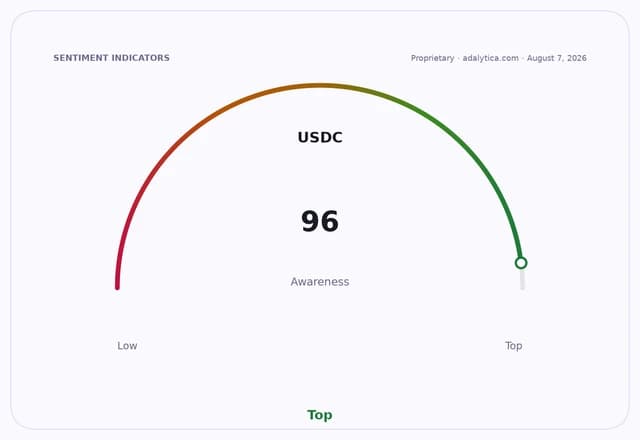
The market has already started to reflect that divergence. Adalytica’s trade signals show both USDT and USDC sitting at extreme-greed readings, with awareness also elevated, but USDC’s 30-day change is softer than USDT’s, suggesting the market is still digesting the policy shift rather than pricing a clean winner-take-all rerating. Coinbase, the main listed proxy for compliant stablecoin activity, has been volatile, but its long-term value proposition is tied to exactly this kind of regulatory sorting: more onshore flow, more custody and payments relevance, and potentially more revenue linked to regulated stablecoin usage.

For Coinbase, the implication is mixed but ultimately constructive. A stricter European regime can reduce the role of the largest offshore stablecoin while reinforcing the importance of compliant issuers and exchange infrastructure. That could support USDC usage on platforms that want to avoid legal risk, and it may deepen the wedge between regulated crypto finance and the less supervised offshore market.
The bull case is that MiCA accelerates institutional adoption by giving treasurers, exchanges and fintechs a clearer framework for reserve-backed dollar tokens. The bear case is that fragmentation hurts crypto liquidity in the short run, pushes some trading activity offshore and leaves USDC with the burden of scaling faster without necessarily capturing all of USDT’s existing network effects.
For investors, the key question is whether MiCA is the start of a broader global reallocation toward compliant stablecoins. If so, issuers and intermediaries aligned with reserve transparency and licensing standards stand to gain share, while tokens that thrive on regulatory ambiguity may remain strong globally but weaker in Europe.
| Entity | Gains | Losses |
|---|---|---|
| USDC | ▲Regulatory acceptance | ▼USDT share gain |
| USDT | ▲Global offshore demand | ▼EU market access |
| Coinbase | ▲Compliant stablecoin flow | ▼Less offshore liquidity |
| EU exchanges/fintechs | ▲Clearer rules | ▼Higher compliance burden |