Colombia gets $1 billion US security aid
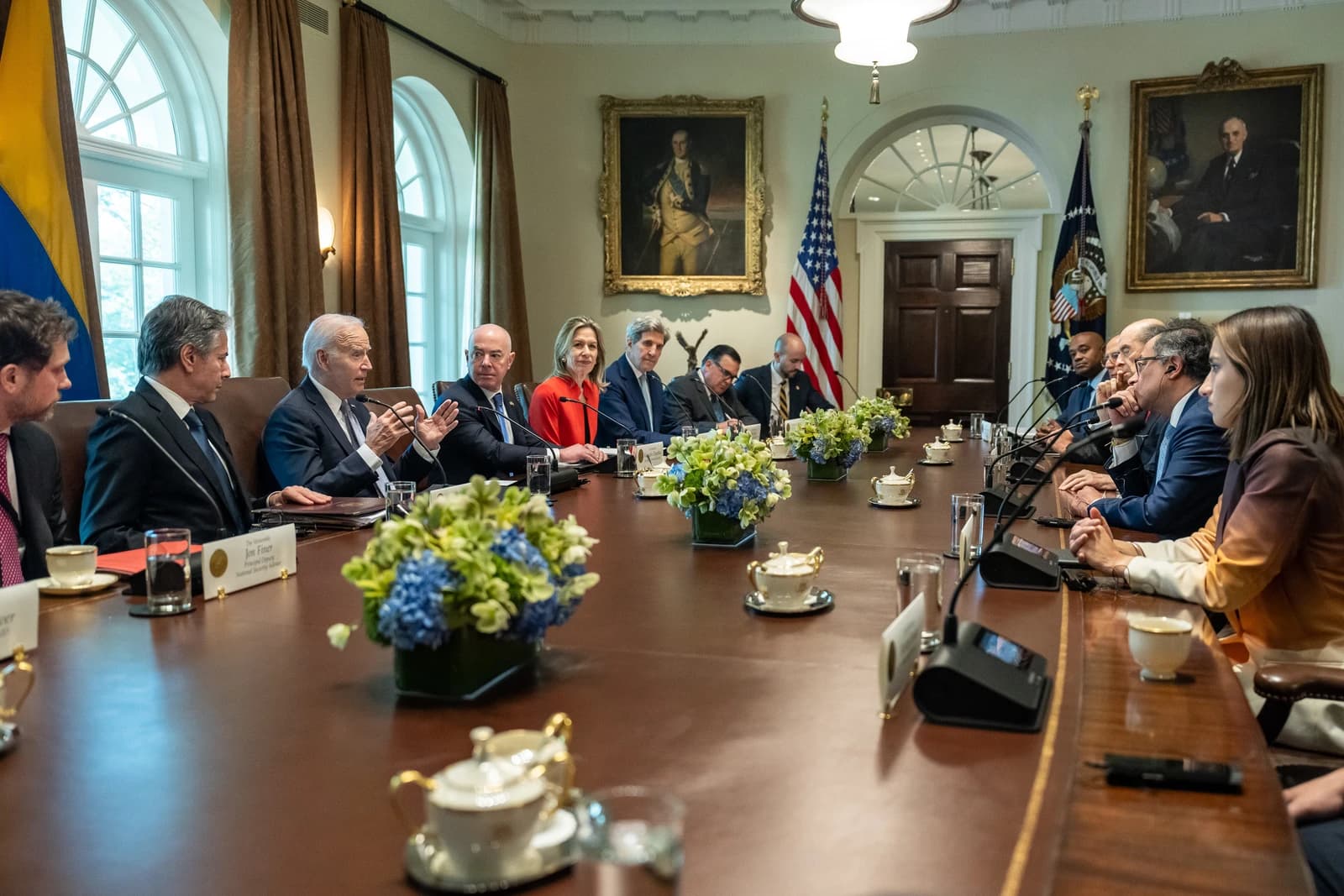
The United States has pledged $1 billion in security aid to Colombia’s new president, a move that deepens Washington’s stake in the country just as Abelardo De La Espriella begins a mandate built on restoring order and tightening control over the state.
The package matters first as a geopolitical signal. Colombia is one of Washington’s most important security partners in Latin America, and a billion-dollar commitment is not a routine diplomatic gesture; it is an attempt to underwrite the new administration’s security agenda at a time when armed groups, territorial fragmentation and weak state capacity remain central economic constraints. For investors, that makes the aid relevant beyond politics: better security can support investment, logistics, tourism, consumption and bank lending, while failure to stabilize the country would keep a risk premium on Colombian assets.
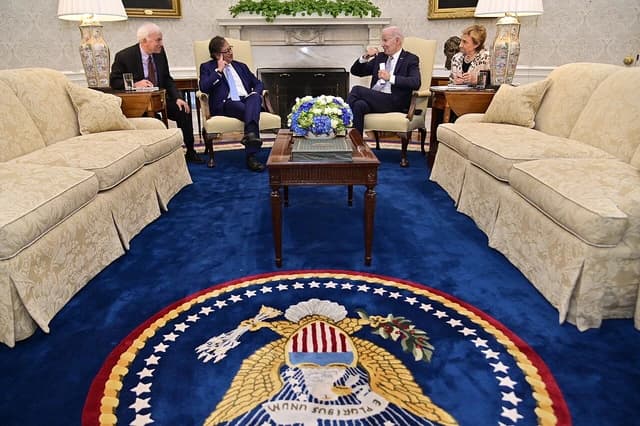
The White House move also suggests an effort to anchor the new right-wing government before it fully defines its domestic model. De La Espriella has promised a more decentralized state built around autonomous regions and territorial equity, but that project will depend on whether Bogotá can project authority outside major urban centers. External financing for security strengthens the government’s room to maneuver, yet it also raises questions about execution, governance and how quickly the state can convert military and police support into lower violence and better economic conditions.
Markets have already been leaning into a friendlier Colombia narrative. The iShares MSCI Colombia ETF, EWW, has climbed to 77.52 from 62.26 on Oct. 10, while local lender CIBEST, trading through CIB, has advanced sharply to 88.85 from 52.63 over the same broad stretch. Ecopetrol, Colombia’s state oil company and one of the market’s key macro proxies, closed at 16.78 after trading as high as 17.40 this week, reflecting continued interest in the country’s asset re-rating. The moves suggest investors are treating the political transition as supportive of reform and stability, even as underlying risks remain elevated.

The backdrop is one of easy global liquidity and persistent geopolitical strain. US policy direction sentiment, as tracked by Adalytica, has swung sharply lower and sits at a fear reading even as awareness is high, indicating uncertainty around the White House’s approach. At the same time, global stability sentiment is at an extreme-greed reading, a sign that markets are still pricing a broad risk-on environment. That combination can help emerging-market assets, but it can also fade quickly if Colombia’s security gains do not arrive fast enough to justify the optimism.
For Colombia’s financial sector, the aid package is potentially constructive if it helps support credit growth and lower funding stress. For exporters and commodity-linked names such as Ecopetrol, a stronger security environment could improve operating continuity and transport links. The bear case is that a bigger security commitment simply contains symptoms without fixing the structural problems that have long limited productivity and foreign investment.
What matters now is whether Washington’s support becomes a catalyst for measurable improvement in violence, fiscal confidence and capital inflows, or whether it turns into another large pledge with limited follow-through. Investors will be watching for signs that De La Espriella can turn external backing into a durable policy framework rather than a short-term stabilization effort.
| Entity | Gains | Losses |
|---|---|---|
| Colombian government | ▲More security resources | ▼Higher pressure to deliver results |
| US administration | ▲Stronger regional influence | ▼Greater exposure to Colombia risks |
| EWW / Colombia equities | ▲Lower risk premium | ▼Volatility if security stalls |
| Armed groups / instability trade | ▲Weaker operating space | ▼Less room to profit from disorder |