Colombia 2027 minimum wage may rise 7% to 8%
Colombia’s 2027 minimum wage is shaping up for another above-inflation increase, with current price trends pointing to a settlement around 7% to 8% as policymakers, unions and employers prepare for year-end talks.
That matters because the wage decision is one of the country’s most important annual price-setting events: it affects labor costs across formal businesses, household purchasing power, social transfers and, through indexation, a wider slice of the economy. With annual consumer inflation at 6.24% and economists penciling in a year-end rate close to 7%, the minimum wage will be negotiated against a backdrop of still-elevated living costs rather than the central bank’s 3% target.
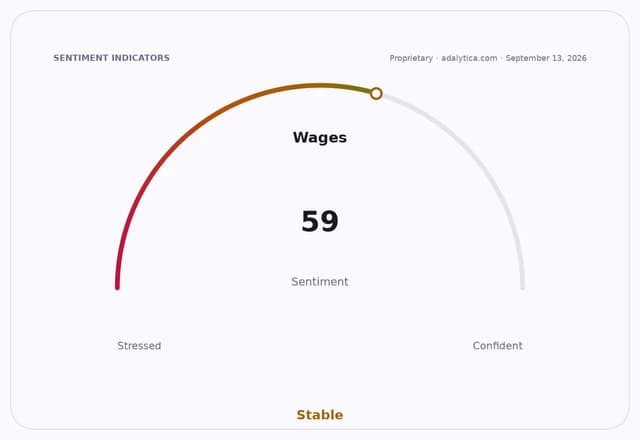
On the current floor of 1,750,905 pesos a month, a 6% rise would lift the base salary to about 1,855,959 pesos; 7% would take it to 1,873,468 pesos; and 8% would put it near 1,890,977 pesos. If the transport subsidy also rises 8%, total monthly income for a minimum-wage worker would approach 2.16 million pesos.
The debate goes beyond arithmetic. Former finance minister Mauricio Cárdenas argued the technically justified increase is closer to 8% if politics do not distort the process, but warned that wage gains that outpace productivity can quickly feed into operating costs and restart inflation. For the Banco de la República, that is the central risk: a larger wage hike would raise costs in labor-intensive sectors and could complicate the disinflation path at a time when the central bank is still trying to pull inflation back to target.
Some sectors are already running hotter than the national average. Restaurants and hotels posted annual price growth of 9.36%, health 8.30% and education 7.45%, underscoring how wage-driven costs can ripple through services. Food, utilities and fiscal pressures remain additional inflation risks heading into the negotiation.
For investors, the story is less about the headline wage number than about second-order effects. A larger increase would be supportive for consumption at the bottom of the income distribution, but it could squeeze margins in retail, hospitality, food service and other labor-intensive businesses. It also raises the odds that the central bank stays cautious on rate cuts if it sees wage-setting becoming a new source of price persistence.
The likely outcome is a compromise above inflation but short of the most aggressive political demands. If inflation stays near current levels, the 2027 settlement will probably set the tone for whether Colombia’s wage policy helps lock in real income gains without reigniting the inflation cycle.
| Entity | Gains | Losses |
|---|---|---|
| Minimum-wage workers | ▲Higher take-home pay | ▼— |
| Retail, hospitality and services firms | ▲— | ▼Higher labor costs |
| Banco de la República | ▲More credibility if wage growth stays contained | ▼Harder inflation fight if wages overshoot |
| Consumers and households | ▲Short-term purchasing power | ▼Risk of weaker price stability |