Colombia Central Bank Sees Inflation Target in 2028
Colombia’s central bank is signaling that getting inflation back to its 3% target will take much longer than policymakers and markets would like, a timeline that implies borrowing costs may stay restrictive well into the next cycle and keeps pressure on households, companies and sovereign debt.
The manager of the Bank of the Republic said the inflation goal would only be reached around mid-2028, underscoring how persistent price pressures remain even after the country has made progress from the peak of the post-pandemic surge. That matters because the longer inflation stays above target, the longer real interest rates have to remain elevated to keep expectations anchored, raising the cost of credit in an economy already sensitive to financing conditions.
The message effectively narrows the scope for aggressive easing. With policy rates still high by regional standards, the central bank is being forced to balance weak domestic demand against the risk that cutting too quickly would stall disinflation and weaken credibility. For borrowers, that means mortgages, consumer loans and corporate funding are likely to stay expensive for longer. For banks, prolonged high rates can support net interest income in the near term, but they also increase credit stress if households and small businesses struggle to absorb higher debt service costs.
The inflation outlook also helps explain the cautious tone across duration markets. In the U.S., Treasury yields have remained elevated, with the 10-year near 4.7%, while bond proxies such as long-dated Treasury ETFs have struggled to sustain rallies even as recent technical readings show some stabilization. Colombian assets face a similar calculation: if the central bank’s path to target is as slow as suggested, local bond investors may demand a higher term premium, and the peso could remain vulnerable whenever global risk appetite weakens.
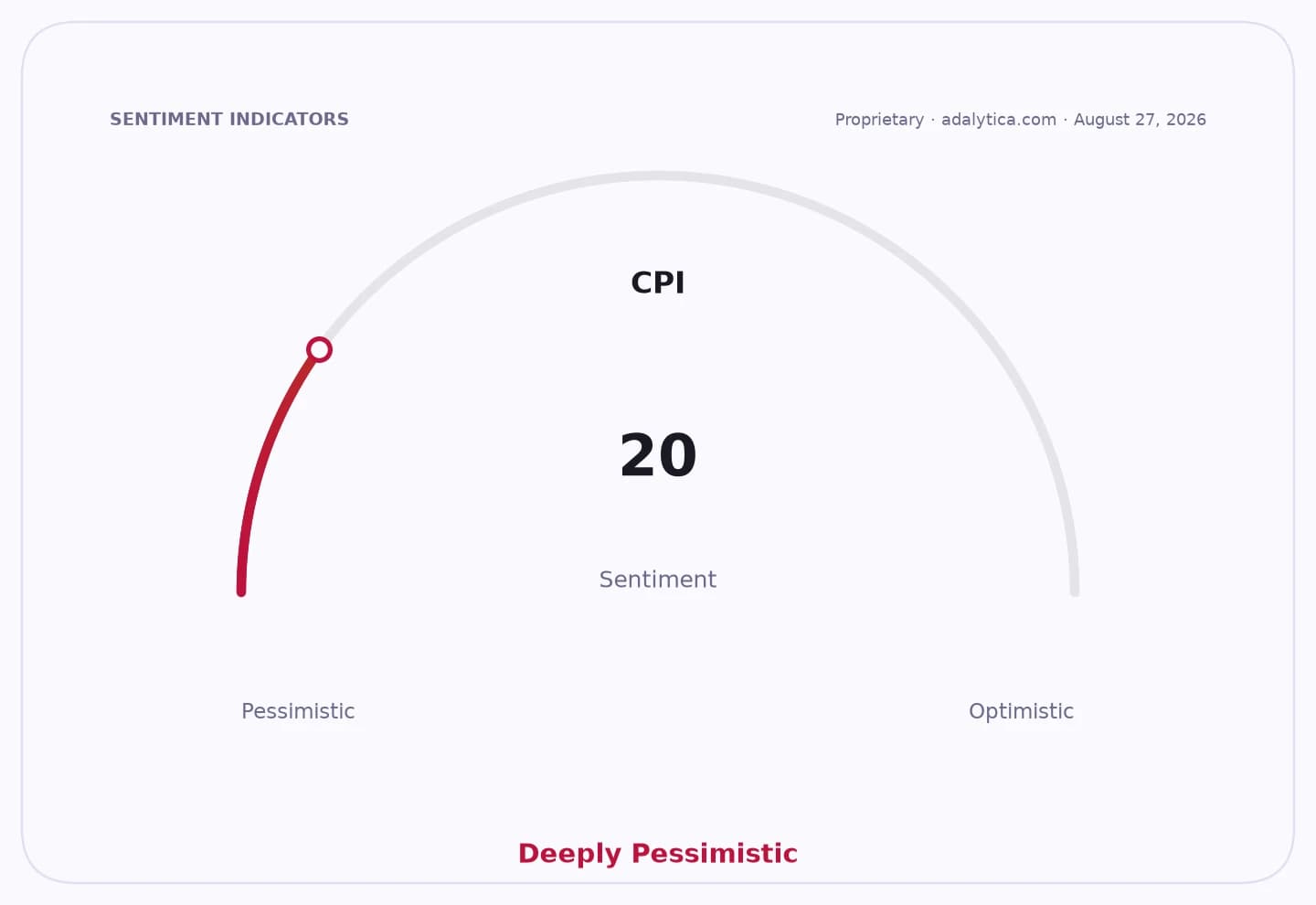
Adalytica’s CPI sentiment gauge is in fear territory, while consumer spending sentiment is in extreme fear, reinforcing the idea that inflation remains a macro drag on households rather than a distant policy debate. That combination typically supports a defensive investment stance: shorter-duration fixed income, selective exposure to bank earnings, and caution on rate-sensitive sectors such as housing, retail and leveraged corporates.
The main risk for policymakers is that inflation proves stickier than expected, forcing an even longer period of tight policy. The upside case is that slower demand and easing external price pressures accelerate disinflation faster than officials now expect. For investors, the key takeaway is that Colombia’s inflation battle is not over and the central bank’s exit from restrictive policy looks measured, not imminent.
| Entity | Gains | Losses |
|---|---|---|
| Bank of Republic | ▲Credibility if caution works | ▼Growth if rates stay high |
| Lenders/banks | ▲Higher net interest income | ▼Rising credit stress |
| Households/borrowers | ▲Lower inflation eventually | ▼Expensive mortgages and loans |
| Bond investors | ▲Higher yields if duration is added | ▼Long-duration price risk |