Consumer Discretionary Weakens as SPY Holds Up
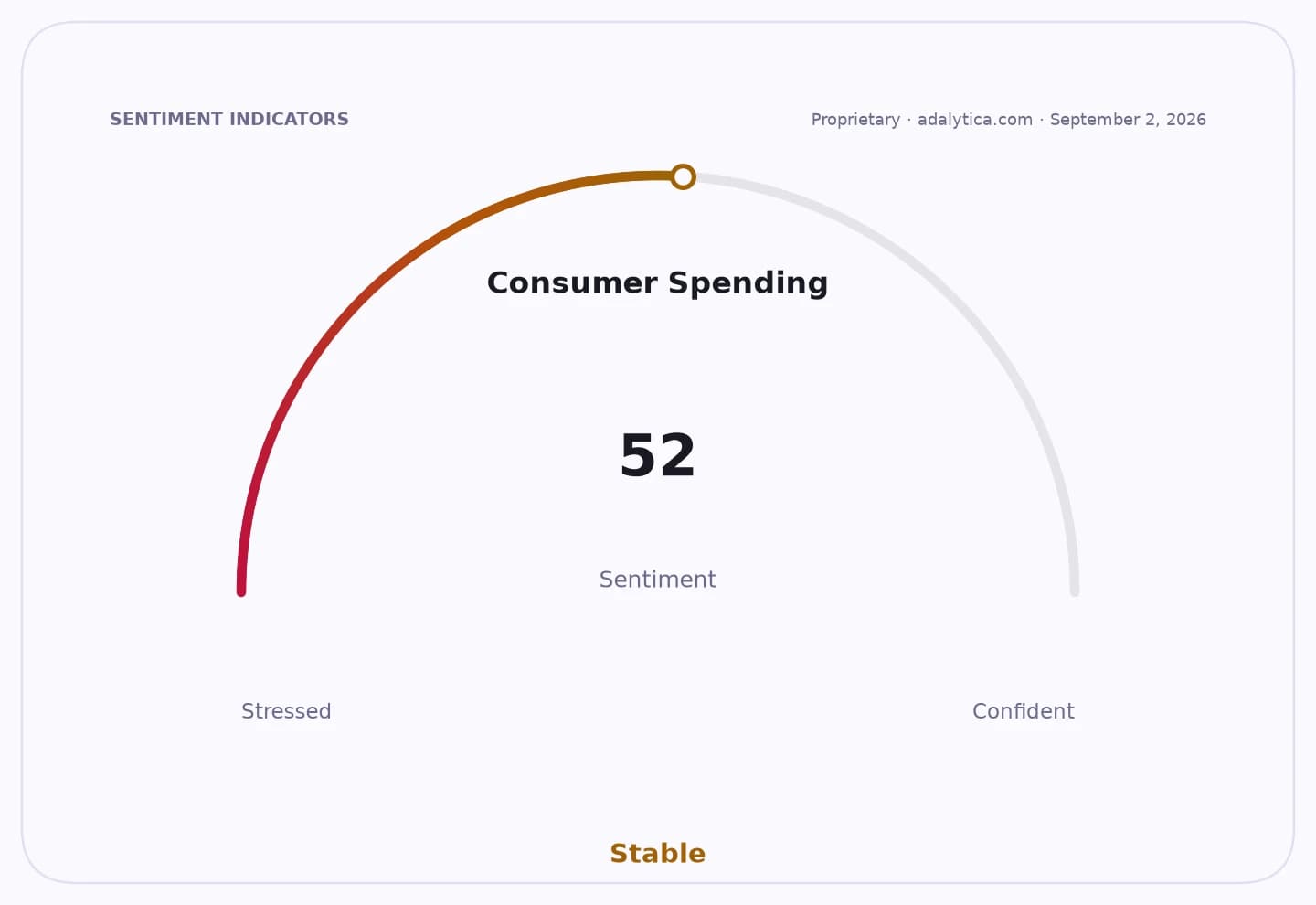
US stocks are showing fresh signs that households are becoming more selective with their spending, a shift that is hitting consumer discretionary shares and leaving the broader market looking less evenly supported.
The clearest read-through is the weakness in the Consumer Discretionary Select Sector SPDR Fund, which fell to $114.59 on Sept. 1 after losing more than 1% in the latest session and sitting just above its lower Bollinger Band. The fund is now below both its 50-day and 200-day moving averages, a technical backdrop that points to fading near-term momentum in one of the market’s most cyclical groups.
That matters because discretionary spending is the part of consumer demand most exposed to confidence, pricing power and wealth effects. When investors are less willing to chase retailers, restaurants and premium brands, it usually reflects concern that households are trading down or delaying nonessential purchases. The Adalytica retail goods spending gauge is in fear territory at 22, while consumer confidence recession sentiment is also low at 26, suggesting the market is increasingly focused on durability rather than aspiration.
The pressure is visible across marquee consumer names. McDonald’s closed at $261.11, down sharply from its February peak and still well below its 200-day moving average of $292.63, even after a brief rally earlier this year. The shares have lost momentum as the company faces the classic late-cycle consumer problem: customers looking for value rather than indulgence. That dynamic also helps explain the broader tone in discretionary stocks, where the stronger brands can still defend traffic, but premium positioning is becoming harder to sustain.
For investors, the message is that the market is rewarding necessity and punishing excess. The old idea of “gifting parents a gold bar” is a fitting shorthand for where the appetite is fading: flashy, high-ticket discretionary purchases are less attractive than practical spending that preserves household budgets. That favors discount chains, value-focused restaurants and companies with clear traffic drivers, while it pressures brands dependent on affluent shoppers and premium pricing.
The broader index is not yet breaking down. SPY closed at 761.78 on Sept. 1, still above its 50-day and 200-day moving averages, which shows the market is holding up overall. But the internal split matters: when consumer-discretionary leadership weakens while the index stays elevated, it often signals a narrower rally and a more cautious consumer backdrop beneath the surface.
The next test is whether spending data and corporate commentary confirm that households are becoming more defensive. If they do, investors may continue rotating away from discretionary winners and toward companies with steadier demand, stronger cash flow and less reliance on big-ticket enthusiasm.
| Entity | Gains | Losses |
|---|---|---|
| Value retailers | ▲Trade-down traffic | ▼Premium brands |
| McDonald’s and peers | ▲Price-sensitive demand | ▼Upsell momentum |
| SPY | ▲Index support from other sectors | ▼Broader market breadth |
| Discretionary investors | ▲Defensive positioning | ▼Growth at any price |