Consumers Turn More Careful as Spending Normalizes
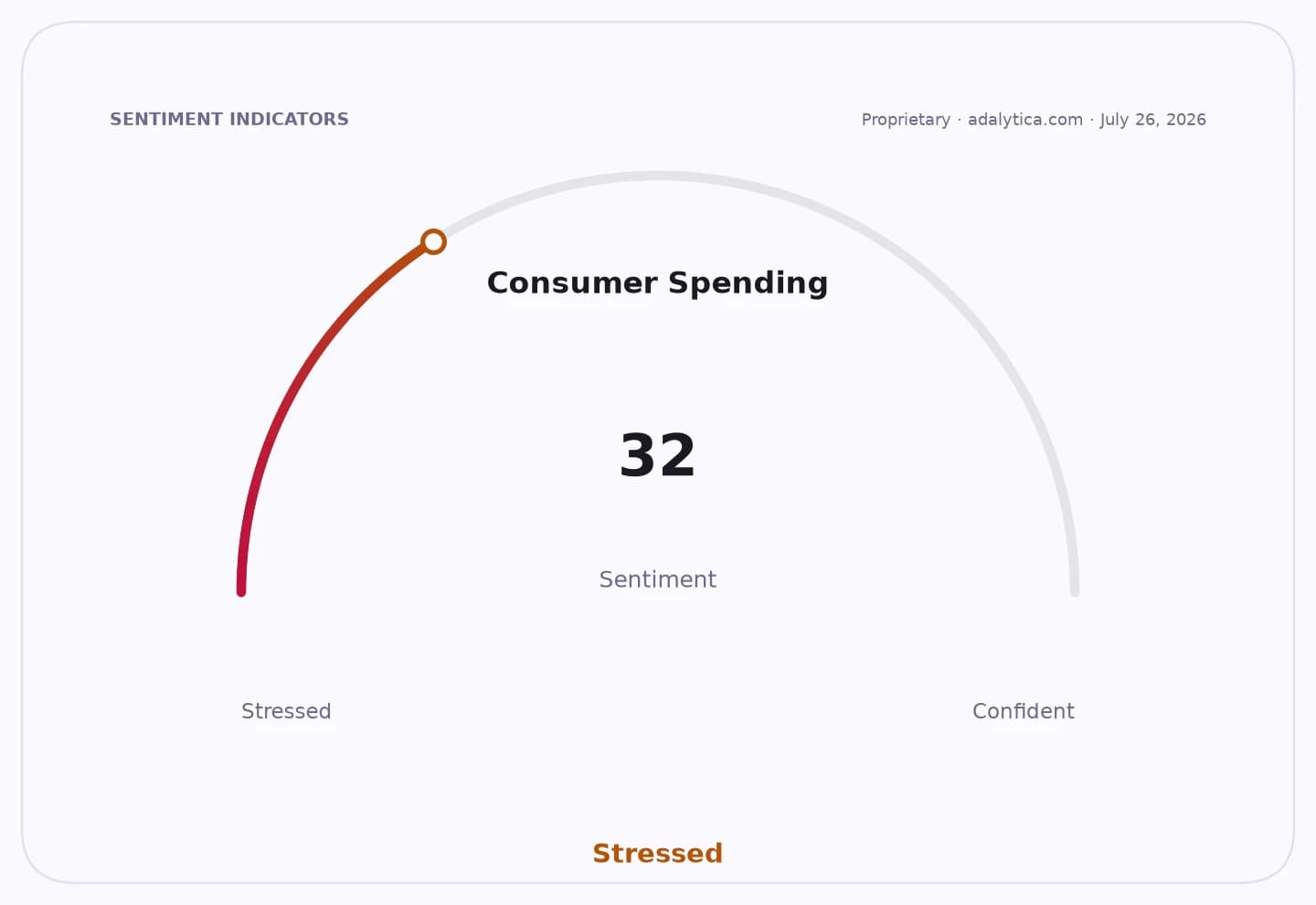
Consumers are watching their budgets more carefully, a shift that matters because it suggests the post-pandemic spending boom is giving way to a more selective buyer just as inflation remains above pre-2020 norms and economic confidence weakens.
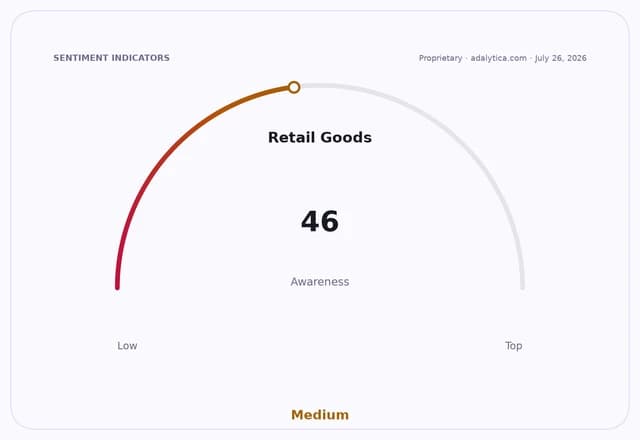
The signal comes from a broad set of consumer gauges and company data that point in the same direction: households are still spending, but with more caution. Adalytica’s Consumer Spending Sentiment snapshot is neutral at 32, with awareness pinned in “Extreme Fear,” while retail-goods spending sentiment is also neutral at 57. Consumer confidence tied to recession risk sits at 50, near the middle, after a sharp 30-day drop in awareness. That combination suggests consumers are not in panic mode, but they are paying closer attention to every purchase.
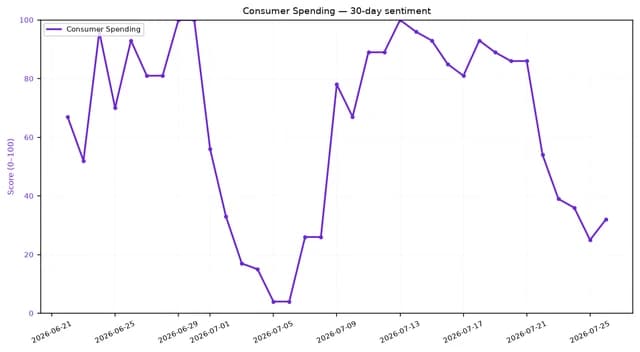
That matters economically because consumer spending remains the backbone of the US economy. The latest context also shows inflation well above the levels that prevailed for most of the past decade. The consumer price index has climbed to 332.568 in June 2026 from 237.336 in early 2016 and 21.48 in 1947, underscoring that prices are still materially higher even if the pace of gains has slowed. Against that backdrop, a more budget-conscious consumer typically means slower discretionary demand, tighter retail margins and more pressure on businesses that depend on easy, frequent spending.
The hard data support that thesis. The RSXFS series, a broad measure of retail and food services sales, is still rising and is forecast to reach 674,837.9 in July from 666,056 in June, but the pace is modest compared with the post-pandemic surge. That is a far cry from the 35.46% jump seen in January 2021 and points instead to a mature cycle where growth depends on household income gains rather than pent-up demand. In other words, consumers are still buying, but they appear to be doing so with a sharper eye on value, timing and necessity.
That shift helps explain why financial technology and payments stocks have been volatile. Fidelity National Information Services has been trading far below its 200-day moving average, with the stock closing at $41.51 on July 24 versus a 200-day average of $52.22. Intuit has also taken a beating, though it has staged a partial rebound from a steep spring selloff. The pattern suggests investors are not just pricing in company-specific risks; they are also reassessing the durability of consumer activity, credit usage and transaction growth.
The bigger read-through is mixed. A more careful consumer can be healthy if it reflects lower inflation and stronger budgeting discipline, especially for firms tied to payments, software and money management. Intuit has said its consumer business benefits from tools that help households optimize cash flow, pay bills and manage savings, which is exactly the kind of behavior that rises when families get more price-sensitive. But the bear case is that “tracking spending more closely” is another way of saying consumers are becoming less willing to absorb price increases, which would hit retailers, branded goods companies and discretionary platforms first.
Investors should watch whether the caution deepens into outright retrenchment. If retail sentiment and confidence keep drifting lower while inflation stays sticky, companies will have less room to push through price hikes and more incentive to compete on promotions, rewards and financing. If, however, spending remains steady even as households become more deliberate, that would favor payment processors, budgeting software and firms that help consumers stretch cash flow rather than those relying on volume growth alone.
| Entity | Gains | Losses |
|---|---|---|
| Budgeting and money-management firms | ▲Higher usage of spend tools | ▼Less discretionary enthusiasm |
| Payment networks and processors | ▲More transaction monitoring | ▼Slower volume growth |
| Retailers and branded goods sellers | ▲Value-focused demand | ▼Pricing power |
| Consumers | ▲Better control of cash flow | ▼Less impulse buying |