Córdoba launches 15,000 youth jobs program
Córdoba Governor Martín Llaryora has launched a new edition of the Programa Primer Paso with 15,000 work opportunities for young people, a move that puts fresh public funding behind hiring at a time when employers are still cautious about adding staff. The plan matters because it targets first-time entrants to the labor market, where weak experience and high unemployment often lock younger workers out of formal jobs.
The program splits the intake evenly between 7,500 paid training placements in private companies and 7,500 formal hires with payroll support from the provincial government. Participants aged 16 to 25 must be unemployed, and the province will co-finance an allowance equal to the minimum wage in the practice-based track while subsidizing employers for 12 months in the direct-hire track.
For Córdoba, the PPP is less a one-off hiring scheme than a labor-market stimulus aimed at widening the pool of registered workers and easing the cost of onboarding junior staff. Llaryora said the program has been adapted over time to match employer demand, while provincial officials framed it as a public-private model designed to turn training into permanent employment.
The economic logic is straightforward: if companies are reluctant to take on inexperienced workers in a slower economy, the state is stepping in to reduce the risk and the cost. That can support household income, formal payroll growth and consumption in a province where labor insertion remains a political and social pressure point.
Investor relevance is indirect but real. More youth employment can help stabilize local demand for retail, services and small industry, while the payroll subsidy may encourage businesses to expand headcount without absorbing the full upfront wage burden. The emphasis on regions covered by the Territorial Equality Program, plus quotas for disabled, transplanted and highly vulnerable applicants, also shows the government is using labor policy as a social redistribution tool.
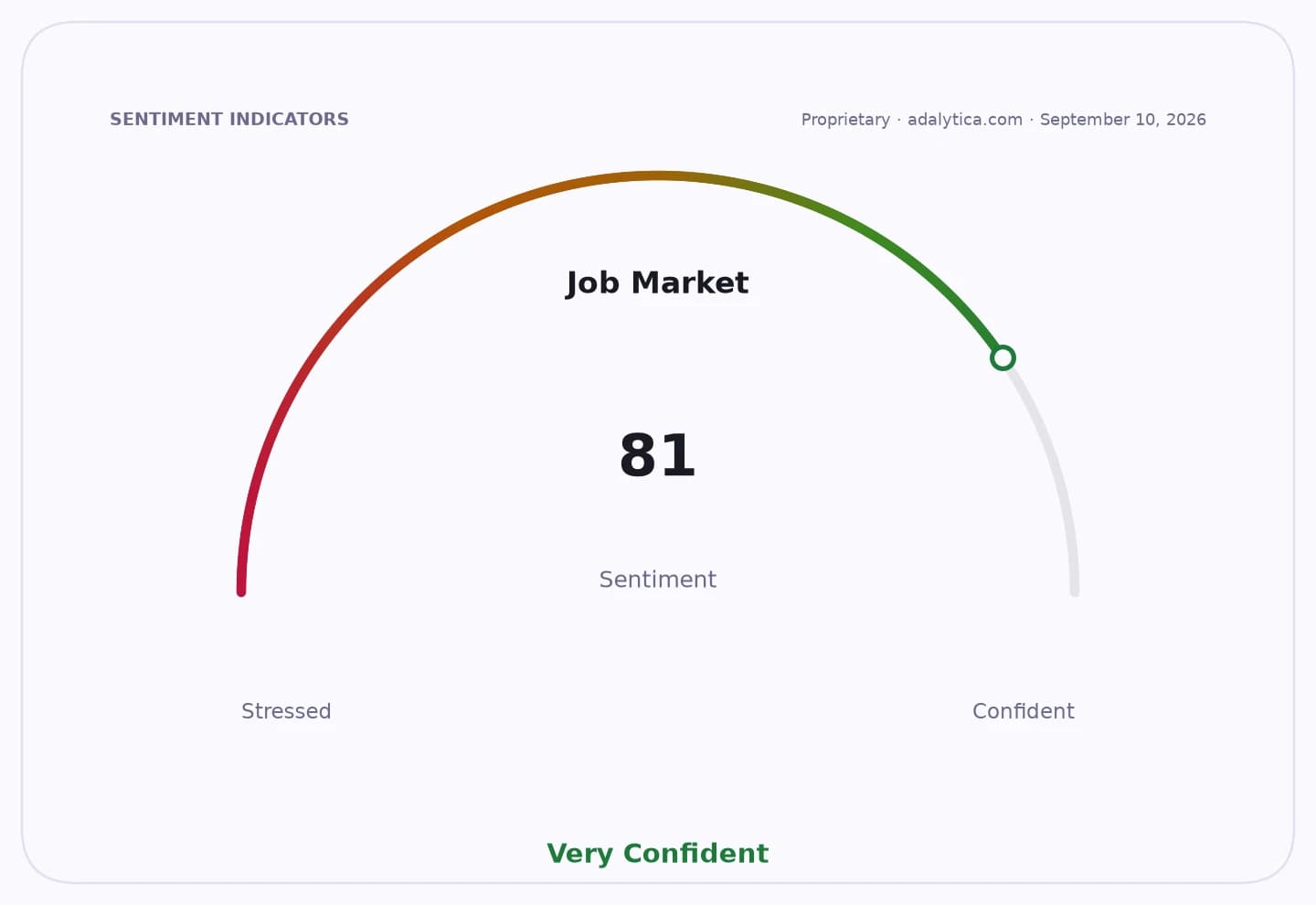
The announcement comes against a broader backdrop of still-elevated concern about jobs, even as some labor indicators improve. Adalytica’s nonfarm payrolls sentiment gauge is at 79, in “Greed,” while its job market sentiment sits at 81, also in “Greed,” underscoring renewed market confidence in hiring conditions. In that context, Córdoba is trying to lock in participation before the next hiring window closes.
The next catalyst is execution: how many firms sign up, how quickly the 15,000 slots are filled and whether the placements convert into longer-term formal jobs will determine whether the PPP is remembered as a labor-policy boost or just another subsidy round.
| Entity | Gains | Losses |
|---|---|---|
| Córdoba provincial government | ▲Political capital, labor insertion | ▼Fiscal outlay |
| Young job seekers | ▲Training and formal job access | ▼Limited spots if oversubscribed |
| Employers | ▲Lower hiring cost, screened candidates | ▼Administrative burden |
| Unassisted competitors | ▲Less pressure from subsidized hires | ▼Weaker access to support |