Corn Rebounds as Sentiment Turns Bullish
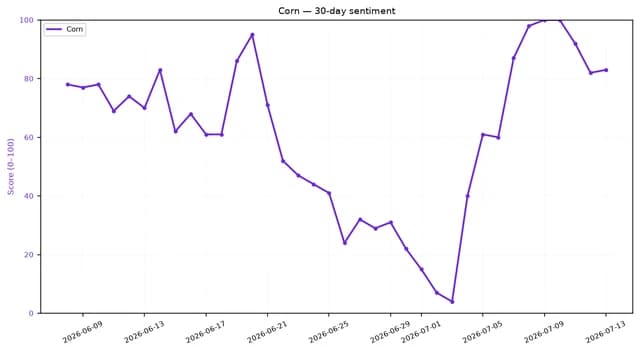
Corn futures are clawing back from a steep mid-June slide, with the July contract closing at 17.55 on July 13 after sinking to 16.47 on June 29, as tighter global grain supply concerns and a rebound in risk appetite helped stabilize the market.
The move matters because corn sits at the center of food inflation, livestock feed costs and biofuel economics. When corn prices swing, the impact quickly filters through farmers’ margins, ethanol producers, food processors and commodity traders, while also feeding into broader inflation expectations.
The rebound comes even as macro signals remain mixed. WTI crude has eased to about $68.69 a barrel in the latest forecast from $69.60 on July 6, while producer prices are still projected to rise, with the U.S. PPI gauge at 292.504 in May and forecast at 298.1505 for June. At the same time, consumer sentiment has weakened sharply, with the University of Michigan index falling to 44.8 in May from 53.3 in March, underscoring a cautious backdrop for demand-sensitive commodities.
Corn’s technical setup has improved alongside the price recovery. The contract’s 50-day moving average stands at 17.70 and the 200-day moving average at 17.80, while RSI readings have climbed back to 63.1 from 37.3 on June 29. The benchmark remains just below the upper Bollinger Band at 17.67, suggesting the recent bounce has narrowed some of the downside pressure that dominated late June.
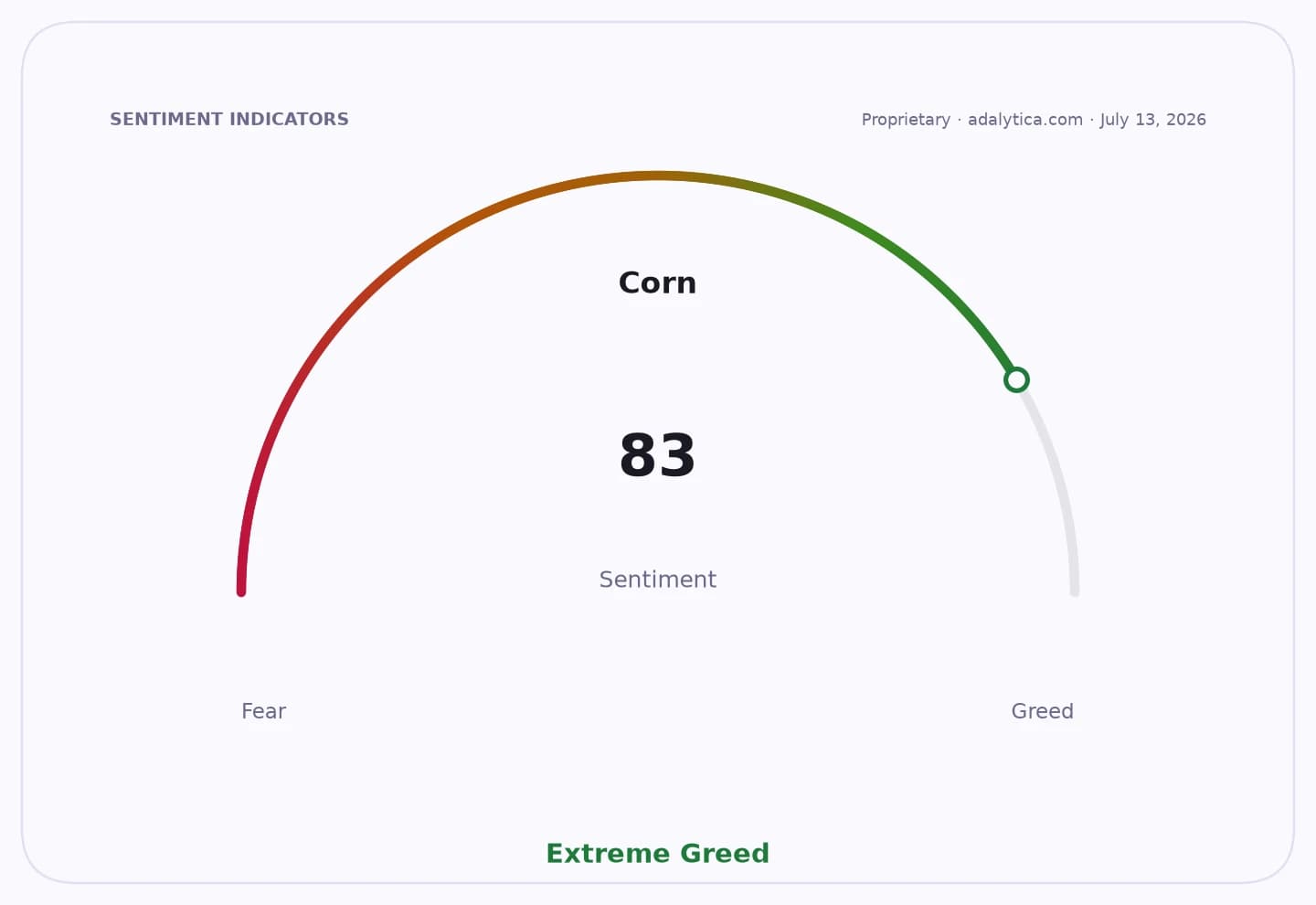
Adalytica’s Corn Fear & Greed Index points to aggressive bullish positioning, with sentiment at 83 and labeled “Greed,” even as awareness remains in “Fear” territory at 25. That mix suggests traders are more willing to chase a rally than to fully embrace a lasting bullish trend, especially after corn’s sharp intramonth whipsaw.
Agribusiness names are already reflecting the shift. Archer-Daniels-Midland closed at 82.04 on July 13, up from 78.98 on July 9, while Bunge advanced to 117.40 from 113.62 over the same period. Both stocks have been volatile this year, but firmer grain prices can support merchandising and trading conditions for processors and exporters, even as it raises input costs for buyers.
The bigger question is whether the rally can extend beyond short-covering. With weather risk still a major variable for Europe and other key growing regions, and with demand indicators not yet strong enough to absorb a sustained price spike, corn traders are likely to stay focused on crop updates, export flow data and any fresh inflation readings that could reshape the market’s next leg.
| Entity | Gains | Losses |
|---|---|---|
| Corn producers | ▲Higher crop prices | ▼Buyers face higher input costs |
| ADM and Bunge | ▲Better trading margins | ▼Feed and processing costs rise |
| Livestock feeders | ▲- | ▼More expensive feed rations |
| Consumers | ▲- | ▼Food inflation risk rises |