Costco, Kroger, Walmart Battle Over Grocery Savings
Consumer-facing grocery “savings” claims are becoming a battleground for loyalty, traffic and margin, and investors should treat that fight as more than retail marketing theater.
The bigger economic story is that grocers are under pressure to justify every dollar of basket savings as households stay price sensitive and app-based shopping becomes the new front door to the grocery aisle. That is forcing Costco Wholesale, Kroger and Walmart into a more aggressive contest over membership value, private-label share and digital engagement — a contest that can reshape who captures recurring spending in a low-growth consumer economy.
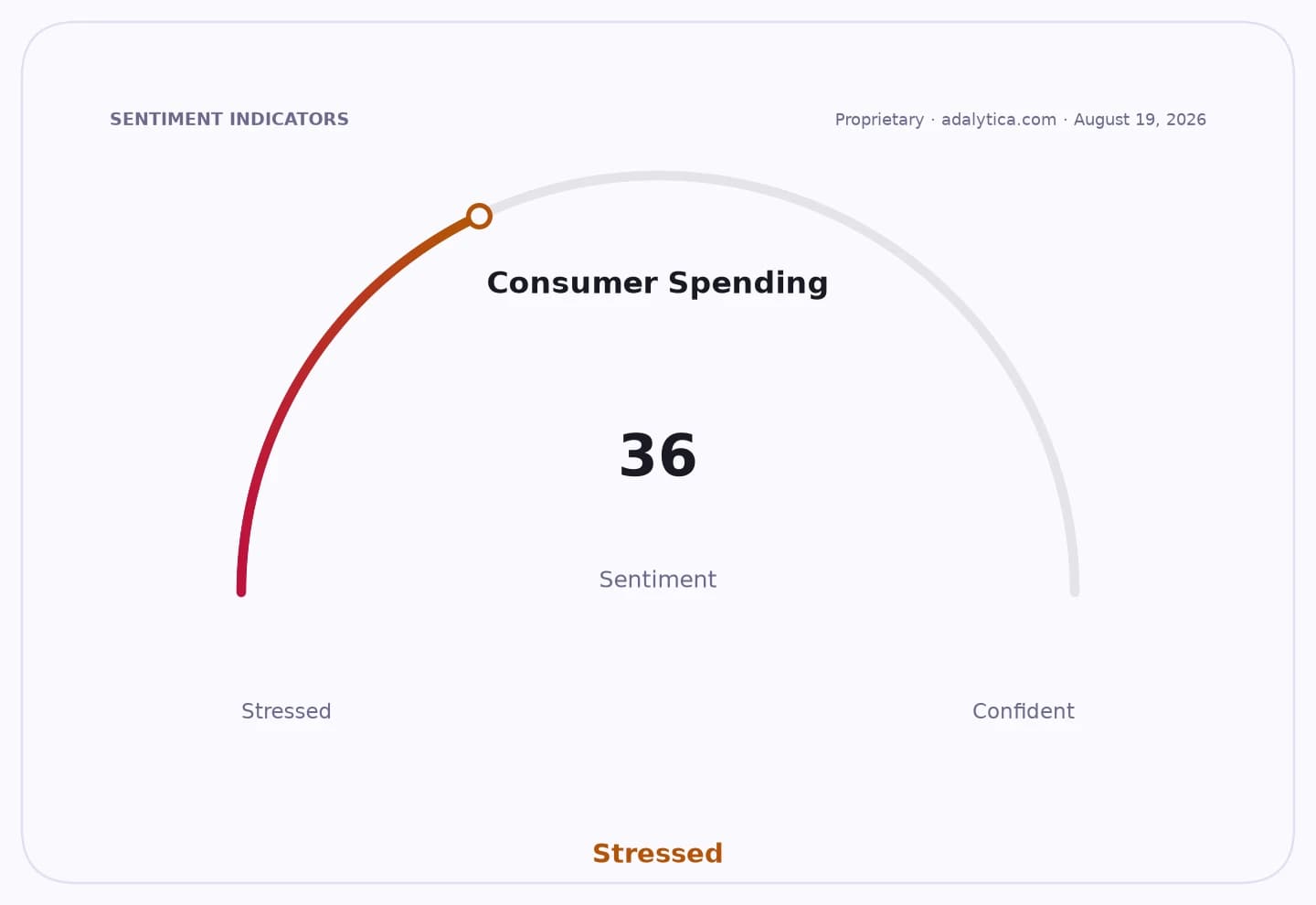
For shoppers, the problem is obvious: an app may say you saved $42, but the real question is whether the price was ever inflated enough to make the discount meaningful. For retailers, the answer matters because perceived savings drive frequency, retention and basket size. In an environment where consumers have become more selective and consumer-spending sentiment from Adalytica.com has fallen to 36, the lowest in weeks and now neutral, price credibility is becoming a competitive moat.
Costco is the purest expression of that strategy. Its business model is built around convincing members that the fee pays for itself through everyday value, and the stock’s recent rebound toward $961.35 after a sharp summer drawdown shows investors still assign a premium to that promise. Even after trading below its 200-day moving average earlier this year, Costco has recovered and sits above both its 50-day and 200-day averages, a sign the market still trusts its pricing power and membership franchise.
That matters because Costco is not just a warehouse chain; it is a toll road on household spending. When consumers trade down, trade up or simply hunt harder for value, Costco can win share without relying on constant promotions. The company’s own filings emphasize “pricing authority,” and that phrase has become increasingly important as grocery shoppers compare app coupons, warehouse savings and loyalty offers across the sector.
Kroger is trying to protect the middle. Its prescription-delivery push, combined with groceries and medications, is another attempt to make the app indispensable rather than merely cheap. Kroger shares, however, have lost altitude, closing at $56.34 on Aug. 18, well below the 200-day moving average around $63.74, suggesting investors remain cautious about the company’s ability to translate digital convenience into sustained margin recovery. The market is saying Kroger’s value proposition is still in transition.
Walmart remains the hardest competitor to ignore. The stock at $115.20 has rebounded from a June slump but still sits below its 200-day average near $118.15, even as the company leans harder on omnichannel retail and membership economics. Its recent fee increase should help future membership income, but a grocery app that prominently displays savings is also a reminder that Walmart is trying to deepen customer stickiness in the same fight for trust and repeat purchases.
The implication for investors is that the winners in grocery are not necessarily the chains with the loudest discounts. The winners are the retailers that can make savings feel permanent, not promotional. That favors operators with scale, private-label strength and loyalty ecosystems, and it helps explain why Costco continues to command a premium despite volatility elsewhere in retail.
The next catalyst is whether app-based shopping, prescriptions and loyalty programs can keep pulling consumers into closed retail ecosystems even as headline food inflation cools. If that happens, the market may eventually value grocery less like a commodity business and more like a subscription-based network with recurring cash flow. I believe that is the real investment opportunity here: own the grocers that can prove value every time a shopper taps “checkout,” and be wary of those whose discounts only look real on the screen.
| Entity | Gains | Losses |
|---|---|---|
| Costco | ▲Member loyalty | ▼Promotional-heavy rivals |
| Kroger | ▲Digital basket share | ▼Margin pressure |
| Walmart | ▲Grocery traffic | ▼Price transparency |
| Consumers | ▲Apparent savings | ▼Potential false discounts |