Costco Stock Falls Near $892 on Valuation Concerns
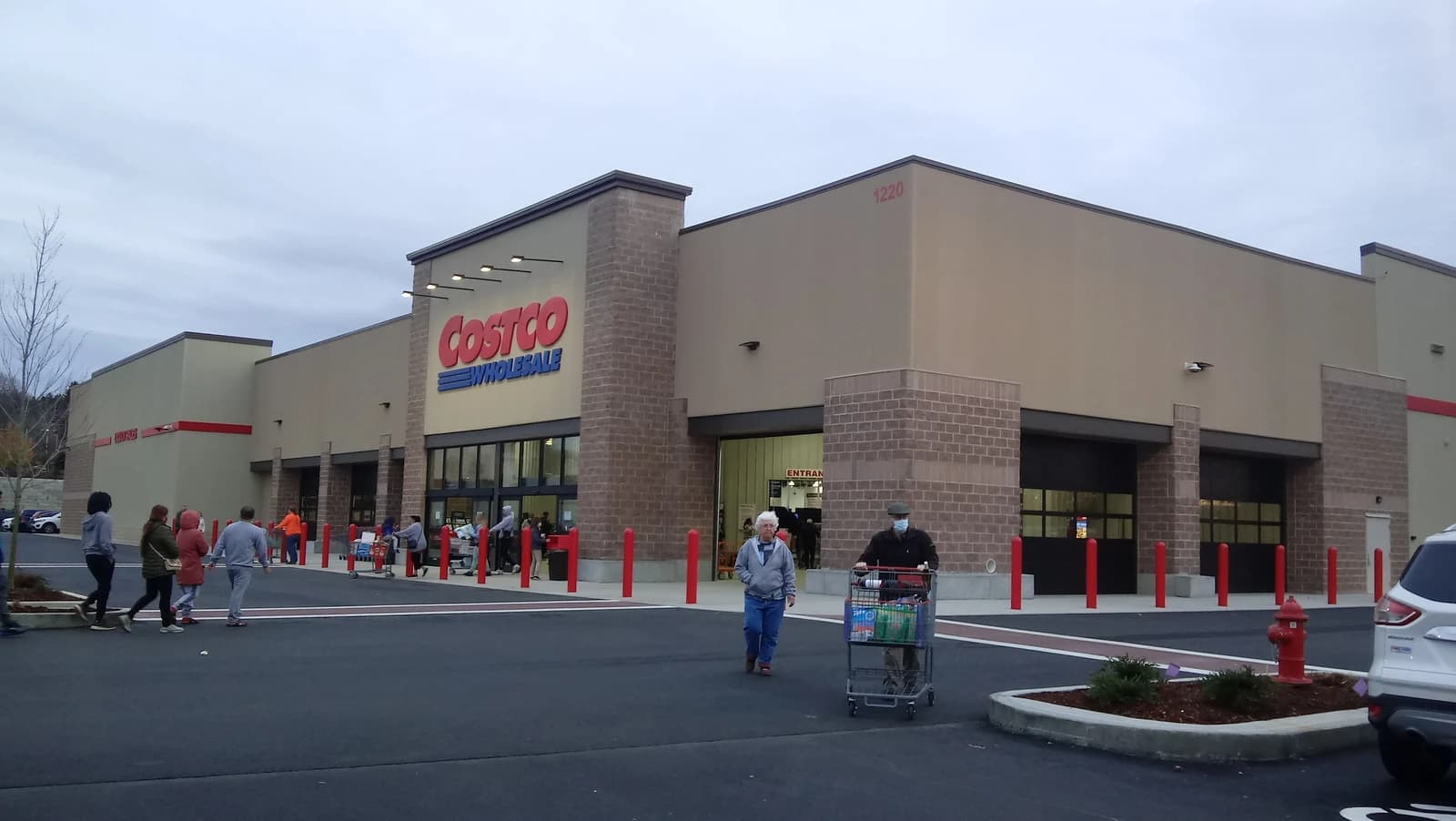
Costco Wholesale shares are back near $892, and the real question for investors is whether the warehouse club’s latest slide is a buying opportunity or a warning that even premium retailers can get too expensive. History suggests the answer may be less dramatic than the chart looks: the stock has often recovered from sharp pullbacks, but it still trades at a valuation that leaves little room for disappointment.
The stock has fallen about 18% from its peak since May, even after a decade-long run that lifted shares 486% and produced a 594% total return with dividends. That keeps Costco in the rare category of retailers that can command an AI-era multiple without actually being an AI name, but it also makes the shares vulnerable whenever growth cools or investors rotate toward cheaper names.
On earnings power, Costco is hardly a weak business. Its fiscal third-quarter net sales reached $69.2 billion, underscoring the scale advantage that comes from its enormous purchasing power and tightly curated product assortment. That model helps protect traffic and pricing even when consumers get more selective, which is why Costco remains one of the market’s most durable consumer names.
But durability is not the same as cheapness. Costco trades at 44.9 times earnings, nearly double the S&P 500’s 23.2 multiple and richer than Nvidia’s 27.8 times earnings despite the chipmaker’s far faster profit growth. In other words, investors are paying up for consistency, not acceleration, and that makes the stock more sensitive to any sign that comps, margins or membership economics are normalizing.
History offers some support for the bulls. The last time Costco traded at roughly this valuation, at the start of 2024, the shares climbed 39% over the following year. That does not guarantee another leg higher, but it shows the market has repeatedly been willing to reward Costco’s quality premium even after stretches of weakness.
The recent price action suggests the market is re-rating the name rather than abandoning it. Costco’s 50-day moving average has been above the shares for most of the latest slide, while its relative strength index has fallen into oversold territory, a sign the selloff has been sharp enough to attract dip buyers if fundamentals hold up. Still, the move comes against a broader backdrop of mixed risk appetite in U.S. equities, with the S&P 500 itself hovering near highs as investors weigh earnings momentum and macro uncertainty.
For investors, the setup is straightforward: Costco remains one of retail’s best businesses, but the stock already prices in a lot of that quality. The next catalyst is likely to be another earnings report or guidance update that either confirms the premium valuation or forces the market to decide that even Costco can be too expensive at 45 times earnings.
| Entity | Gains | Losses |
|---|---|---|
| Costco shareholders | ▲Quality premium if growth holds | ▼Multiple compression if results soften |
| Dip buyers | ▲Chance to buy a strong franchise at a pullback | ▼Risk of paying up before a de-rating |
| Competitors | ▲Less pressure if Costco valuation cools | ▼Share gains if Costco keeps out-executing |
| Value stocks | ▲Relative appeal if investors rotate away from Costco | ▼Less capital if Costco rebound resumes |