Costco stock holds above 200-day average
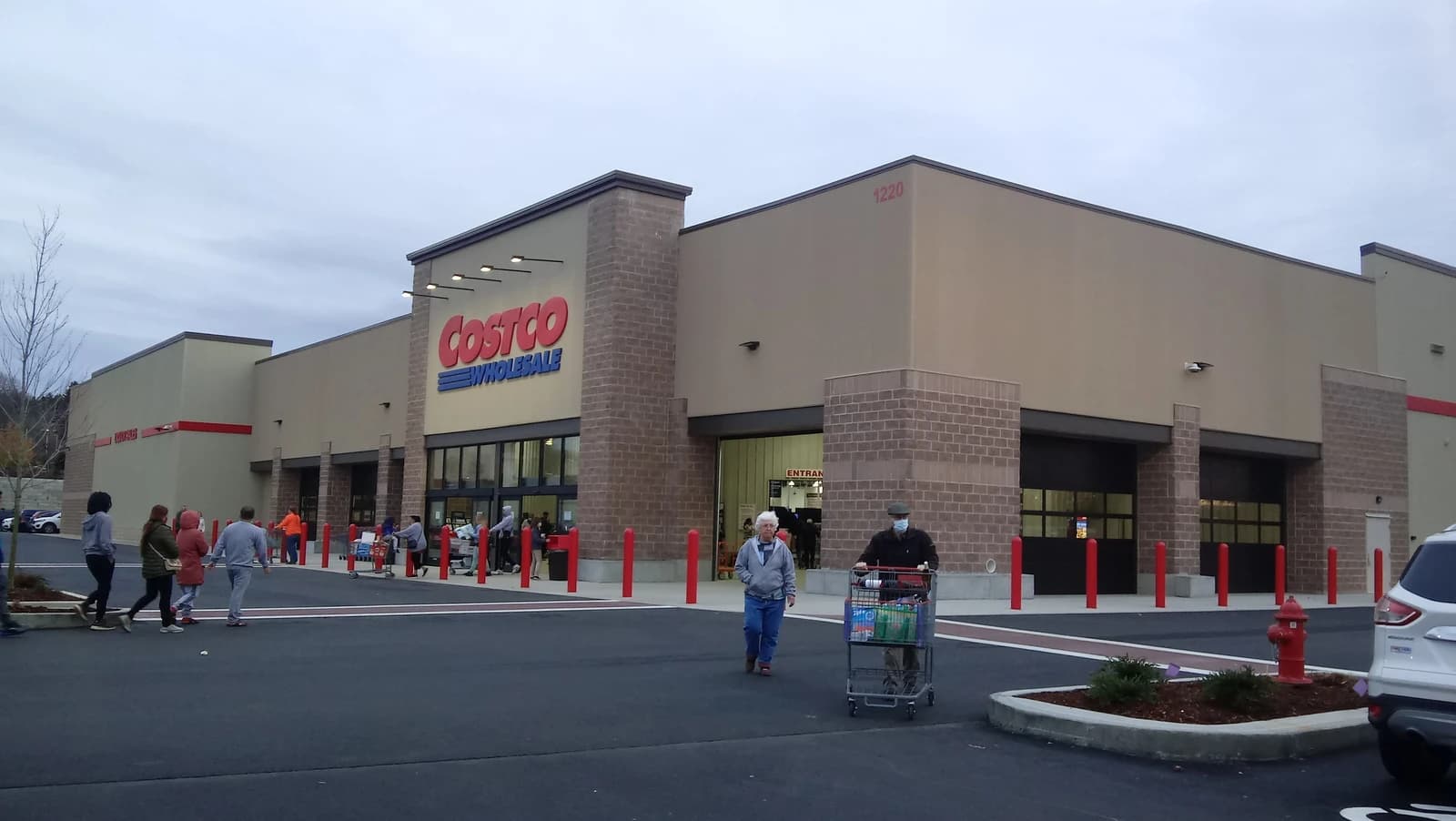
Costco is once again showing that the most valuable moat in retail is not delivery speed or assortment breadth, but the willingness of shoppers to pay for access.
The warehouse club has held up better than many investors expected as a price-conscious consumer has remained willing to trade convenience for value, reinforcing the idea that its membership model can still take share from Walmart’s supercenters and Amazon’s online marketplace even after both rivals spent years investing to dominate the next phase of retail.
The stock’s recent price action reflects that resilience. Costco closed at $904.77 on Sept. 11, off sharply from a May peak above $1,092 but still well above its 200-day moving average, suggesting the market is not treating the selloff as a structural break. The shares have stabilized near the 50-day average around $940, while RSI readings in the low 30s point to an oversold setup rather than a collapse in the underlying business. That matters because Costco’s valuation has long depended on the market’s belief that its earnings compound reliably even when broader consumer sentiment turns choppy.
What makes the story economically important is that Costco is not competing on the same battlefield as Walmart and Amazon. Walmart can point to scale, grocery penetration and a widening omnichannel ecosystem. Amazon can point to selection, convenience and Prime loyalty. But Costco’s model turns the transaction itself into a recurring relationship: shoppers pay upfront, then return to protect the value of the fee. That dynamic tends to support traffic, basket discipline and a loyalty profile that is more durable than a one-time discount.
There is also a macro angle. Consumer-spending sentiment in Adalytica’s gauge sits at extreme greed, while awareness is at extreme fear, an unusual combination that suggests households still want to spend but are highly alert to price. In that environment, warehouse clubs often perform well because they package inflation defense into a premium-feeling experience. A customer can see immediate savings on groceries and household staples without having to chase promotions across multiple channels. That is a competitive advantage when families are still prioritizing value over convenience.
For Walmart, the risk is not that Costco can outspend it on logistics or outscale it in e-commerce. It is that Costco captures the most loyal slice of the value-conscious consumer base — shoppers who are willing to concentrate spending in exchange for lower per-unit prices. Walmart’s latest filings show continued omnichannel strength, but Costco’s appeal is different: it monetizes loyalty through the fee itself, not just through basket expansion. That can make same-store competition more intense in the categories that matter most during periods of household stress.
Amazon faces a different problem. Its retail machine is unmatched in convenience, but grocery and everyday essentials remain harder to defend against a club format that emphasizes bulk buying and visible savings. Amazon’s stock has been more volatile, with recent technicals softer than Costco’s, underscoring how much of its market value rests on long-duration growth expectations rather than near-term defensive demand. If consumers lean harder into value and less into impulse and convenience, Costco’s proposition becomes harder to dismiss.
The bear case is straightforward: Costco’s shares still trade as a premium asset, and the stock can be vulnerable whenever momentum fades or investors rotate toward cheaper defensives. A sustained drop below the 50-day moving average would invite questions about whether the market is re-rating the group after a long period of outperformance. But the bull case is that Costco’s model keeps converting inflation anxiety into membership retention, a far stronger engine than simple traffic growth.
For investors, the key question is not whether Walmart and Amazon remain formidable. They do. It is whether either can fully replicate the combination of pricing authority, fee-based loyalty and habitual shopping that gives Costco its edge. The latest price behavior suggests the market still believes Costco can do what the street thought impossible: win share in retail without having to win on speed, selection or convenience.
| Entity | Gains | Losses |
|---|---|---|
| Costco | ▲Membership loyalty | ▼Momentum traders |
| Walmart | ▲Omnichannel scale | ▼Share in value baskets |
| Amazon | ▲Convenience leadership | ▼Grocery value shoppers |
| Consumers | ▲Lower unit prices | ▼One-stop convenience |