CPI 332.568 Shows Costs Still Rising

American consumers are still paying more for everyday goods and services even as headline inflation cools in some pockets, exposing a disconnect between market optimism and household budgets that could keep pressure on spending, margins and Federal Reserve policy.
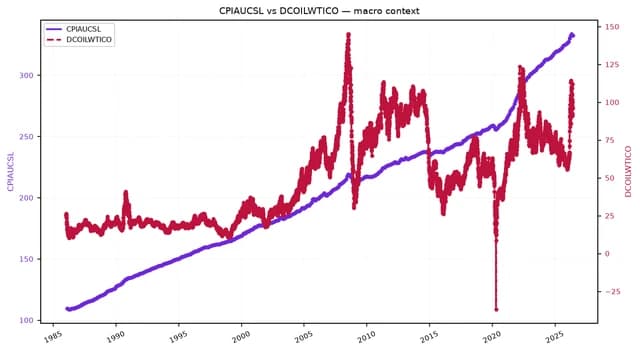
The Consumer Price Index stands at 332.568, up sharply from 286.827 in June and far above the 2021-22 surge that reset price levels across the economy. A July forecast points to another 0.89% increase to 335.512, underscoring that the cost of living is still moving higher even when monthly swings look modest.

That matters because consumers do not buy the market narrative; they buy groceries, fuel and services. Core producer prices have climbed to 286.827 on the latest reading, with a July forecast for 295.8433, showing that inflationary pressure is still filtering through the supply chain and could keep retail prices sticky.
Crude oil has been volatile, with West Texas Intermediate at $84.25 on July 27 before a forecast rebound to $88.704. Energy volatility feeds directly into transportation and household costs, while also complicating the inflation outlook for policymakers and investors trying to price the next move in rates.
The split between markets and Main Street is visible in sector trading. Consumer discretionary ETF XLY is holding near 118.29, above its 50-day moving average of 116.0 and just above its 200-day average of 116.72, after rebounding from a March low of 107.31. That suggests investors are still willing to pay for growth exposure even though consumer purchasing power remains under strain.
Defensive buying is also visible. Consumer staples ETF XLP has climbed to 85.37, above both its 50-day average of 84.03 and 200-day average of 81.56, while energy ETF XLE remains elevated at 58.52 versus a 200-day average of 52.2. The move signals investors are still favoring pricing power and cash flow over pure consumer demand sensitivity.
Adalytica’s CPI sentiment gauge sits at 84, in “Greed,” with awareness at 100 and long-term inflation expectations sentiment at 54, neutral. Confidence in the Fed’s 2% inflation target has also risen to 82, suggesting markets are growing more comfortable with the inflation story even as the data and household experience remain less reassuring.
For investors, the risk is that this disconnect lasts long enough to squeeze discretionary demand, support defensive sectors and delay any broad consumer-led earnings recovery. The next catalyst is the next inflation release and any fresh guidance from retailers, which will show whether shoppers are finally trading down or simply absorbing higher prices.
| Entity | Gains | Losses |
|---|---|---|
| Staples companies | ▲Pricing power | ▼Volume growth |
| Energy producers | ▲Higher realized prices | ▼Fuel-demand softness |
| Consumer discretionary retailers | ▲Rebound in XLY sentiment | ▼Cost-sensitive shoppers |
| Households | ▲None | ▼Higher living costs |