Credit holidays vs restructuring for distressed borrowers
Credit holidays are easier to sell to distressed borrowers, but the latest market and rate backdrop suggests debt restructuring is increasingly the more economical choice when households and lenders are trying to preserve value.
That matters because borrowing costs remain elevated enough to keep pressure on consumers and lenders alike. The U.S. two-year Treasury yield is around 4.56% and the 10-year is near 4.95%, levels that keep refinancing expensive and make temporary payment pauses less attractive if the underlying debt load is already too heavy.
For banks, the difference is about cash flow and loss recognition. A credit holiday can buy time, but it also delays repayment and can increase the chance that balances snowball once deferred payments resume. A restructuring, by contrast, can cut monthly obligations, extend maturities or reduce principal, and often gives lenders a cleaner path to working out problem loans before delinquencies worsen.
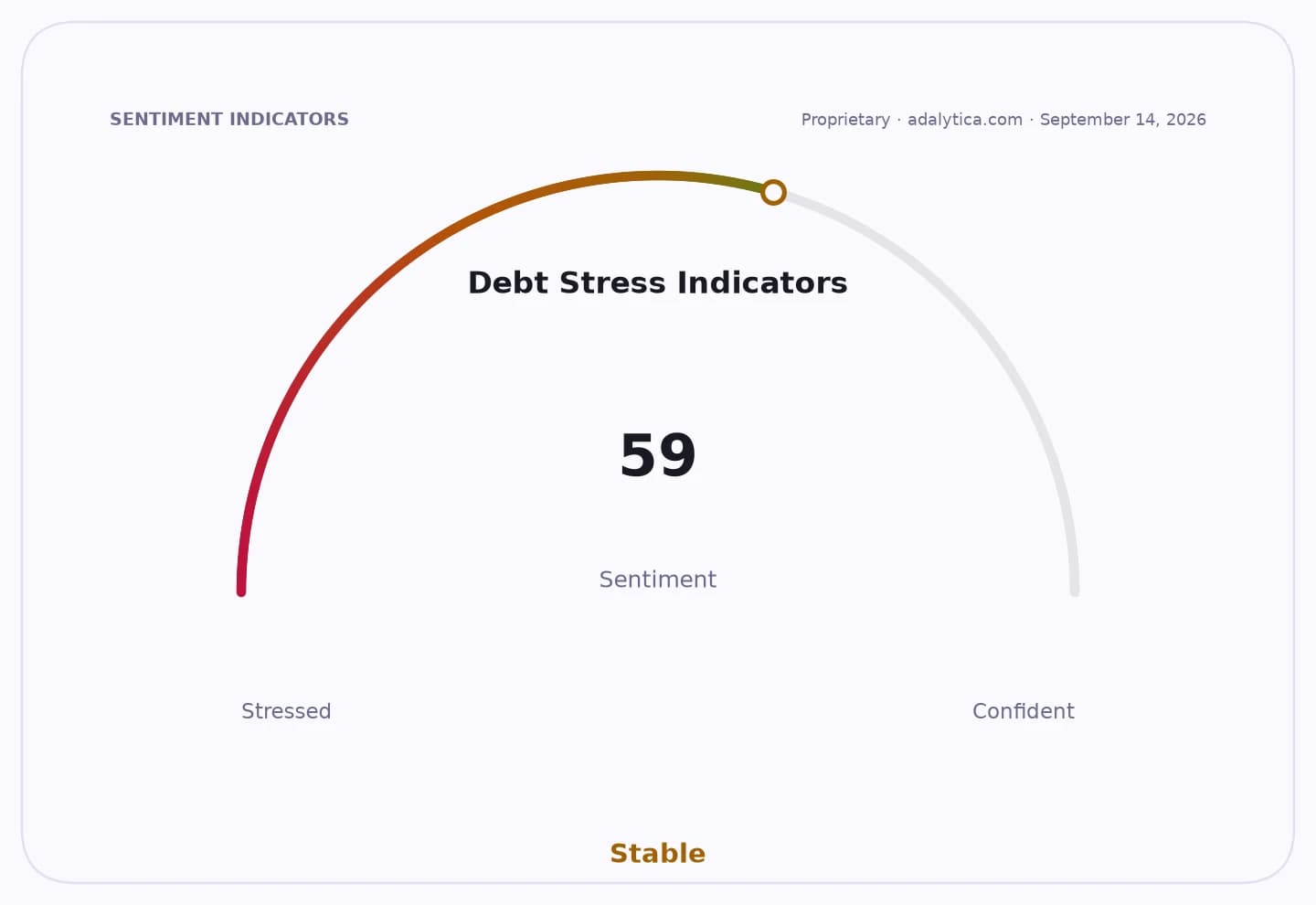
That distinction is becoming more relevant as credit stress stays contained but not absent. The high-yield credit spread is around 2.7 percentage points, below its spring peak but still wide enough to show investors are not pricing in easy credit conditions. Adalytica’s Household Debt Stress Sentiment sits at 59, in neutral territory, while awareness remains in “fear,” underscoring that borrowers are still under strain even if markets are calmer than earlier in the year.
The issue matters for bank earnings because it affects provisions, charge-offs and fee income. JPMorgan’s shares are trading around $352.89, above both the 50-day and 200-day moving averages, while Bank of America is near $62.22 and Capital One around $208.31. All three are well above their longer-term technical trend lines, but recent price action shows investors are still watching credit quality closely as rates stay restrictive.
For lenders, the more profitable path depends on the borrower’s balance sheet. A short holiday can make sense for a temporary shock, but where debt is structurally unsustainable, restructuring tends to protect recoveries better over time. That is why the debate is less about compassion than economics: the cheapest fix for the borrower is not always the one that preserves the most value for the bank.
The next catalyst is whether higher-for-longer rates push more consumers from forbearance into formal workouts, which would feed into bank loss provisions and help determine how much credit pain is still ahead.
| Entity | Gains | Losses |
|---|---|---|
| Distressed borrowers | ▲Lower payments via restructuring | ▼Higher balances after credit holidays |
| Banks | ▲Better recoveries from workouts | ▼Delayed losses from payment deferrals |
| JPMorgan, Bank of America, Capital One | ▲Cleaner credit resolution | ▼Rising provision risk if stress spreads |
| Credit investors | ▲Earlier default pricing clarity | ▼Slower resolution from temporary holidays |