Credit Stress in 2026 Hits Capital One, Synchrony
Bad credit is turning into a bigger financial problem in 2026 because borrowing costs remain too high for too long, and lenders are getting more selective just as households and smaller businesses need credit the most.
That combination is starting to reshape the credit market. The 2-year Treasury yield is still around 4.23%, while the 10-year sits near 4.67%, a level that keeps benchmark funding costs elevated even after the recent pullback in rates. High-yield credit spreads, at roughly 2.71 percentage points over Treasuries, are narrow by stress standards but still reflect a market that is not pricing in any easy turn in credit conditions. For borrowers with weaker files, the problem is not just the headline rate — it is the higher all-in cost of refinancing, the tighter underwriting, and the shrinking room for error.
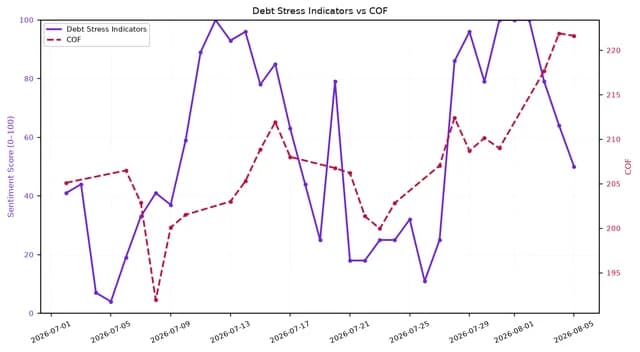
The pressure is showing up in consumer finance names that live closest to the edge of borrower quality. Capital One’s stock has climbed to about $221.63, but its technical profile still reflects a choppy recovery, with the shares only modestly above the 200-day moving average and trading near the upper end of their recent Bollinger Band range. Synchrony Financial has rallied to about $79.25, yet it too remains in a market that is rewarding resilience rather than assuming broad credit improvement. The message is clear: investors are not paying for a boom in lending. They are rewarding lenders that can defend margins and avoid a jump in charge-offs.
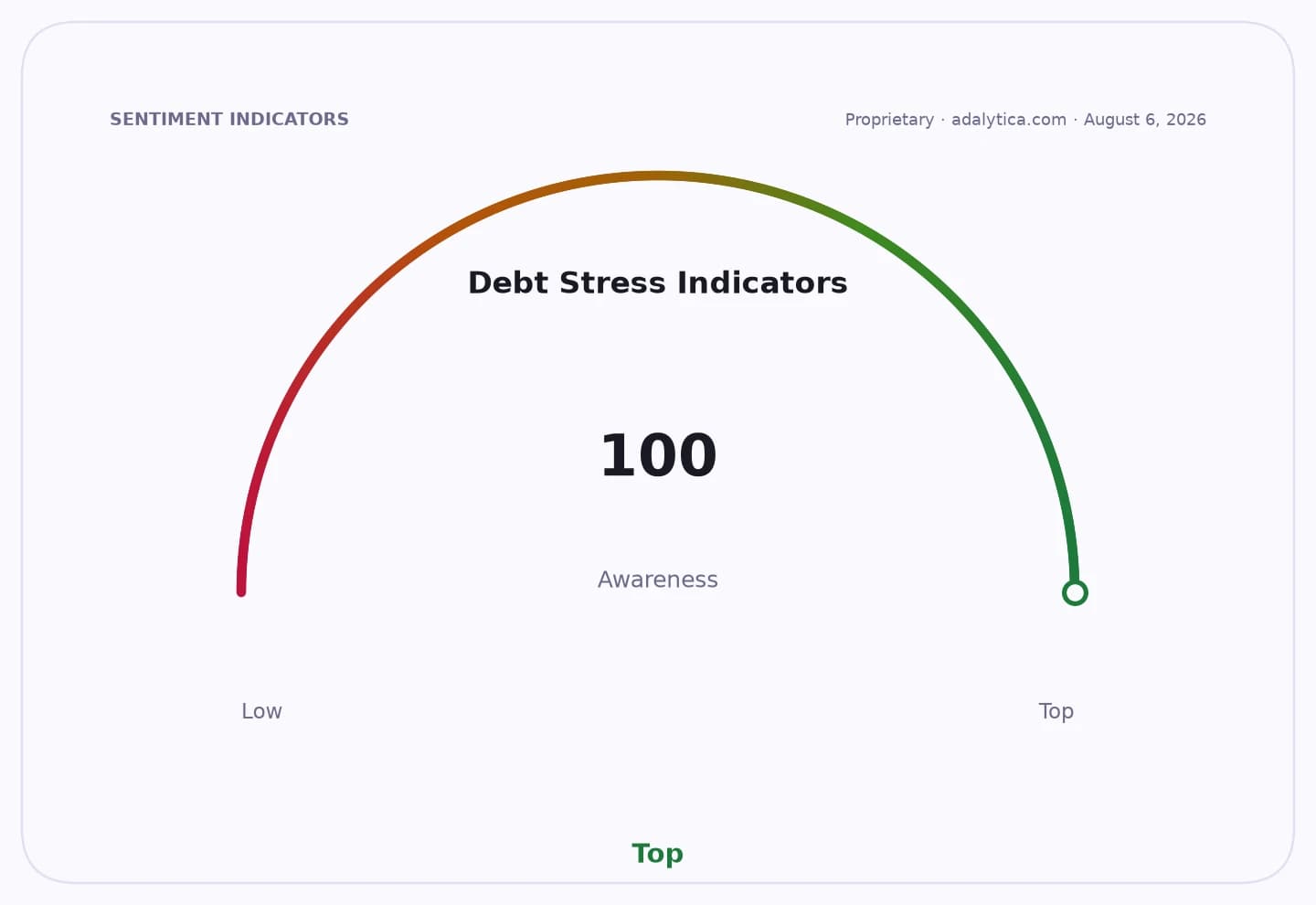
The macro backdrop makes that caution rational. Adalytica’s Household Debt Stress sentiment gauge is neutral at 50, but its recent swings show how quickly confidence can sour when credit conditions tighten. Nonfarm payroll sentiment has also turned more fragile, a reminder that borrowers do not need a recession to fall behind — they only need slower income growth, sticky rates and fewer refinancing options. The broader market may still be in an extreme-greed posture, but credit is a different story. Credit always turns before the macro data does.
That is why the real investment story is not just that bad credit is worsening. It is that the market is underestimating how long this phase can last. When rates remain elevated, lenders get choosier, not braver. That favors firms with strong underwriting, diversified funding and lower exposure to marginal borrowers, while it punishes players that depend on fee growth from easy credit or on constant refinance activity. The winners are likely to be the banks and finance companies that can price risk properly. The losers are the borrowers trapped in the middle and the lenders that chased volume during cheaper-money years.
Capital One and Synchrony both suggest the sector is trying to price a controlled landing rather than a credit event. But the deeper opportunity may be in the second-order winners: servicers, credit monitors, debt workout platforms, and lenders with prime-heavy books that can take share as weaker competitors pull back. If rates stay this high into late 2026, bad credit stops being a niche problem and becomes a structural drag on consumption, auto finance, card spending and small-business formation.
For investors, the takeaway is simple: don’t chase lenders that need easier money to grow. Own the names that benefit when credit gets harder, underwriting tightens and capital becomes scarce.
| Entity | Gains | Losses |
|---|---|---|
| Prime lenders | ▲Better pricing power | ▼Slower loan growth |
| Subprime borrowers | ▲None | ▼Higher borrowing costs |
| COF, SYF | ▲Resilience, share gains | ▼Credit volatility |
| Credit work-out firms | ▲More demand | ▼None |