Crypto Gambling Boosts Bitcoin and Stablecoin Rails
Bitcoin’s renewed bid above its 50-day moving average is making crypto gambling more investable — and more controversial — as casinos lean harder on BTC and USDT to move money fast across borders.
That matters because the real story is not a niche payment option at Pinco Casino. It is the growing normalization of digital assets as settlement rails for online wagering, a use case that generates transaction volume even when the broader market is uneven. With Bitcoin trading around $65,900 and holding above its 50-day average near $63,076, the market is signaling that crypto still has liquidity, optionality and utility well beyond speculation. USDT, meanwhile, remains pegged at $1, but its sheer turnover underscores why stablecoins are the workhorse of fast, frictionless payments in gambling and other cross-border services.
For investors, that creates a second-order trade. The headline risk sits with gambling operators and platforms that may attract regulators, especially as casino operators face heightened scrutiny over fraud, illicit finance and scam activity. The upside sits with the infrastructure layer: exchanges, custody providers, blockchain networks, payment gateways and compliance tools that benefit whenever BTC and USDT become accepted rails for real economic activity. In other words, the market underestimates how much “payments” demand can cushion crypto infrastructure even when token prices are volatile.
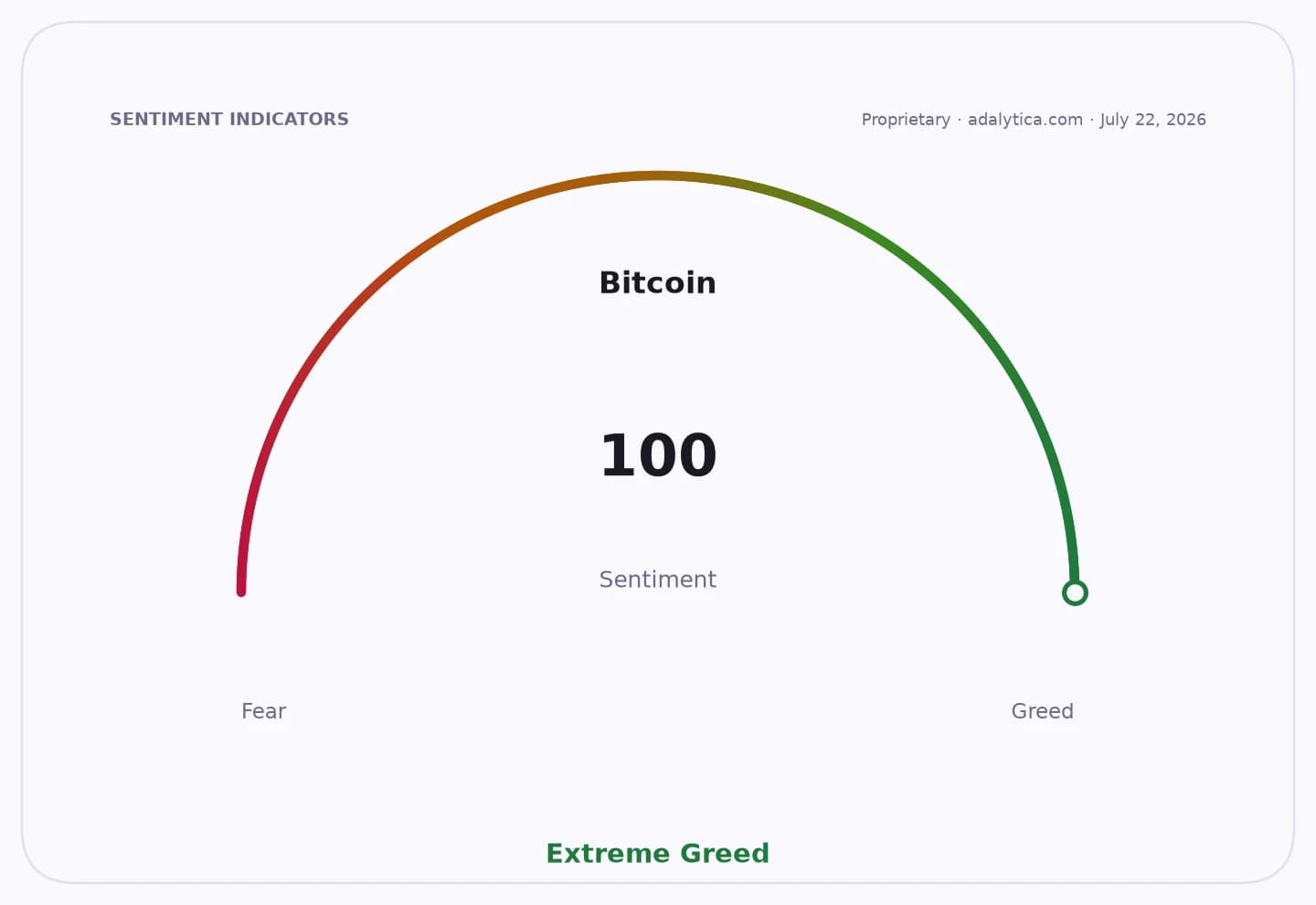
Technical indicators point to a market that still has momentum but not complacency. Bitcoin’s RSI at 66.2 is warm, not euphoric, while its MACD remains positive, suggesting the recent rebound has legs after the drawdown earlier this year. The broader message from Adalytica’s Bitcoin Fear & Greed Index is even more striking: sentiment reads at 100, or extreme greed, while awareness is just 6, implying the rally is being driven more by price action than broad conviction. That kind of setup often extends the move, but it also raises the odds of sharp rotations into the picks-and-shovels names if investors want exposure without owning the coin outright.
USDT’s story is different. Trade-signal readings from Adalytica show extreme fear and collapsing awareness even as the token remains the most obvious settlement tool for high-frequency online payments. That disconnect is exactly where opportunity lives. The market may be dismissing stablecoins because they lack the drama of Bitcoin, but stablecoins are the plumbing of the digital casino economy. Every wager funded in USDT is a reminder that the most valuable crypto businesses may be the ones collecting tolls on transactions, not chasing token headlines.
Century Casinos, whose shares have weakened sharply over the past year, illustrates the asymmetry. Physical casino operators can benefit if crypto payments expand liquidity and customer reach, but they also carry the regulatory and reputational burden. Pure-play online operators and crypto-native payment rails are better positioned to capture the growth without the same balance-sheet and compliance drag. That is why I believe the smarter trade is not the casino itself, but the ecosystem around it: Bitcoin as a speculative asset with institutional appeal, USDT as transactional grease, and the infrastructure names that monetize both.
The next catalyst will be regulatory clarity. If authorities tolerate or standardize crypto payments in gambling, adoption can scale quickly across jurisdictions where card networks, banks or local payment systems are slower and more expensive. If enforcement tightens, volume may shift further toward compliant platforms and stronger stablecoin rails. Either way, the direction of travel is clear: crypto is moving from narrative to utility, and investors who position early in the infrastructure layer have the best chance of capturing the upside.
| Entity | Gains | Losses |
|---|---|---|
| Bitcoin holders | ▲More utility demand | ▼Regulatory headline risk |
| USDT issuers/rails | ▲Payment volume growth | ▼Scrutiny on illicit use |
| Crypto payment infrastructure | ▲Transaction tolls | ▼Margin pressure from compliance |
| Casino operators | ▲Faster deposits, wider reach | ▼Oversight and reputational risk |