The crypto industry has poured more than $200 million into federal political spending this election cycle as it tries to secure a friendlier Congress and revive stalled legislation that would give digital assets a clearer US regulatory framework.
Crypto industry spends $200M on federal elections
That spending matters because the industry’s political campaign is no longer just about electing sympathetic lawmakers; it is about shaping the rules that will determine whether crypto becomes a more integrated part of the US financial system or remains stuck in a fragmented, litigation-heavy environment. For exchanges, token issuers and stablecoin firms, the difference is not academic: clearer market-structure rules could reduce legal overhang, attract institutional capital and lower the cost of doing business. For investors, the legislative outcome is likely to influence valuations across the sector, from Coinbase to Bitcoin proxies such as MicroStrategy, by affecting the odds of regulatory clarity and future adoption.
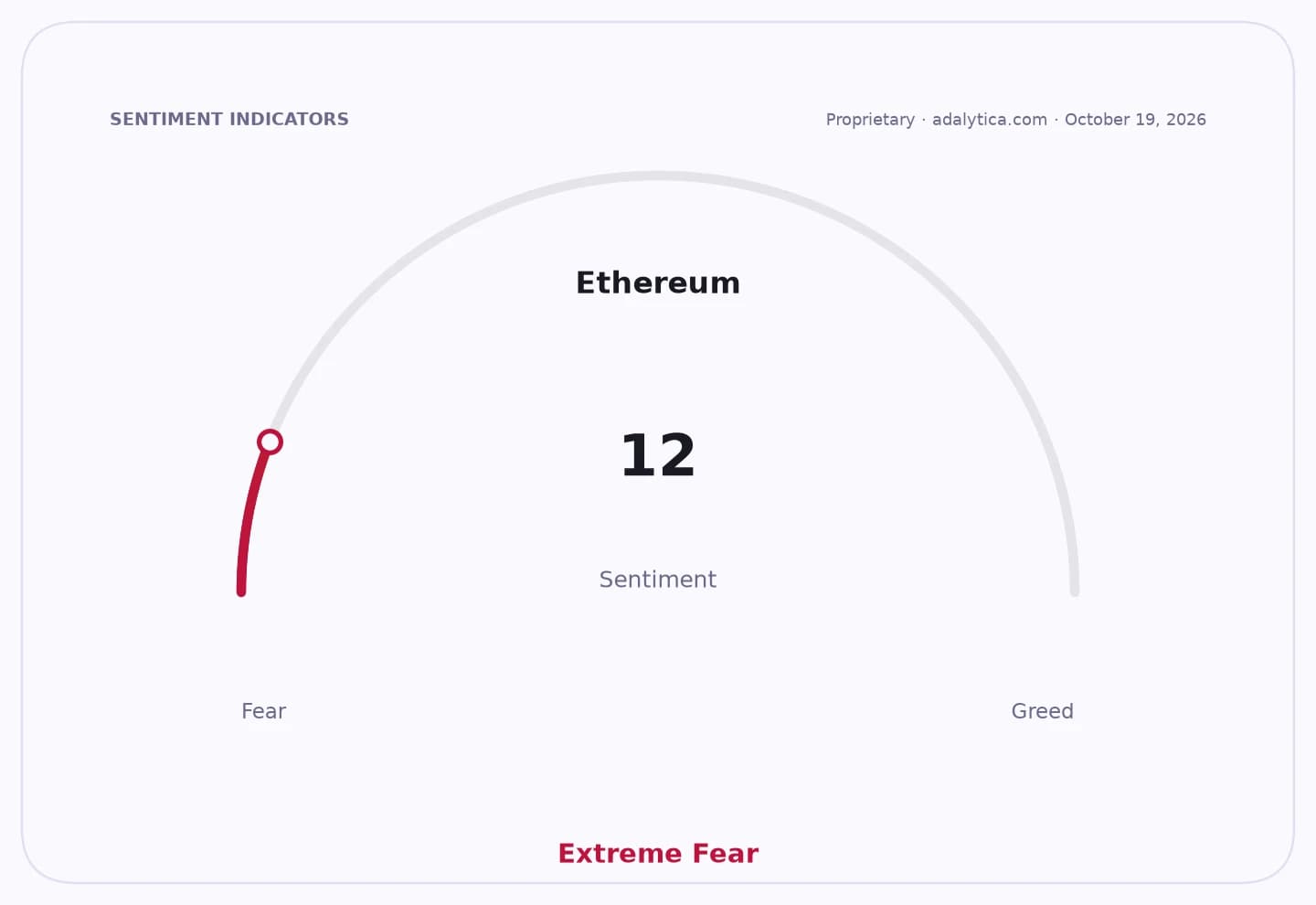
Sentiment Indicators
According to Public Citizen, crypto-backed organisations have outspent online betting and data centre development groups, underscoring the scale of the sector’s lobbying push. The industry is trying to repeat its 2024 playbook, when super PACs spent $250 million to help elect pro-crypto lawmakers. Fairshake and affiliated groups are backing 33 House candidates, including 19 Republicans and 14 Democrats, while directing at least $1 million apiece to six incumbents in both parties. That bipartisan approach reflects the industry’s effort to turn crypto into a mainstream policy issue rather than a partisan one.
Coinbase has emerged as one of the biggest donors, contributing $79 million to federal races in 2024 and another $25 million to Fairshake’s midterm efforts in 2025. Ripple added $25 million as well. Their argument is straightforward: the industry has already delivered results, pointing to the GENIUS Act, signed in July, which created a federal framework for stablecoins. That law gives crypto advocates a concrete example of how political spending can translate into policy wins.
But the campaign has also run into resistance. The bipartisan Clarity Act, intended to establish market-structure rules for digital assets, stalled in the Senate in September amid Democratic objections to provisions that could prevent government officials from profiting from crypto ventures. If the bill fails by year-end, Congress would have to restart the process, delaying the regulatory certainty that many crypto firms have spent years seeking.
The political stakes are especially high in Ohio, where Fairshake has spent heavily against Democrat Sherrod Brown, a long-time crypto critic, in his race against Republican Jon Husted. Fairshake said it had already spent $55 million opposing Brown this cycle after spending about $40 million to help unseat him in 2024. That makes the race a test case for whether the sector’s money can still shift outcomes in tightly contested Senate battles.
For markets, the immediate implication is that Washington remains a key catalyst for crypto assets and crypto-linked equities. Bitcoin has been volatile, and Coinbase and MicroStrategy have also seen sharp swings, but the bigger issue is whether a pro-crypto Congress can remove a structural discount that has weighed on the sector for years. Bullish investors see the spending as evidence that the industry is building durable political capital. Bears argue that the size of the outlays also reflects how far crypto still has to go before it wins broad, stable acceptance in Washington.
The next test will be whether the industry’s spending converts into enough congressional support to move the Clarity Act or revive similar legislation before year-end. If it does, the sector could enter 2026 with a more predictable policy backdrop. If it does not, crypto firms may end up with a more expensive political operation but the same regulatory uncertainty.
| Entity | Gains | Losses |
|---|---|---|
| Crypto industry | ▲More political influence | ▼Cash outlays, no certainty |
| Coinbase and Ripple | ▲Better odds of favorable rules | ▼Policy risk if bills stall |
| Pro-crypto lawmakers | ▲Campaign support | ▼Anti-crypto opponents |
| Crypto skeptics | ▲— | ▼Weaker influence in Congress |