Crypto Policy Debate Keeps Bitcoin Volatile
A push by a top crypto official to broaden the review of digital assets, as he meets Islamic scholar Taqi Usmani, points to a widening policy debate that could shape how regulators, investors and issuers treat the sector in the months ahead.
The significance is less about the meeting itself than what it suggests: digital assets are moving further into the mainstream regulatory and legal conversation. For markets, that matters because broader review can lead either to clearer rules that support adoption or to tighter constraints that slow it. Either way, the current ambiguity around crypto’s status is becoming harder to sustain.
That matters economically because regulation is now one of the biggest determinants of capital flows into digital assets. Clearer frameworks can lower compliance costs, improve institutional participation and make it easier for banks, funds and payment firms to engage. By contrast, fragmented or restrictive rules can keep liquidity shallow and limit the sector’s role in payments, savings and cross-border transfers, especially in emerging markets where policymakers are weighing innovation against financial stability.
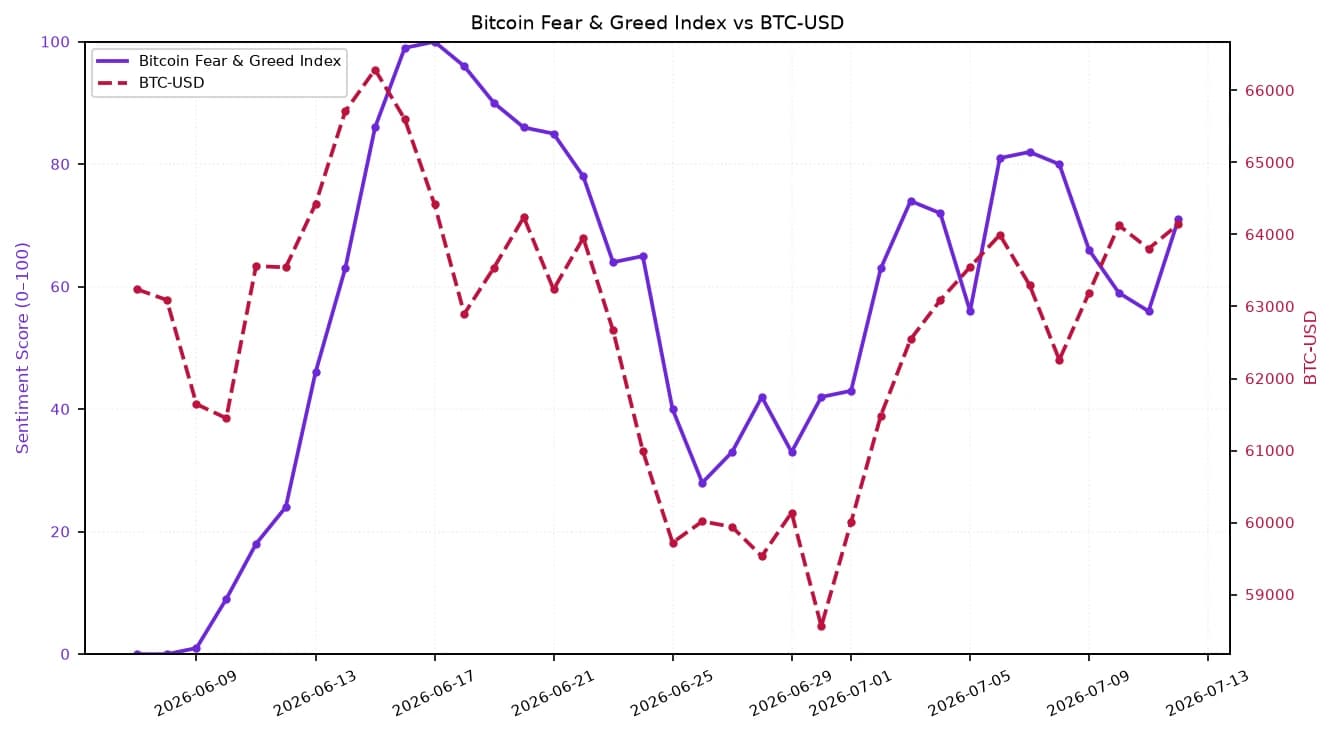
The latest price action in bitcoin shows how sensitive the market remains to that policy backdrop. Bitcoin traded around $64,142 on July 12, holding above the prior day’s close but still below its 50-day moving average of about $64,884 and far under the 200-day average near $73,867. The token’s RSI reading of 69.4 suggests momentum has improved, while the MACD remains negative but is narrowing, a sign that selling pressure has eased. That leaves bitcoin in a technically constructive but still fragile position, with traders watching whether policy headlines can translate into sustained demand.
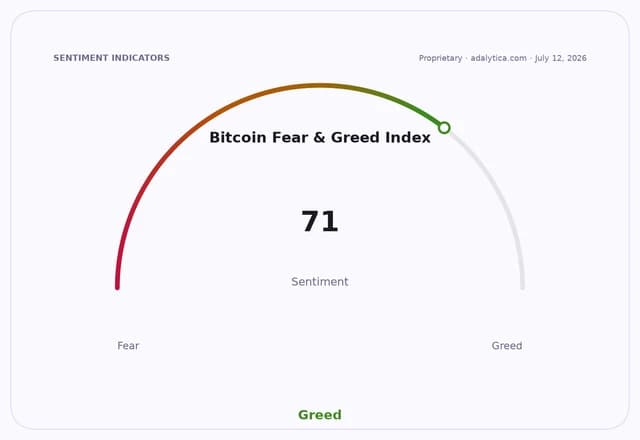
The rally in sentiment is not yet matched by broader conviction. Adalytica’s Bitcoin Fear & Greed Index showed sentiment at 71, or Greed, while awareness remained at 11, still in Extreme Fear. That split suggests traders are becoming more willing to take risk, but the market is not fully convinced that the policy environment has turned decisively supportive. In practice, that means headlines around regulation may trigger sharper swings than usual.
Coinbase and MicroStrategy reflect the same tension. Coinbase closed at $159.07 on July 10, well below its 50-day average of $175.13 and 200-day average of $226.68, even as momentum indicators improved modestly from oversold levels. MicroStrategy, a proxy for leveraged bitcoin exposure, ended at $94.64, also far below its 50-day average of $137.47 and 200-day average of $175.19. Both remain vulnerable to any disappointment in bitcoin’s price or in the regulatory narrative that underpins institutional interest.
For investors, the key question is whether a broader review of digital assets leads to legitimacy or limitation. A constructive outcome would support exchanges, custodians, payments firms and asset managers that benefit from clearer rules and wider participation. A negative outcome would reinforce the view that crypto remains a policy battleground rather than a mature asset class, keeping valuations under pressure and reinforcing the premium on firms with stronger balance sheets and diversified revenue.
The broader backdrop is one of regulators moving from observation to action. In several markets, authorities are tightening oversight even as they test frameworks that could accommodate digital finance. That creates a two-sided setup for crypto assets: the same policy process that can unlock adoption can also impose new costs, new disclosures and new legal risks.
For now, the market is treating the regulatory discussion as a potential catalyst rather than a solved issue. The next move will depend on whether this broader review produces a practical framework for digital assets or simply adds another layer of scrutiny. Investors should expect continued volatility until the policy direction becomes clearer.
| Entity | Gains | Losses |
|---|---|---|
| Crypto issuers | ▲Broader legitimacy | ▼Regulatory uncertainty |
| Bitcoin bulls | ▲Policy clarity upside | ▼Delay in reform |
| Coinbase and exchanges | ▲Higher trading access | ▼Compliance burden |
| Skeptical regulators | ▲More oversight power | ▼Faster crypto adoption |