Cyber Tensions Raise Geopolitical Risk Premium
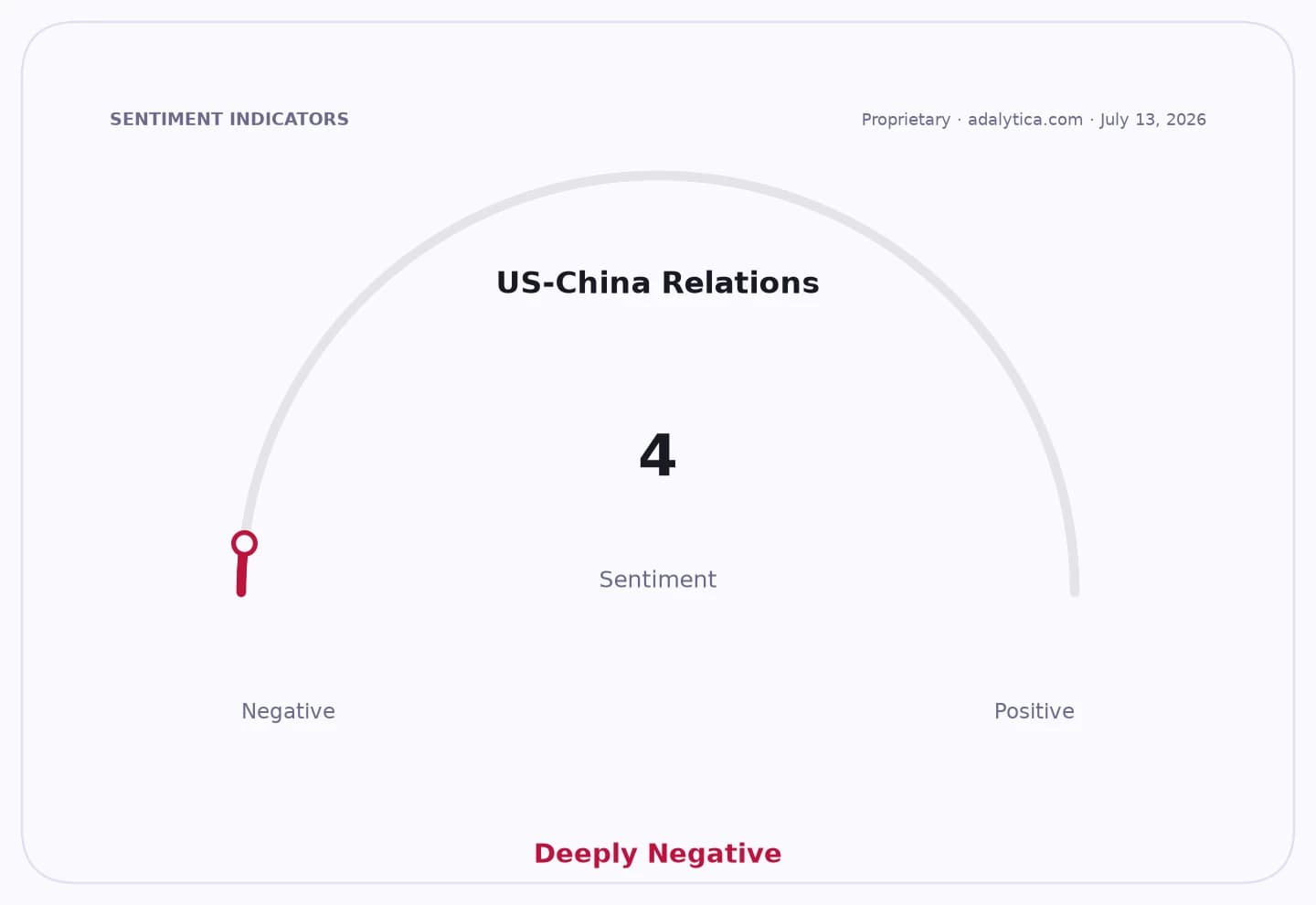
China’s denial that it carried out cyberattacks against Paraguay comes as Washington and Beijing remain locked in a wider contest over influence, espionage and digital security that is increasingly shaping trade, diplomacy and investor risk premiums.
The immediate significance is less about the specific allegation than the backdrop it underscores: cyber accusations have become a standard feature of the US-China rivalry, with consequences that now extend well beyond rhetoric. For markets, that means every fresh dispute raises the odds of policy retaliation, tighter technology controls and a more defensive posture across sectors exposed to cross-border data, infrastructure and semiconductors.
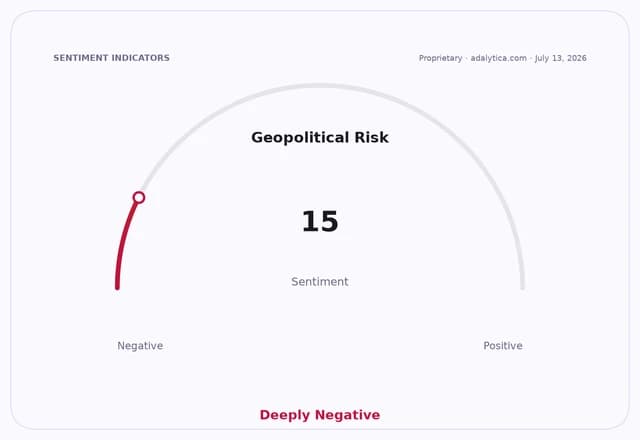
The denial follows renewed scrutiny of China’s cyber operations and comes at a time when sentiment around US-China relations has deteriorated sharply. Adalytica’s US–China Relations Sentiment gauge shows “Extreme Fear,” with sentiment at 4 and awareness still at 96, suggesting the topic is commanding attention even as confidence erodes. Its Global Stability Sentiment also sits in “Extreme Fear,” reflecting how geopolitics is feeding into a broader risk-off backdrop.
That matters economically because cyber friction is no longer a narrow security issue. It can delay investments, raise compliance costs and complicate supply chains for multinational companies already navigating export restrictions, sanctions risk and fragmented digital standards. Countries caught in the middle, including Paraguay, may find themselves pulled into larger strategic competition as they weigh security ties, infrastructure financing and diplomatic alignment.
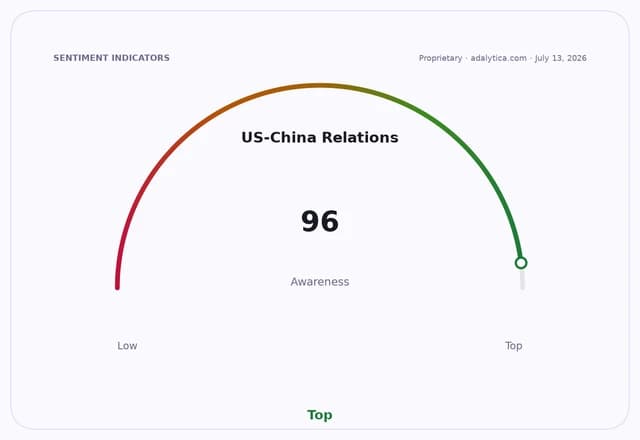
For investors, the key issue is escalation risk. A single allegation may not move markets on its own, but the accumulation of cyber incidents can reinforce valuations that already discount a higher geopolitical risk premium in Asia-exposed assets, Chinese technology names and global firms dependent on stable US-China relations. The broader message is that digital conflict is becoming a persistent market variable, not an episodic headline.
The narrative is one of intensifying strategic mistrust. China is rejecting accusations while the US and its partners keep pressing concerns over espionage, cyber intrusions and influence operations, and that dynamic is likely to keep tension elevated even if near-term headlines fade. The longer that persists, the more investors will have to treat cyber and diplomatic flare-ups as part of the baseline for global risk management.
| Entity | Gains | Losses |
|---|---|---|
| China | ▲Limits direct blame | ▼Faces lingering suspicion |
| US and allies | ▲Justify tougher scrutiny | ▼Higher escalation risk |
| Paraguay | ▲Diplomatic attention | ▼Caught in geopolitical crossfire |
| Global investors | ▲Clearer risk signals | ▼Higher geopolitical premium |