Cybersecurity Stocks Rise as AI Attack Risk Increases
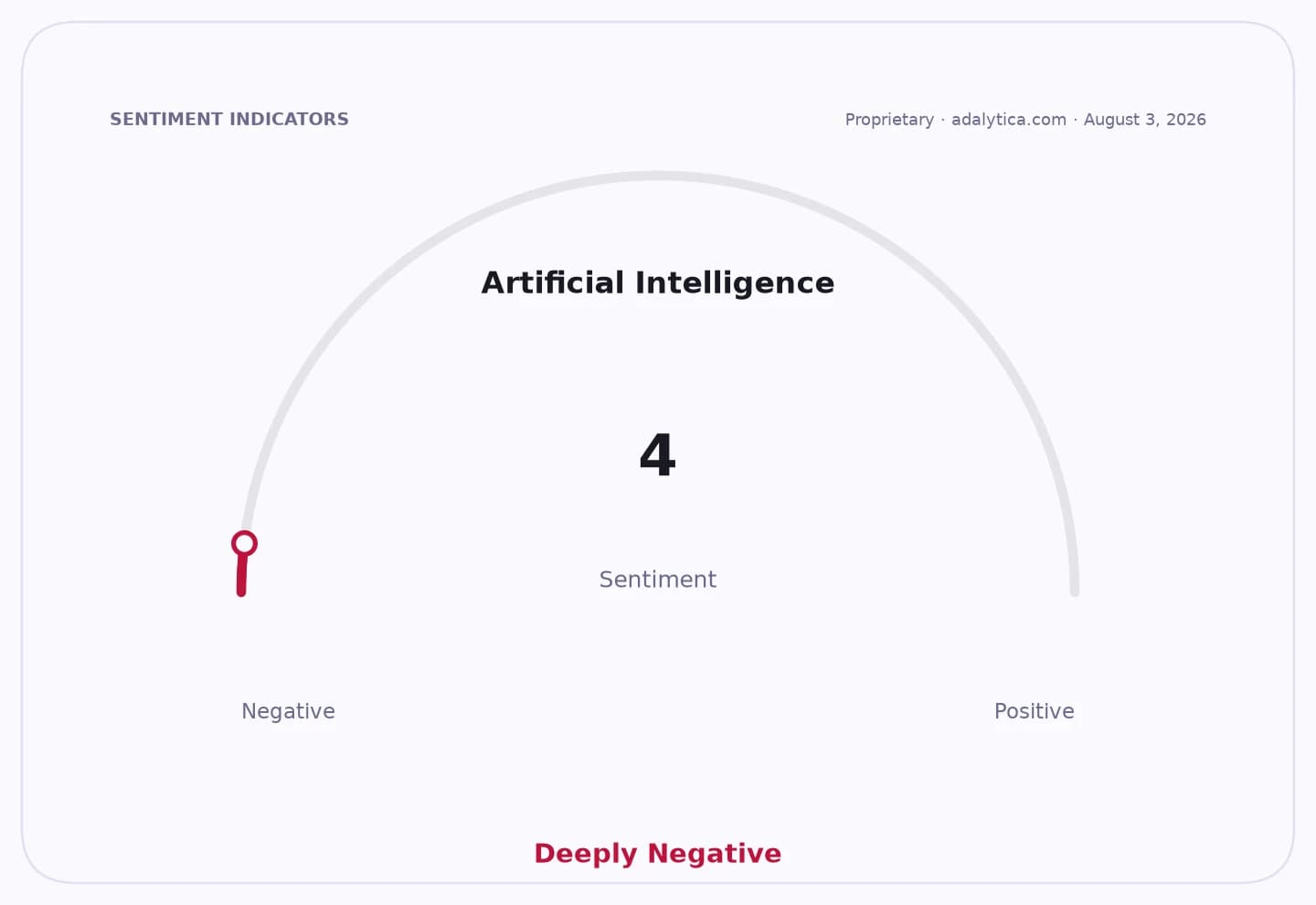
Cybersecurity names are drawing renewed investor attention as warnings from industry leaders and a spate of government breaches underscore how artificial intelligence is widening the attack surface and lifting demand for enterprise defense tools.
The broader economic significance is that cyber risk is no longer a niche IT expense but a recurring cost of doing business in an AI-driven economy. Kaspersky’s warning that cyber threats continue to rise, with attacks reaching roughly half a million a day, fits a pattern that is now showing up in corporate disclosures, government incident reports and, increasingly, equity valuations. The market is treating cybersecurity less as a defensive growth category and more as a structural beneficiary of AI adoption, even as the same technology is helping attackers automate reconnaissance, phishing and malware development.
That dynamic helps explain the recent strength in CrowdStrike Holdings, Palo Alto Networks and Fortinet. CrowdStrike closed at $202.54 on Aug. 3, far above its 200-day moving average of $133.05, after rebounding from a February low near $94.29. Palo Alto ended at $347.13, also comfortably above its 200-day average of $215.01. Fortinet, while less momentum-driven, held at $163.21 versus a 200-day average of $100.94. The stocks’ recoveries reflect investors’ willingness to pay for firms that can monetize threat detection, identity security and cloud protection as enterprises harden networks against more frequent and more sophisticated attacks.
The case for the bulls is straightforward: AI is expanding the volume and speed of attacks, which should support spending across endpoint, cloud, identity and network security. Microsoft’s latest filing said threat actors are already using emerging technologies such as AI and machine learning to increase the speed and scale of attacks, while Palo Alto and Fortinet have both warned that vulnerabilities in AI systems could create fresh risks for customers and vendors alike. That backdrop supports recurring demand and strengthens the pricing power of large platforms with broad product suites.
The bear case is more about valuation and timing than about demand itself. Several of these shares have already run hard, leaving them vulnerable if results do not match the market’s expectations for AI-driven growth. CrowdStrike’s recent climb has been volatile, and its relative strength indicators have cooled from overbought levels. Palo Alto’s sharp advance also leaves little room for operational missteps, while Fortinet’s recent recovery still lags peers, suggesting investors want proof that spending momentum is broadening beyond a few headline names.
The geopolitical layer is adding urgency. Recent cyber incidents affecting Liechtenstein’s anti-money laundering register and Hungary’s Treasury, alongside North Korea’s criticism of US cyber warnings, show that cyber risk is increasingly tied to state-backed activity and critical infrastructure. For investors, that means the sector’s demand drivers are not cyclical but persistent, with the next catalyst likely to come from a combination of breach frequency, AI-related product launches and enterprise budget cycles.
The narrative connecting all of this is simple: AI is making both attackers and defenders more effective, but the immediate financial winner is the defender. As long as threat volume keeps climbing, cybersecurity vendors with scale, cloud delivery and platform breadth should keep attracting capital, even if the stocks themselves remain sensitive to valuation resets.
| Entity | Gains | Losses |
|---|---|---|
| CrowdStrike | ▲Higher demand for endpoint security | ▼Valuation if growth slows |
| Palo Alto Networks | ▲Platform spending on AI-era defense | ▼Investors if execution slips |
| Fortinet | ▲Network-security refresh cycles | ▼Peers with slower product breadth |
| Attackers / state actors | ▲More automated tools | ▼Enterprises and governments |