Czech Mortgage Rates Rise to 5.51% in September

Mortgage rates in the Czech Republic climbed again in September, pushing the average offer rate to 5.51% and keeping borrowing costs near levels last seen when the central bank’s policy rate was much higher. The increase matters because it extends a six-month run of rising pricing even as the Czech National Bank has left its benchmark rate at 3.75% since June, showing that long-term market funding costs — not just policy rates — are now driving the mortgage market.
The September reading from Swiss Life Hypoindex was up 0.09 percentage point from August and 0.62 point above March’s 4.89%, the lowest since April 2022. For a typical 3.5 million koruna mortgage with a 25-year maturity and financing up to 80% of the property value, the monthly payment is about 21,520 koruna, roughly 1,280 koruna more than in March.
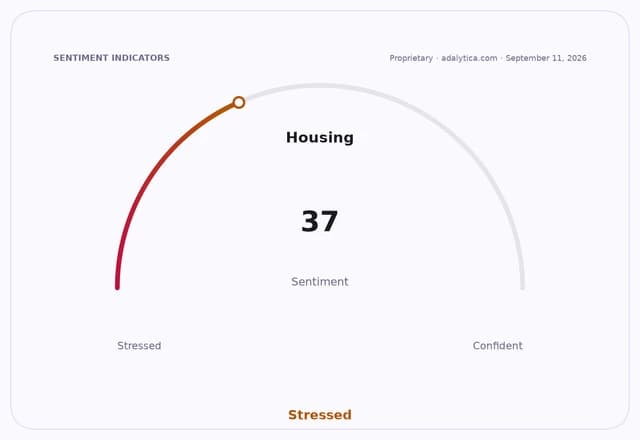
That gap is a direct hit to housing affordability in a market where demand has not disappeared. Czech Savings Bank said new mortgage volumes rose about 25% year on year in the first two quarters, and lending this year passed 90 billion koruna already in August. But the higher rates threaten to slow that momentum if banks keep passing on elevated swap costs.
The key driver is the cost of long-term money. Banks fund fixed-rate mortgages using market instruments such as interest-rate swaps, and those costs have been pushed up by renewed inflation fears, higher energy prices and the broader rise in global bond yields. The Czech National Bank can control short-term rates, but it cannot fully offset the market’s pricing of long-dated funding.
That is why lenders have been reluctant to cut mortgage rates in line with the central bank’s easing cycle. The Czech policy rate was 5.25% in June 2024 and is now lower, yet mortgage pricing is nearly the same because long-term market rates remain elevated. Analysts said any room for broad-based cuts is limited unless swap rates fall materially.
For investors, the story cuts several ways. Czech banks may see mortgage demand hold up in the near term, but margin pressure is likely if they keep absorbing part of the higher funding cost to stay competitive. Homebuilders and real-estate developers, meanwhile, face a tougher affordability backdrop just as apartment prices keep rising, limiting how much lower rates can relieve housing demand.
The broader risk is that borrowers who wait for cheaper financing may find the homes themselves more expensive by the time rates ease. With the Czech central bank meeting again on Sept. 17, the market will be watching not just the policy rate, but whether inflation, energy and global bond yields finally start to ease the pressure on long-term mortgage pricing.
| Entity | Gains | Losses |
|---|---|---|
| Czech banks | ▲Wider repricing power | ▼Higher funding costs |
| Homebuyers | ▲Access to credit if demand stays strong | ▼Higher monthly payments |
| Developers | ▲Continued transaction interest | ▼Affordability pressure |
| Borrowers waiting for cuts | ▲Potentially better timing later | ▼Risk of higher home prices |