DAX dips 0.2% before ECB meeting, Infineon downgraded

The DAX edged lower in early Tuesday trading, slipping 0.2% to 25,856.78 as investors pulled back from record territory ahead of the European Central Bank’s policy meeting and after a downgrade on Infineon added pressure to technology shares.
The move matters because the German benchmark is still trying to hold above the 26,000-point level, a zone that has become a short-term marker for market confidence. A sustained break above that threshold would normally signal stronger appetite for cyclical and export-heavy stocks, while failure to do so suggests traders are still reluctant to chase prices higher into a central-bank event.

The index had closed at 26,006.53 on Monday and reached 26,046.40 on Friday, but Tuesday’s softer open shows how quickly momentum fades when rate expectations and earnings risk collide. The DAX is still well above its 50-day moving average of 25,740.13 and its 200-day average of 24,693.34, underscoring the broader uptrend, but the pullback comes with the relative strength index at 43.8, a reading that points to cooling momentum rather than an overbought market.
Infineon’s downgrade is especially relevant for investors because semiconductors sit near the center of Germany’s industrial and export story. Weakness in that part of the market can spill into broader sentiment around the DAX, which has leaned heavily on auto, industrial and tech-linked names to power gains this year.
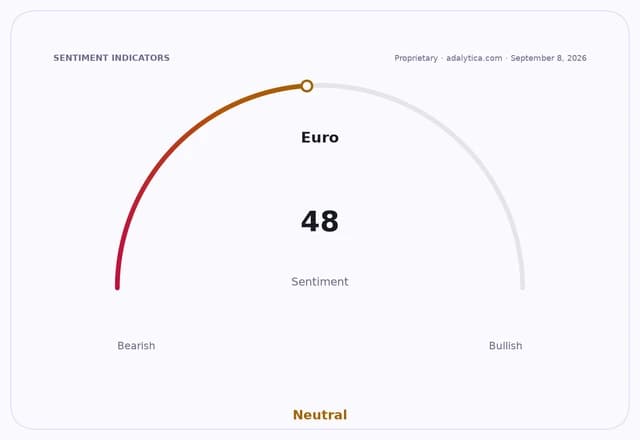
The ECB meeting is the bigger macro catalyst. Any sign that policymakers intend to stay restrictive for longer would keep pressure on rate-sensitive sectors and cap enthusiasm for equities, while a softer tone could help the DAX retest recent highs. For now, traders appear to be using the index’s record run to trim exposure rather than add to it.
| Entity | Gains | Losses |
|---|---|---|
| ECB hawks | ▲Policy credibility | ▼Equities |
| DAX bulls | ▲Longer-term uptrend | ▼Near-term momentum |
| Infineon rivals | ▲Relative rotation | ▼Infineon shares |
| Export-heavy German stocks | ▲Weaker euro/rates support | ▼Rate-sensitive sentiment |