Germany’s DAX index has pushed back above the 25,000 mark even as surging oil prices threaten to revive inflation concerns and complicate the outlook for European risk assets.
DAX Breaks 25,000 as Oil Inflation Risks Rise

The immediate driver is not domestic earnings or a fresh policy shift, but the renewed jump in crude, which has climbed nearly 5% and approached $80 a barrel as US-Iran tensions escalated. That matters for Germany more than for many peers because Europe remains more exposed to imported energy costs, and a sustained rise in oil tends to feed directly into transport, utilities and industrial input prices. The DAX’s ability to stay above 25,000 after inflation data suggests investors are willing to look through the near-term macro noise for now, but the market is also signaling that the energy shock could yet reshape rate expectations and equity positioning.
Sentiment IndicatorsⓘProprietary · adalytica.com · July 14, 2026
This is a snapshot — live sentiment, awareness and momentum for 130+ markets update continuously in the dashboard.Open AlphaPulse

The inflation backdrop is the key link. Even if the latest price data did not deliver an outright shock, a stronger oil price adds a new layer of pressure at a time when the market has been hoping for disinflation to support easier policy. Higher energy costs can slow the pace of consumer-price relief, keep core input costs elevated for manufacturers, and limit how aggressively the European Central Bank can lean toward cuts. That is especially relevant for German equities, where autos, chemicals, industrials and exporters are sensitive both to energy costs and to the outlook for global growth.
Market behaviour also shows the tension between macro risk and underlying momentum. Using conventional technical indicators, the DAX’s US proxy, the DIA, has remained well above both its 50-day and 200-day moving averages, with the 50-day above the 200-day, a sign that the broader trend is still constructive. RSI readings around the mid-60s indicate strength without clear panic, while the recent price holding near the upper end of its Bollinger Band range suggests momentum traders are still engaged. But those signals also imply that the market is extended enough to be vulnerable if oil keeps rising and inflation expectations move higher.
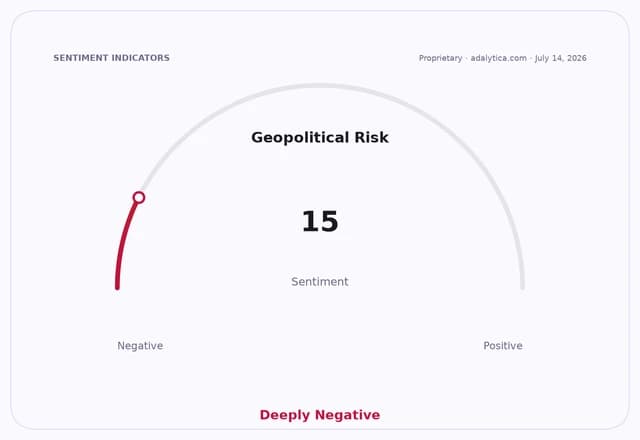
The geopolitical dimension is now doing the heavy lifting. Adalytica’s Global Stability Sentiment gauge has slumped to “Extreme Fear,” while awareness remains elevated, underscoring how sharply markets have repriced geopolitical risk. At the same time, US dollar trade signals point to fear, a combination that usually reflects a flight toward caution rather than a clean risk-on environment. That helps explain why crude is leading the narrative while gold has lost some appeal: investors are treating energy as the immediate transmission channel for conflict risk, not just as a hedge.
For investors, the question is whether the DAX’s breakout above 25,000 marks durable confidence or a short-lived relief rally. Bulls will argue that corporate earnings remain resilient, the index’s long-term trend is intact and a lot of bad news is already reflected in valuations. Bears will point out that Europe’s equity market has historically struggled when energy spikes collide with sticky inflation, because margins come under pressure just as central banks are forced to stay cautious.
The next catalyst is crude itself. If oil stabilizes, the DAX can probably absorb the inflation data and keep trading on earnings and easing hopes. If prices push toward the higher levels being discussed in the market, Germany’s index will have to contend with a less favorable mix of higher costs, slower growth and reduced policy flexibility.
| Entity | Gains | Losses |
|---|---|---|
| Oil producers | ▲Higher realized prices | ▼Demand destruction risk |
| German exporters | ▲Weak euro support, if any | ▼Higher energy input costs |
| Consumers and importers | ▲None | ▼Higher fuel and heating bills |
| Equities bulls | ▲Index resilience above 25,000 | ▼Valuation pressure if inflation reaccelerates |