Diesel Prices Rise, Pressure Trucking and Grocery Costs

Diesel prices have surged this summer, and transporters say the pain will quickly filter through to grocery bills as shipping costs rise across the supply chain.
That matters because diesel is the fuel that keeps freight trucks, farm equipment and much of the food distribution network moving. When diesel spikes faster than crude, the squeeze lands not just on haulers but on retailers and ultimately households, turning a commodity move into a broader inflation problem.

The backdrop is a tight diesel market made worse by refinery bottlenecks and geopolitical disruptions, including attacks on Russian refineries and instability in the Persian Gulf. The gap between crude oil and diesel has widened, a sign that the issue is not only the price of oil but the availability of refined fuel. In Spain, diesel has climbed to near $5.60 a gallon, an unprecedented level that shows how quickly transport costs can escalate when supply is constrained.
For investors, the message is straightforward: higher diesel tends to be bad for transport-dependent businesses and can make consumer staples margins harder to protect. Trucking companies may recover some of the increase through fuel surcharges, but not always in full or with a lag. In filings, Old Dominion Freight Line said higher diesel costs lifted operating expenses in the second quarter, while Knight-Swift and J.B. Hunt have also flagged fuel as a recurring cost pressure. That leaves carriers with less room to absorb shocks if freight demand softens.
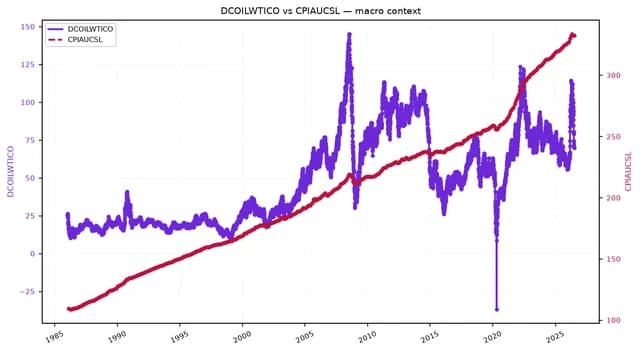
The market has already started to reflect that tension. Energy stocks, as measured by the Energy Select Sector SPDR Fund, have rallied sharply as crude has held firm, while the Industrial Select Sector SPDR Fund has lost momentum and the Consumer Staples Select Sector SPDR Fund has been steadier. In other words, the immediate winners are energy producers and refiners, while transporters, food distributors and consumers face a familiar tax at the pump.
For long-term investors, this is a reminder that energy is not just about oil prices — it is also about refining capacity, logistics and geopolitical risk. Diesel shortages can ripple through the economy even when crude is not at extreme highs, and that makes the sector worth watching closely if you own carriers, retailers or inflation-sensitive consumer names. The most resilient portfolios are the ones that can handle that kind of cost pressure, not just the ones chasing the next oil spike.
| Entity | Gains | Losses |
|---|---|---|
| Energy producers/refiners | ▲Higher margins | ▼Price-sensitive transport buyers |
| Trucking and logistics firms | ▲Fuel surcharges partially offset costs | ▼Operating margins |
| Food retailers/consumers | ▲— | ▼Higher delivery and shelf prices |
| Long-term energy investors | ▲Cash flow tailwind | ▼Companies exposed to diesel costs |