DJT Below Key Moving Averages Before Midterms
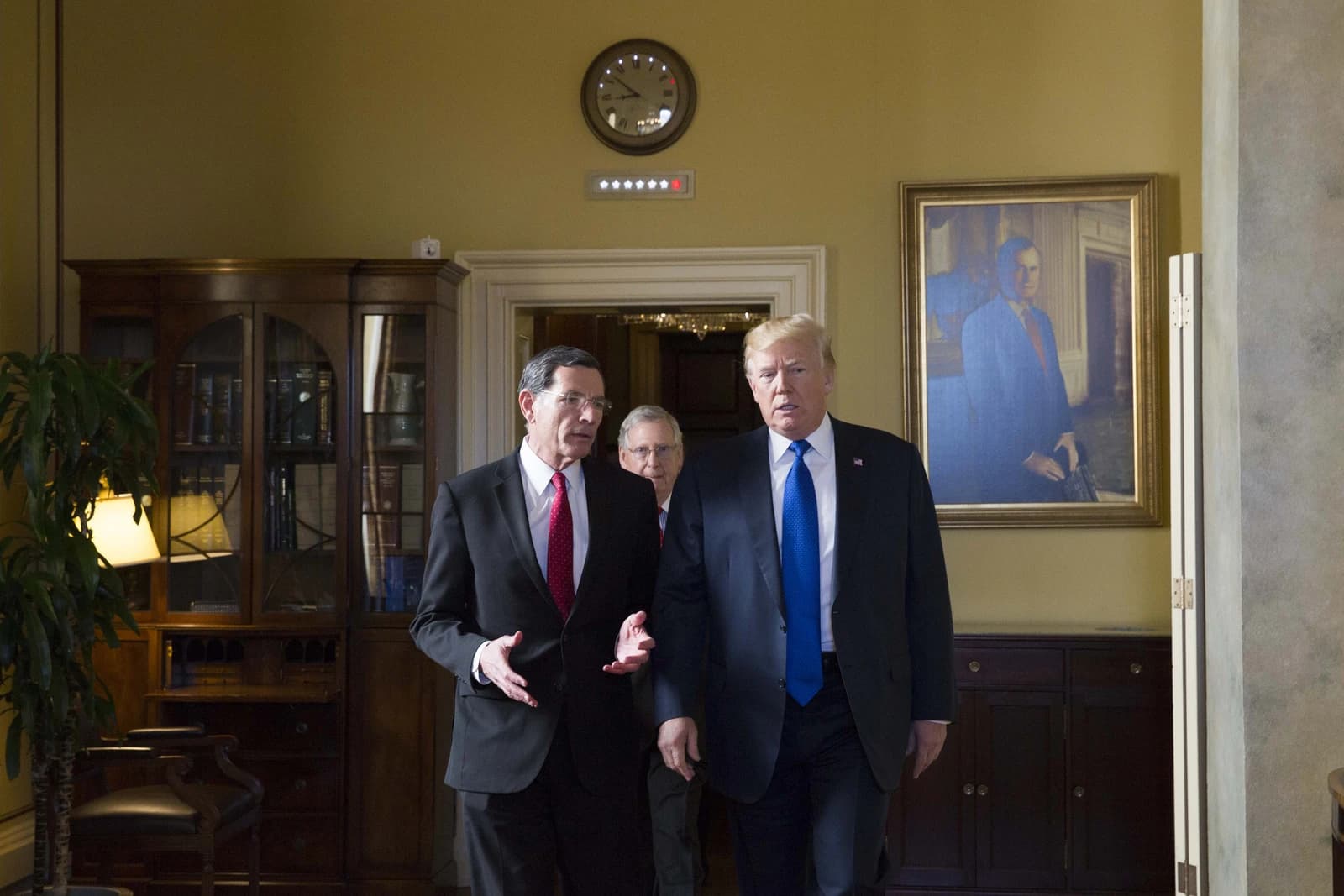
Donald Trump is trying to turn personal loyalty into political capital before the midterms, but the real economic significance is that a Republican setback would sharply narrow the president’s room to govern on taxes, immigration and spending for the rest of his term.
The unusual two-day Dallas gathering is less a celebration than a damage-control exercise. Republicans enter the final stretch with projections pointing to a likely loss of the House and a possible narrow Senate setback, according to Decision Desk HQ’s model, which would leave Trump facing a far more hostile Congress. That matters for markets because divided government would make big legislative moves harder and raise the odds of policy drift, especially on fiscal measures that affect deficits, regulation and corporate planning.
Trump is leaning on the rally to reassert command over a fractured party and to boost turnout in races where his brand remains both an asset and a liability. His approval rating, which recent polling has put below 35%, is a warning sign: political science research suggests presidents sitting in the low-30s typically drag down their party, not lift it. That leaves Republicans in competitive districts with a tactical dilemma — embrace the president’s base or keep a safer distance from him in the final weeks.
The Dallas event also shows how Trump is trying to make the midterms a referendum on his record, not on local candidates. The schedule is packed with speakers, from JD Vance and Mike Johnson to cabinet figures and family members, with the White House touting tax cuts, immigration crackdowns and other priorities as achievements to sell to voters. But the political choreography is complicated by timing: many battleground Republicans would rather spend the week canvassing than standing beside an unpopular president in Texas.
For investors, the immediate market issue is not the rally itself but what a weakened Trump majority would mean for policy execution. If Republicans lose one or both chambers, Washington’s ability to deliver another round of tax changes, spending packages or regulatory rollbacks drops materially. That would matter to sectors sensitive to fiscal policy, border enforcement, defense outlays and government contracts, while increasing the odds of legislative standoffs that can unsettle risk appetite.
Trump Media & Technology Group, DJT, also remains a highly reactive political proxy. Its shares closed at $8.98 on Wednesday, below the 50-day moving average of $9.16 and the 200-day moving average of $10.14, while RSI readings around 55 suggest the stock is no longer in the oversold zone but still lacks clear momentum. The broader message is that political enthusiasm can still spark bursts of trading, yet the underlying trend has weakened as midterm uncertainty, and Trump’s own political ceiling, remain unresolved.
The bigger narrative is straightforward: Trump is using an unconventional convention-style showcase to consolidate his base because he cannot rely on approval ratings to do the work. If he succeeds, Republicans may limit losses and preserve his leverage. If he fails, the midterms could become a turning point that leaves him louder but weaker in Washington.
| Entity | Gains | Losses |
|---|---|---|
| Trump loyalists | ▲Higher turnout push | ▼Policy moderation |
| Battleground Republicans | ▲Base mobilization | ▼Distance from Trump |
| Democrats | ▲House control chances | ▼Republican disarray fades |
| DJT holders | ▲Event-driven volatility | ▼Momentum if GOP underperforms |