Dollar Pauses Ahead of Fed Decision
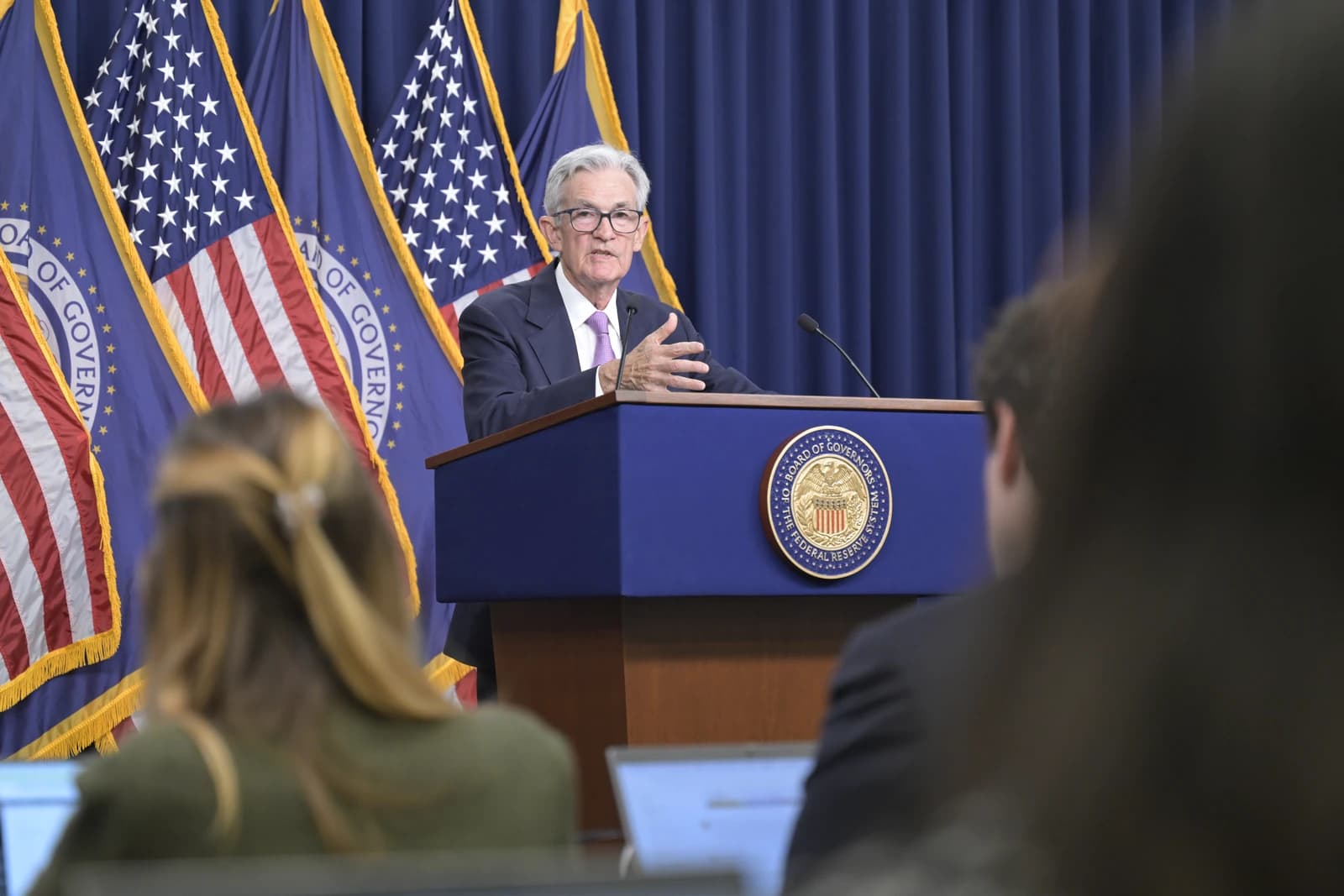
The US dollar slipped modestly before the Federal Reserve’s policy decision, a sign traders are positioning for the central bank to avoid sounding more hawkish than markets already expect. That matters because the dollar has been the cleanest expression of US rate expectations this month: when it firmed, copper weakened and global risk assets came under pressure; when it softens, financial conditions loosen a touch across markets.
The greenback’s pullback is small, but the macro signal is not. The dollar index was last around 101.4, holding above its 50-day moving average at 100.3 and its 200-day average near 99.1, which suggests the broader uptrend remains intact even as near-term momentum cools. The euro was steady near $1.14, still below its longer-term average, underscoring that the move is more about traders reducing pre-meeting exposure than a decisive shift in the currency regime.
That distinction matters for investors because the Federal Reserve’s guidance, not just the rate statement itself, is likely to drive the next leg in currencies, bonds and commodities. Treasury yields have already moved up into the meeting, with the 10-year note around 4.69%, while the federal funds rate is hovering near 3.63%. That gap leaves room for the Fed to surprise less by cutting or hiking than by signaling how long rates may stay restrictive, and the dollar is likely to react first.
For equities and commodities, the implications are immediate. A firmer dollar tends to tighten global liquidity, cap commodity rallies and pressure emerging-market assets; a softer dollar does the opposite. Copper’s recent weakness reflected that logic, while the dollar-tracking UUP ETF remained near $28.58, close to recent highs and just under the upper end of its Bollinger Band, indicating that investors are not yet abandoning the bullish dollar trade, only hedging it ahead of the event.
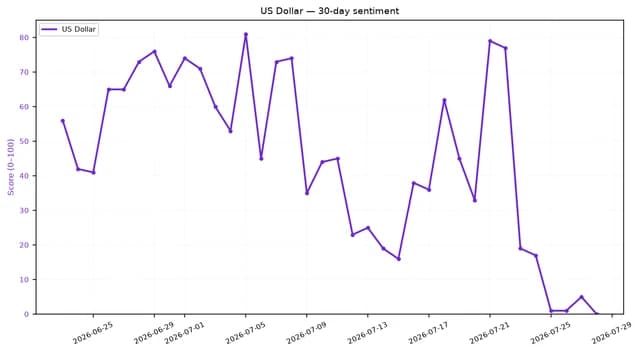
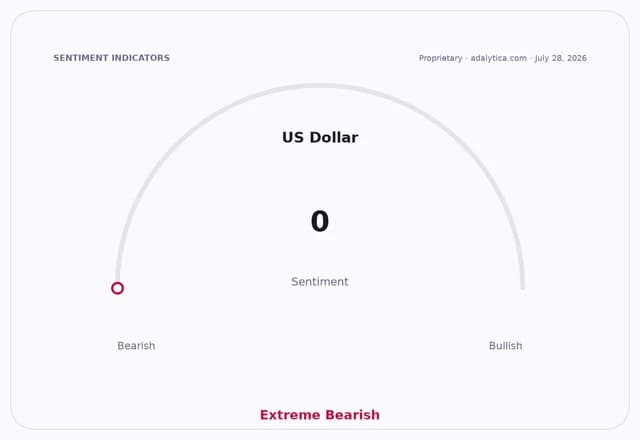
Technical indicators point to a market that is still constructive on the dollar but vulnerable to a fade if the Fed disappoints the hawks. UUP’s RSI is in the low 60s and its MACD remains positive, both consistent with a trend that is intact but no longer stretched. By contrast, Adalytica’s US Dollar Trade Signals snapshot shows “Extreme Fear” sentiment even as awareness remains elevated, a combination that often appears when positioning is crowded and headlines are about to matter more than trend-following.
The broader backdrop is one of policy uncertainty amplified by geopolitics. President Trump has kept pressure on the Fed to ease, while tensions in the Middle East have added another source of volatility to currency and commodity markets. That mix raises the stakes for Jerome Powell: if the Fed sounds more concerned about inflation or growth than investors expect, the dollar could extend gains; if it leans cautious, the recent dip may become the start of a deeper unwind in US rate premium trades.
For now, the message from currency markets is straightforward: investors are not betting against the dollar’s structural strength, but they are reluctant to chase it higher before the Fed speaks. The next move will depend less on the size of the policy shift than on whether the central bank validates or challenges the market’s assumption that US rates will stay elevated longer than peers.
| Entity | Gains | Losses |
|---|---|---|
| US dollar bears | ▲short-term relief | ▼crowded positioning risk |
| Fed hawks | ▲stronger policy signal | ▼pressure for a softer stance |
| Importers and non-US borrowers | ▲easier dollar funding | ▼— |
| Commodity producers | ▲if dollar weakens further | ▼if dollar rebounds on hawkish Fed |