Dollar weakens as yen firms and buybacks rise
The clearest story in the market right now is that the dollar’s long stretch of strength may be giving way, and that matters far beyond foreign exchange traders. A softer dollar can reshape U.S. buyback power, lift overseas earnings for American companies and change the economics of the yen carry trade that has helped fuel global risk assets.
That shift is showing up in the price action. The Invesco DB U.S. Dollar Index Bullish Fund, or UUP, has slipped to 28.02 from 28.50 on July 13, while momentum has cooled: its RSI reading is 40.0, below the 50 level that often marks a more balanced trend, and the 50-day moving average sits above the price at 28.27. That is not a crash. It is more important than that. It suggests the dollar is losing some of its earlier upside momentum just as investors start to reconsider how long U.S. exceptionalism can keep powering currency gains.
For investors, that has two big implications. First, a weaker dollar usually helps multinationals. Apple, for example, has already said in filings that yen weakness hurt Japan sales when translated back into dollars. If the dollar eases instead, those translation effects can work in the opposite direction, lifting reported overseas revenue for U.S. companies without any change in local demand. That is one reason currency moves can quietly boost earnings per share over time.
Second, the dollar’s pullback matters for corporate buybacks. When U.S. companies repurchase shares, a softer dollar can make overseas cash more valuable when brought home, effectively stretching balance sheets and supporting more buybacks for the same amount of foreign earnings. That is especially relevant for the mega-cap companies that have become the market’s main source of repurchase demand. Apple, Microsoft and Alphabet all still have enormous authorization capacity, but the marginal value of those overseas cash flows depends partly on the exchange rate.
The yen leg of the story is just as important. The yen has been firming recently, with the currency ETF FXY trading around 57.55 after a run as high as 58.50 earlier in August. Its 50-day moving average is 57.02, so the recent bounce is still modest, but the direction matters. If the yen strengthens while U.S. rates or dollar support cools, the economics of borrowing in yen to buy higher-yielding assets abroad become less attractive. That can reduce a familiar source of liquidity for global stocks, credit and risk trades.
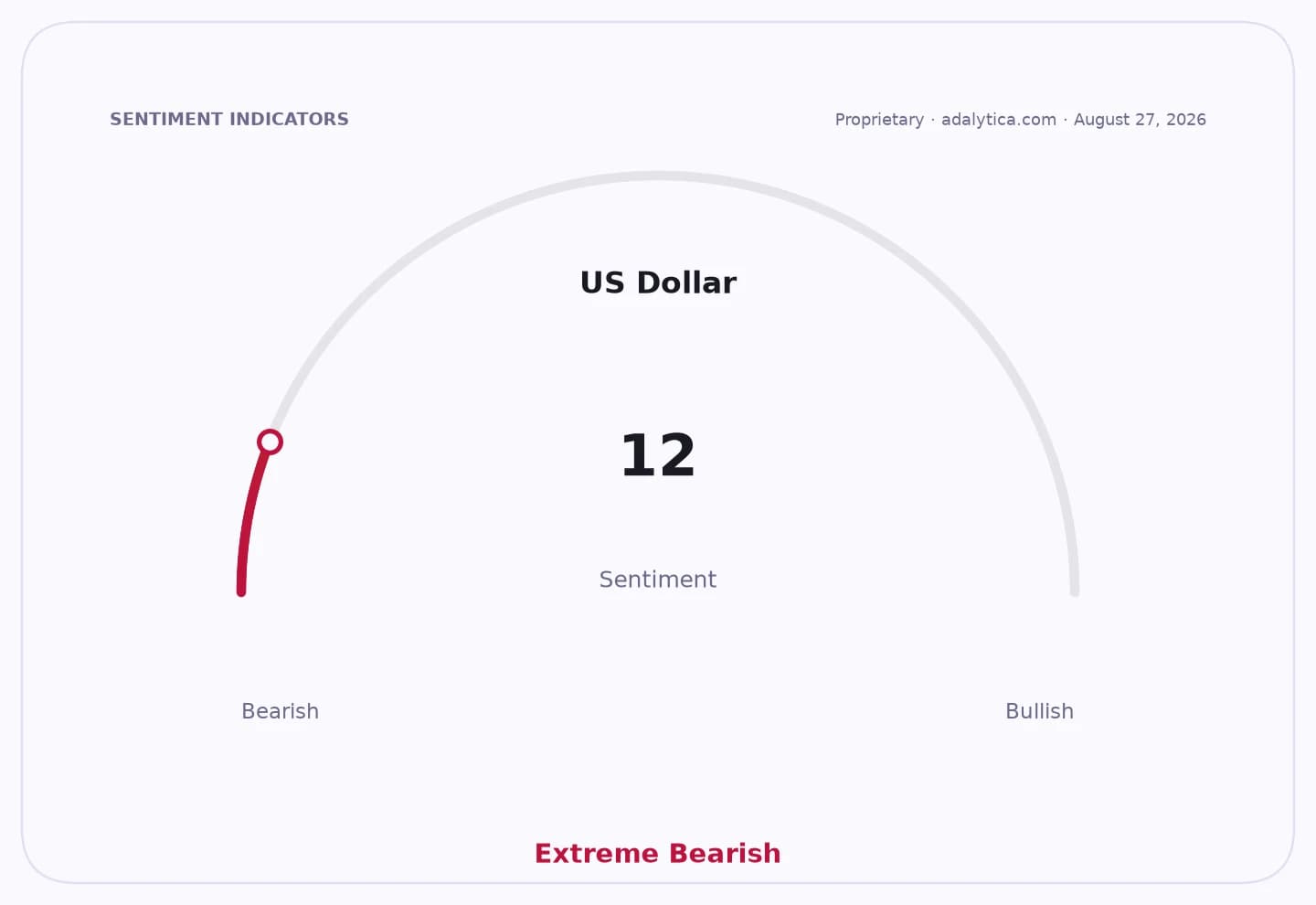
Adalytica’s US Dollar Trade Signals snapshot reinforces that change in tone. The system shows sentiment at 12, labeled “Extreme Fear,” even as awareness stands at 93, or “Extreme Greed.” In plain English: traders are watching the dollar closely, but the mood has turned much more cautious. FX volatility signals are also not screaming panic, which suggests this is less about a disorderly unwind and more about a gradual repositioning.
That is what makes this moment interesting for long-term investors. A turning point in the dollar does not need to be dramatic to matter. Even a slow fade can alter the math for buybacks, overseas profits, commodity prices and cross-border capital flows. The market has spent a long time assuming a strong dollar was the default setting. If that assumption starts to wobble, investors may want to lean more heavily on companies with foreign revenue, strong free cash flow and the ability to keep repurchasing shares through currency cycles.
The risk, of course, is that this turns out to be only a pause. The dollar can strengthen again if growth, rate differentials or safe-haven demand swing back in its favor. But with the technicals softening and the yen showing signs of life, the burden is now on dollar bulls to prove the trend still has legs. For patient investors, that is worth watching closely and keeping on the watchlist.
| Entity | Gains | Losses |
|---|---|---|
| U.S. multinationals | ▲Higher foreign earnings translation | ▼Weaker export pricing power |
| Shareholders in buyback-heavy firms | ▲More repurchase capacity | ▼Less currency tailwind if dollar rebounds |
| Yen bulls | ▲Stronger currency trend | ▼Less attractive carry trade |
| Dollar bulls / carry traders | ▲— | ▼Slower momentum, lower returns |