Domestic worker jobs fall as household budgets tighten
Domestic workers are becoming one of the clearest casualties of the squeeze on household budgets, with more than 30,000 formal jobs lost as weaker purchasing power forces families to cut hours, trim services and push more labor into informality.
That matters because domestic work is a labor market pressure valve: when middle- and higher-income households feel the strain, they often reduce cleaning, caregiving and other household services before cutting bigger-ticket spending. The result is not just lost income for workers, but a broader weakening in domestic demand, tax collection and formal employment — exactly the kind of slow-burn damage that can make an economic downturn linger.
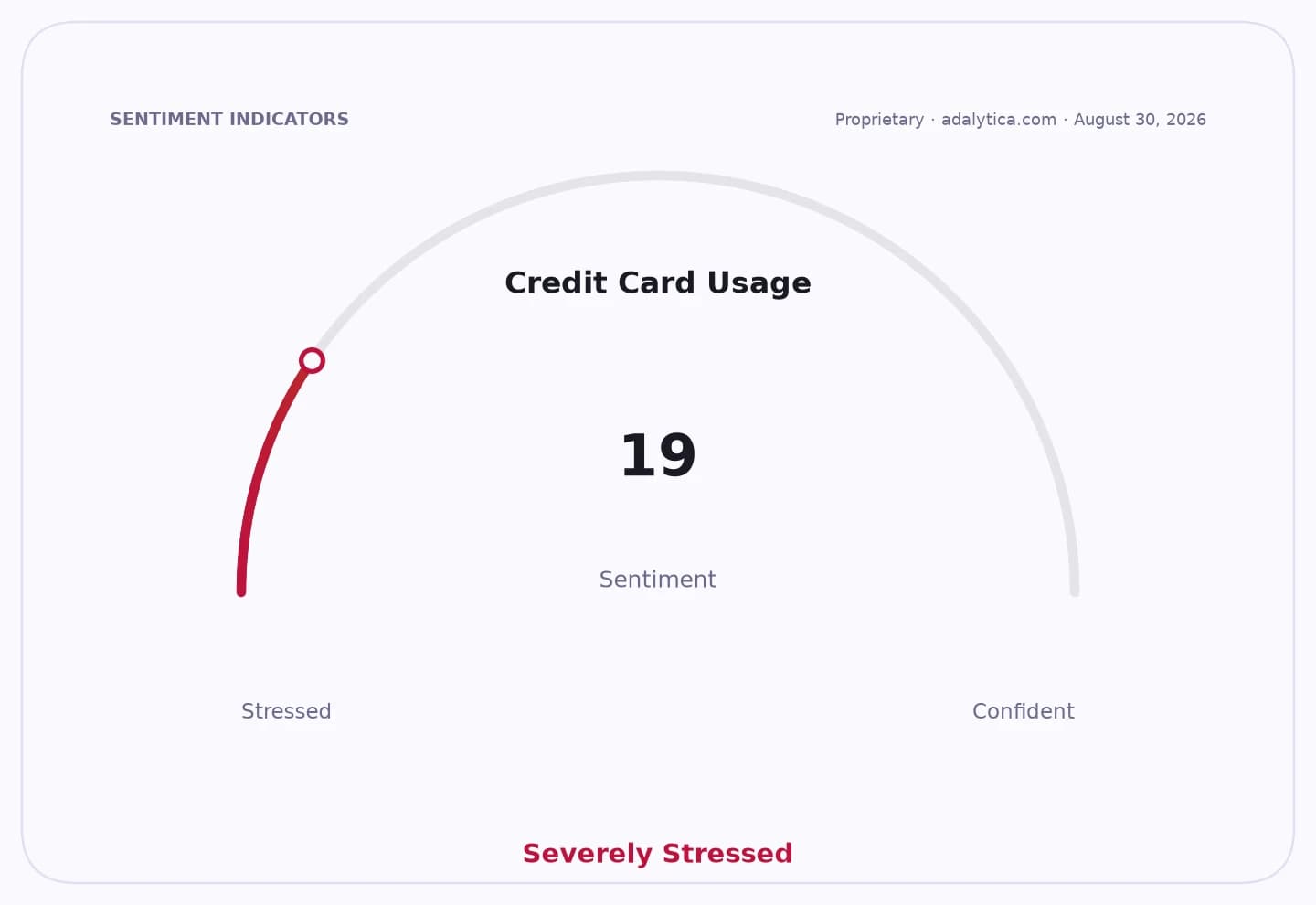
The labor market signals are consistent with that story. Formal domestic employment is falling even as the broader unemployment rate remains relatively contained, suggesting the hit is showing up first in services tied directly to family budgets rather than in headline joblessness. At the same time, consumer spending indicators remain elevated in nominal terms, but sentiment around credit card usage has slid sharply into fear, a sign that households are leaning more on caution even if they have not yet pulled back everywhere.
For investors, the important point is second-order effects. When household purchasing power weakens, the pain spreads beyond domestic workers to retailers, personal services, food delivery, home-care businesses and the financial institutions exposed to lower-income consumers. Informality also rises, which can erode payroll-tax receipts and make the recovery less efficient, while increasing the risk that policymakers respond with labor or social-support measures that raise costs for employers.
There is also an inflation angle. If households are cutting paid domestic services because wages are being squeezed by prices, the disinflationary impulse may take longer to feed through to core demand than headline data suggest. That leaves policymakers with a more uncomfortable backdrop: cooling labor demand in the household-services segment, but still-fragile consumer behavior overall.
The market takeaway is that the real story is not 30,000 jobs alone. It is that household finances are fraying enough to transmit stress into one of the most informal and labor-intensive corners of the economy. That is usually an early warning, not a late one. Investors should watch consumer discretionary names, payroll processors, staffing firms and banks serving mass-market borrowers, while favoring businesses that sell essentials or benefit from a shift away from paid household labor toward lower-cost alternatives.
| Entity | Gains | Losses |
|---|---|---|
| Cost-conscious households | ▲Lower service spending | ▼Fewer paid domestic options |
| Informal labor market | ▲More off-the-books work | ▼Less formal protections |
| Essential retailers | ▲Defensive demand | ▼Slower premium spending |
| Domestic workers | ▲None | ▼Jobs and hours |