Dorian LPG is back in the research spotlight as investors weigh whether a softer oil market and higher U.S. Treasury yields can offset an LNG-linked shipping backdrop that still supports tanker economics. The immediate issue for the stock is not just spot freight direction, but whether tightening or loosening in the global energy complex changes the supply-demand balance for VLGCs that carry propane and butane.
Dorian LPG Faces Mixed Macro and Freight Signals
Crude prices have cooled to about $68.69 a barrel in the latest forecast for July 7 from $69.60 on July 6, extending a pullback after a sharp slide from above $109 in early May. That matters because LPG shipping demand is tied to global hydrocarbon flows, refinery runs and the export economics of Middle East and U.S. producers, while lower oil often feeds through to weaker energy-trade momentum and softer charter-rate expectations.
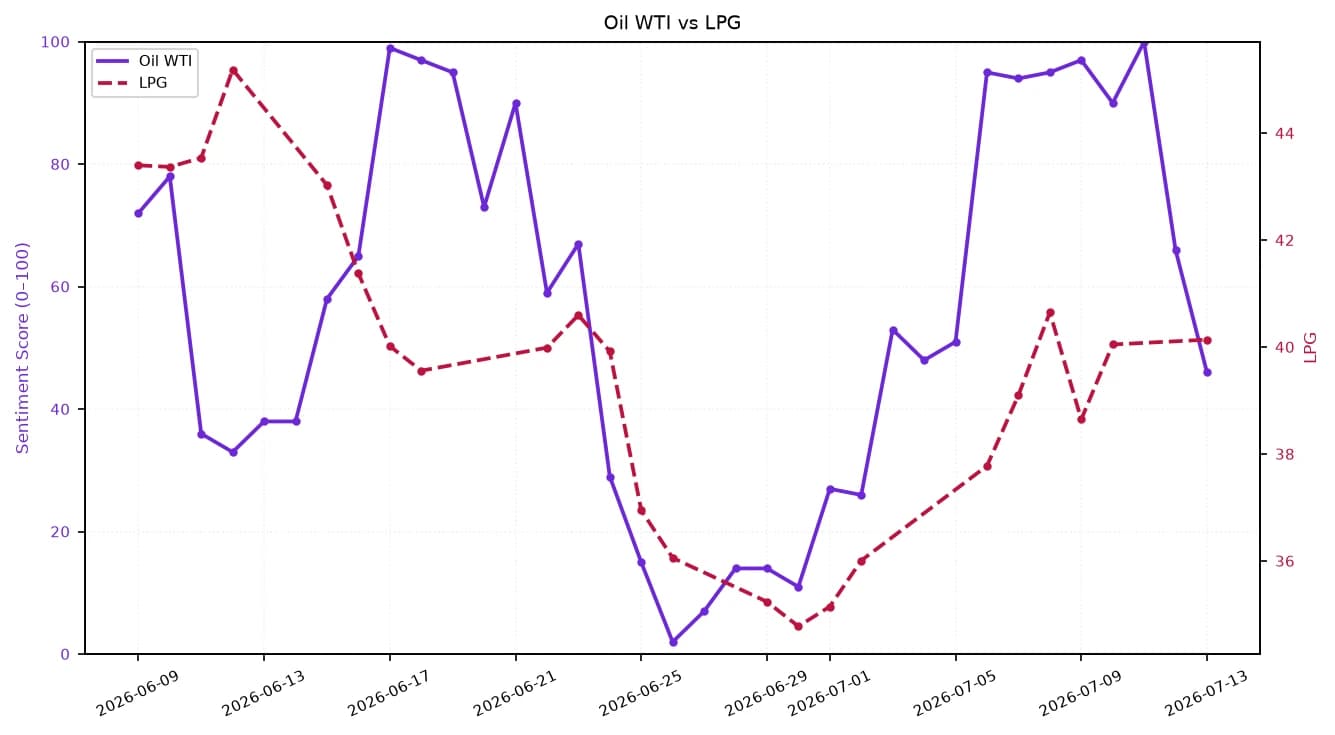
Sentiment IndicatorsⓘProprietary · adalytica.com · July 14, 2026
This is a snapshot — live sentiment, awareness and momentum for 130+ markets update continuously in the dashboard.Open AlphaPulse
At the same time, benchmark U.S. 10-year yields are hovering around 4.56%, near recent highs, keeping financing conditions tight for capital-intensive shipping names and pressuring valuation multiples across the sector. For Dorian LPG, that leaves the market balancing asset-heavy cash generation against a discount rate that remains elevated and a freight cycle that can turn quickly if vessel supply outpaces cargo growth.
The stock has already shown how sensitive it is to that setup. Shares closed at $40.14 on July 13, roughly flat on the day and just above the 50-day moving average of $40.42, after a volatile spring that took the stock as high as $47.72 on May 20. Technical readings now look less overheated than earlier in the year, with RSI at 50.5 and MACD still negative, suggesting the recent rebound has steadied but not fully reversed the prior pullback.
Investors are also watching the company through a supply-side lens. Dorian’s latest annual filing warned that purpose-built ethane carriers could be diverted into the VLGC market if ethane imports become uneconomic, while new competition from vessel deliveries could add pressure to charter rates. That risk is central for a company whose earnings hinge on a relatively tight fleet market and strong utilization.
The broader macro backdrop is mixed for the group. Adalytica’s Oil WTI Trade Signals show neutral sentiment at 46 and awareness at 33, down sharply from earlier in the month, pointing to fading enthusiasm around the energy tape. For LPG shippers, that leaves the next catalysts in fleet updates, charter-rate trends and any shift in Middle East supply routes or U.S. export volumes.
| Entity | Gains | Losses |
|---|---|---|
| Dorian LPG | ▲higher charter visibility | ▼weaker freight if supply grows |
| LPG shipowners | ▲cargo-linked demand resilience | ▼new vessel competition |
| Energy importers | ▲cheaper feedstock costs | ▼less urgency to secure cargoes |
| Short sellers | ▲rate-cycle uncertainty | ▼any oil or freight rebound |




