Dow, EUR/JPY and Natural Gas Diverge on Yields

The biggest market development is a rebound in risk assets and the dollar-dollar complex at the same time, even as U.S. natural gas futures stall at a key technical ceiling. That combination matters because it points to a market still trying to price higher-for-longer rates, a firmer greenback and uneven appetite for cyclical assets — a setup that can reward relative-value trades more than broad index exposure.
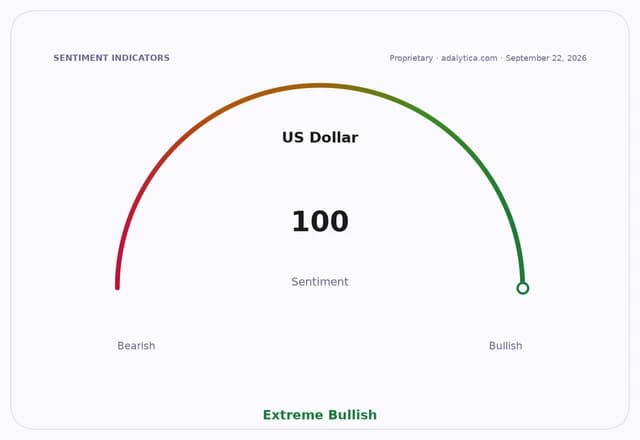
The Dow Jones Industrial Average has clawed back from its multi-month lows, and the same is true for EUR/JPY, a classic risk-sensitive cross that tends to improve when global growth expectations stabilize. But the macro backdrop is not a clean “risk-on” turn. U.S. Treasury yields remain elevated, with the 10-year at about 4.99% in the latest forecast and the 2-year near 4.76%, while the dollar continues to trade with extreme-greed positioning in Adalytica’s signal snapshot. That is a tough mix for bonds, for import-sensitive economies and for rate-sensitive equities that depend on cheap capital.
The Dow’s recovery looks more like a tactical bounce than a confirmed trend reversal. It is still sitting below its 50-day moving average and well under its recent highs, even after the latest advance toward 519.78 on the DIA ETF. The RSI has recovered from deeply oversold territory earlier this year, but momentum remains fragile. For investors, that means the market is not rewarding indiscriminate beta; it is rewarding balance-sheet strength, pricing power and companies less exposed to the damage from sticky yields.
EUR/JPY tells a different but related story. The pair’s move off multi-month lows reflects some easing in recession fear, but it is being capped by the same forces that are pressuring U.S. equities: a strong dollar, persistent rate differentials and a market that still sees inflation as sticky enough to keep central banks cautious. In this environment, the yen remains vulnerable when U.S. yields stay high, while the euro benefits only modestly from any stabilization in European growth. That makes the cross a useful barometer for traders: if EUR/JPY can extend higher, it would signal that the market is finally willing to price a softer growth scare and a less defensive macro backdrop.
Natural gas is the clearest example of a market running into supply-and-demand reality. U.S. gas futures, tracked through UNG, have been rejected from key resistance near the top of their recent Bollinger Band range after a sharp run earlier this year. UNG closed at 10.26 on Sept. 21, below its 200-day moving average of 11.52, even though the 50-day average sits close by at 10.23. The message is blunt: the market is still trading gas as a tactical commodity, not a clean secular breakout. RSI slipped back to 42.8, and the MACD remains only barely positive, suggesting the rebound lacks the kind of momentum that would support a sustained energy trade.
That has broader economic consequences. Higher Treasury yields and a firmer dollar tighten financial conditions just as markets were hoping for a smoother landing. A strong dollar helps consumers via cheaper imports, but it also crimps multinational earnings and keeps pressure on commodities priced in dollars. That is why the recovery in equities is not translating into a broad-based commodity boom. Investors are instead rotating between defensive growth, energy selectivity and rate-sensitive trades that can still work if yields stop rising.
The opportunity here is not to chase every rebound. It is to position for divergence. If yields stay near current levels, the winners are likely to be U.S. companies with durable margins, commodity producers with real cash flow and selective foreign assets that benefit from dollar strength. The losers are the usual suspects: long-duration growth stocks, leveraged cyclicals and commodity proxies that need a stronger macro impulse to break through resistance.
The key catalyst now is whether the Dow can hold above its recent recovery levels while EUR/JPY extends off the floor and natural gas fails to reclaim resistance. If that plays out, the market will be confirming a world in which capital is still expensive, the dollar still matters and the best returns come from owning scarcity, not broad optimism. For investors, this is the moment to stay selective and buy the assets with the cleanest balance sheets, the strongest cash generation and the least dependence on falling rates.
| Entity | Gains | Losses |
|---|---|---|
| Dollar bulls | ▲Firmer yield advantage | ▼Exporters and multinationals |
| Dow defensive leaders | ▲Relative capital inflows | ▼High-beta cyclicals |
| EUR/JPY longs | ▲Risk rebound and yield carry | ▼Yen-safe-haven buyers |
| Natural gas producers | ▲None from resistance rejection | ▼Momentum traders and UNG holders |