Dow Falls 1% as Bond Selloff Hits Stocks

The Dow Jones Industrial Average slipped nearly 1% Tuesday afternoon as a global bond selloff, firmer oil prices and renewed inflation worries pushed investors out of risk assets and back toward safety.
That matters because markets are not reacting to one bad headline so much as to a harder economic backdrop: higher energy costs can keep inflation sticky, lift Treasury yields and make borrowing more expensive for companies, households and governments. When bond yields grind higher near multi-year highs, equity valuations usually have a tougher time holding up, especially for richly priced growth stocks and sectors that depend on easy financing.

In New York, the Dow was down 0.97% at 52,896.34 at around 20:02 CET after starting the session higher. The index hit an intraday high of 53,110.45 before sliding to 52,721.62 at the low point. Even after the pullback, the blue-chip gauge remains up 9.33% this year, underscoring that Tuesday’s move looks more like a valuation reset inside a strong longer-term trend than the start of a full-blown bear market.
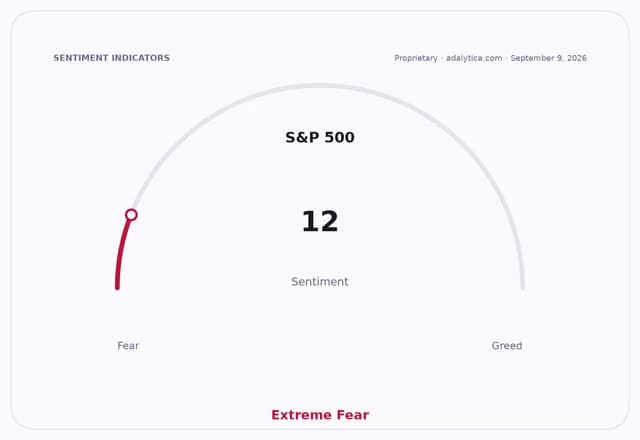
The broader market tone was cautious. Adalytica’s S&P 500 trade signals showed “Extreme Fear,” reflecting how quickly sentiment has deteriorated as investors weigh inflation data, bond yields and geopolitical risk. That kind of fear often hits cyclical stocks and rate-sensitive sectors first, because investors start questioning whether earnings expectations are too optimistic for the interest-rate environment ahead.
The stock-by-stock picture inside the Dow also tells the story. Caterpillar, UnitedHealth and Chevron held up, which makes sense in a market looking for either defensive earnings or exposure to energy. But Amgen dropped 9.1%, Salesforce fell 4.3% and NVIDIA slipped 1.9%, showing that investors were not paying up for momentum even in megacap names. NVIDIA still stands out as the index’s most heavily traded stock and its largest by market value, so any weakness there can influence sentiment well beyond one afternoon.
For long-term investors, the important takeaway is that inflation scares and bond volatility can create uncomfortable but useful entry points. If oil stays elevated and yields keep climbing, the next leg of the market will likely reward companies with real pricing power, strong free cash flow and durable balance sheets, not just fast revenue growth. The Dow’s Tuesday dip is a reminder that even a resilient market needs a steady macro backdrop to keep advancing, so this is a moment to stay selective, stay diversified and keep quality businesses on your watchlist.
| Entity | Gains | Losses |
|---|---|---|
| Energy and defensive stocks | ▲Higher relative demand | ▼Valuation pressure |
| Bond sellers / yield bulls | ▲Better entry on higher yields | ▼Price losses on existing bonds |
| Inflation-sensitive equities | ▲None | ▼Multiple compression |
| Long-term value investors | ▲Potential buying opportunities | ▼Short-term mark-to-market pain |