Dow falls as Treasury yields rise on Iran, oil

The Dow Jones Industrial Average slipped as U.S. Treasury yields climbed back toward multi-year highs, with renewed pressure from geopolitical तनाव around Iran and a firmer oil backdrop reviving inflation concerns.
The move matters because higher long-dated yields tighten financial conditions even when the Federal Reserve is not raising rates. The 10-year Treasury yield was last around 4.71%, with the latest forecast pointing to 4.729%, while the 2-year hovered near 4.19%. That keeps the yield curve only modestly positive at about 46 basis points, a sign investors are still pricing slower growth ahead even as inflation risk reasserts itself. For equities, particularly rate-sensitive parts of the market, that combination is uncomfortable: discount rates rise, bond substitutes lose appeal and cyclical leadership becomes harder to sustain.
The Dow’s drift lower was consistent with that macro setup. DIA ended at 528.39 on Aug. 20, down from 534.27 a day earlier, while the Nasdaq-100-tracking QQQ also slipped to 709.63 from 716.08. The tech-heavy fund remains above its 50-day moving average, but its momentum has cooled, with RSI easing to 61.5 from 67.7. DIA, meanwhile, is still above both its 50-day and 200-day moving averages, yet its RSI has backed off from overbought levels to 55.1, suggesting the recent upside run is losing steam as yields rise.
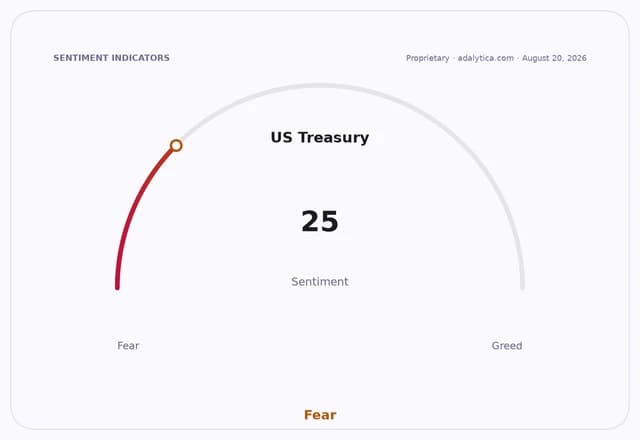
The broader bond market is sending the same message. TLT, the long-duration Treasury ETF, has been volatile and closed at 82.36 on Aug. 20, with Adalytica’s U.S. Treasury Bond Trade Signals showing sentiment at 25, labeled fear, even as awareness is marked at extreme greed. That split highlights how closely investors are watching a market that has become more reactive to news on oil, sanctions and central bank policy than to traditional safe-haven demand. The latest move in yields also comes after long-dated Treasury rates surged to their highest levels since 2007 in earlier trading, underlining how sensitive the market remains to inflation shocks.
Trump’s threat to intensify economic pressure on Iran adds another layer of risk. Any escalation that constrains oil supply can feed directly into energy prices, lift breakeven inflation expectations and force investors to demand more yield on government debt. That is especially important now, because the market is already wrestling with a bond selloff that is no longer confined to the U.S.; Japanese government bond yields have also climbed to 30-year highs as investors price tighter policy abroad. A synchronized rise in yields across major markets tends to hit global equity valuations, not just Treasuries.
For investors, the immediate implication is a tougher backdrop for duration-heavy assets and for sectors whose valuations depend on low discount rates. Financials may benefit from a steeper curve, but industrials and megacap growth names can struggle if yields keep rebounding faster than earnings estimates. Bullish investors will argue that the Dow’s pullback is contained and that rising yields reflect growth resilience. The bear case is that inflation risk is being reintroduced through geopolitics at a time when policy has little room to absorb another energy shock.
What to watch next is whether Treasury yields can hold above the 4.7% area on the 10-year and whether crude prices extend higher. If they do, the market may shift from treating the move as a one-day geopolitical flare-up to a more durable repricing of inflation and rate risk.
| Entity | Gains | Losses |
|---|---|---|
| Treasury bears | ▲Higher yields, lower bond prices | ▼Safe-haven bond demand |
| Energy producers | ▲Firmer oil prices | ▼Refined-margin pressure from volatility |
| Banks | ▲Steeper yield curve | ▼None if credit stress rises |
| Growth stocks / QQQ | ▲Relative resilience if yields stabilize | ▼Higher discount rates |