ECB Schnabel Warns on Wage-Price Spirals

The European Central Bank must move early to stop wages and prices from feeding off each other, according to board member Isabel Schnabel, underscoring how officials remain wary that inflation could re-accelerate even after the euro-zone price surge has eased.
That matters because the ECB’s next move is no longer just about whether headline inflation is slowing, but whether labor-market strength and still-firm pay growth could set off second-round effects that keep services inflation sticky and force the bank to stay tighter for longer. For households and companies, that means borrowing costs may remain restrictive even if the worst of the inflation shock has passed.

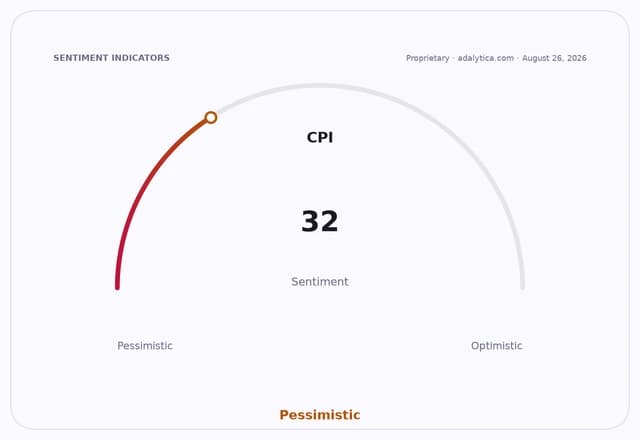
Schnabel’s warning lands at a sensitive point for markets. The ECB has already kept rates unchanged while stressing that inflation is under control, but policymakers are still talking up vigilance in the face of energy risks, uneven growth and stubborn wage pressures. Adalytica’s wage-inflation sentiment gauge sits at 71, a “greed” reading that points to elevated pricing pressure in the labor market, even as its CPI sentiment is neutral at 32, suggesting investors see headline inflation easing but not yet fully defeated.
That mix is visible in rates and foreign exchange. Euro-denominated assets have been sensitive to every shift in the ECB’s guidance, with the euro ETF FXE trading at 107.80 and holding above its 50-day moving average, while its RSI of 71.4 shows the currency has been in technically overbought territory after recent gains. In fixed income, the U.S. 10-year Treasury yield has climbed to 4.69%, reflecting a broader global repricing of policy risk and keeping pressure on duration-heavy assets.
For the ECB, the economic logic is straightforward: if the central bank waits too long, firms may keep passing wage costs into prices, workers may demand compensation for higher living expenses, and inflation expectations may become embedded. That would make disinflation more expensive to achieve and raise the odds of a deeper slowdown later. Acting earlier, by contrast, would aim to prevent that loop before it becomes self-reinforcing.
The bull case for Schnabel’s position is that the ECB can still anchor expectations without having to tighten aggressively if it signals resolve now. The bear case is that moving too early risks choking off a fragile recovery, especially if consumer demand and industrial activity remain weak. Either way, investors will read future ECB comments for signs of whether policymakers are leaning toward a longer plateau in rates or preparing to cut once they are confident wage growth is cooling.
For markets, the key question is not whether inflation has peaked, but whether the ECB believes the battle is won. Schnabel’s remarks suggest it does not, and that leaves European bonds, equities and the euro exposed to more policy-sensitivity than traders had hoped.
| Entity | Gains | Losses |
|---|---|---|
| ECB hawks | ▲Stronger anti-inflation credibility | ▼Growth-sensitive borrowers |
| Euro | ▲Support from tighter-for-longer policy | ▼Exporters if rates stay high |
| Bondholders | ▲Earlier clarity on policy path | ▼Duration if yields rise |
| Consumers and firms | ▲Price stability over time | ▼Higher borrowing costs now |