E-commerce faces stricter enforcement and rebound demand
A higher-profile gathering of online retailers, regulators and regional leaders is underscoring how e-commerce is being pulled in two directions at once: stronger consumer protection and tighter enforcement on one side, and a rebound in online spending on the other.
That tension matters because digital commerce is no longer just a growth story for platform operators such as Shopify, Amazon and Mercado Libre. It is increasingly a policy story, with governments looking to curb fraud, scalping and other unlawful resale practices while merchants and marketplaces try to preserve conversion, pricing power and take rates. For investors, that makes the sector more sensitive to the quality of demand and the cost of compliance than to headline sales growth alone.
The policy backdrop is becoming harder to ignore. In Japan, authorities recently issued a summary prosecution over World Baseball Classic ticket resale at more than 10 times face value, reinforcing the message that regulators are willing to use fines and criminal penalties to police secondary markets. While the case is about event tickets rather than goods sold on major marketplaces, it reflects a broader global push to limit unauthorized resale and protect consumers from inflated prices. That kind of enforcement can improve trust in digital transactions, but it also raises the bar for platforms that profit from scale and fast-moving third-party commerce.
For e-commerce platforms, the economic stakes are material. Stronger enforcement can reduce the scope for fraud and abusive resale, which is positive for long-term user trust and brand equity. But it can also increase moderation, verification and compliance costs, especially for companies operating large open marketplaces. Amazon has already flagged regulatory scrutiny around online “gatekeepers” and seller liability, while eBay has built much of its positioning around trusted marketplace experiences. Shopify, which sells the infrastructure that powers merchants rather than running a single centralized marketplace, is more exposed to merchant health and transaction volume than to resale enforcement directly, but it still depends on a broad, well-functioning online ecosystem.
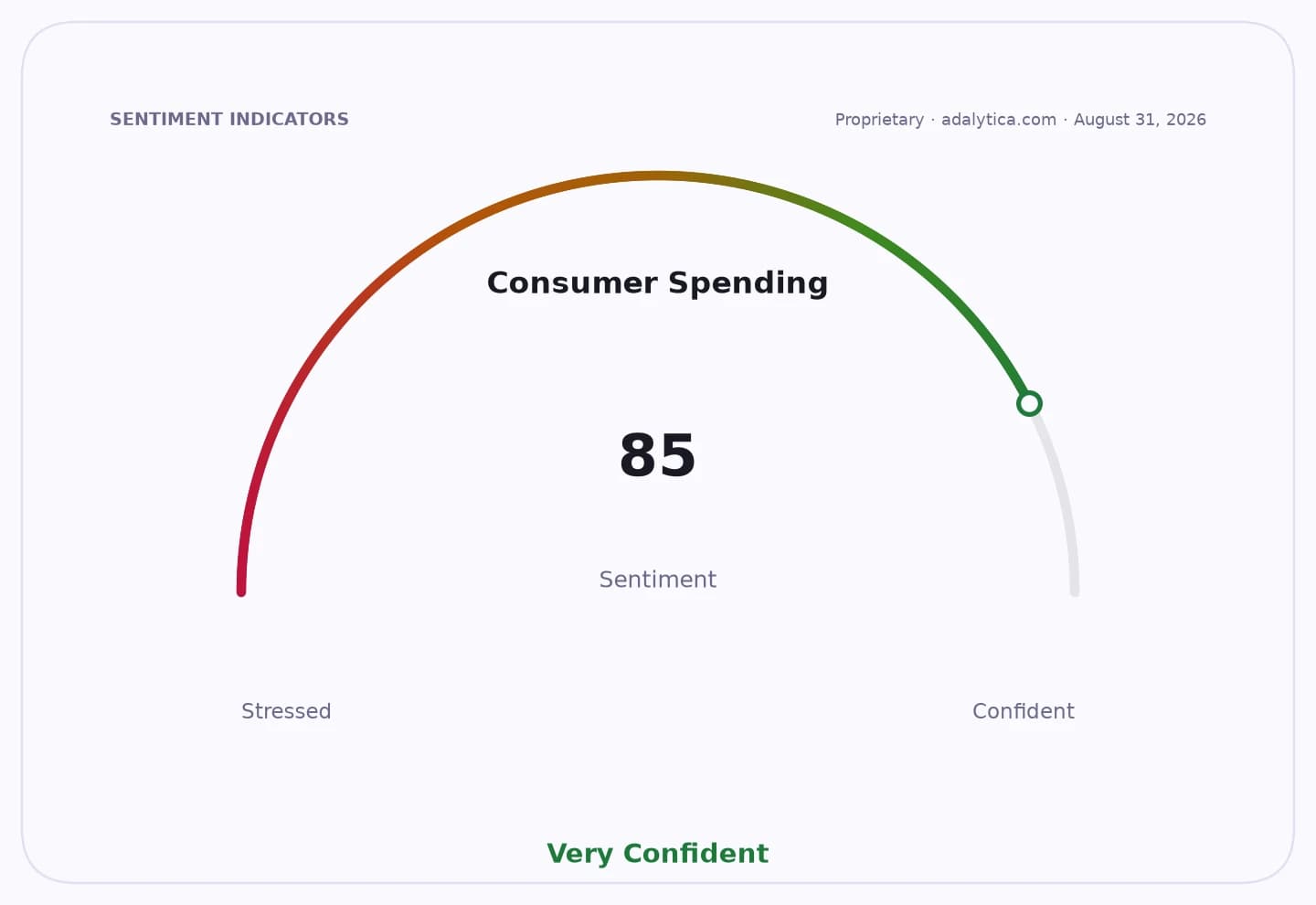
The market backdrop is more constructive than the policy noise suggests. Consumer spending sentiment tracked by Adalytica.com is back in “Greed” territory at 85, up sharply over the past week, while S&P 500 trade signals remain in a risk-on zone even as broader awareness is still flashing extreme fear. That combination points to investors being willing to pay for growth again, particularly in consumer internet and e-commerce names, but it also suggests the rally may be vulnerable if regulatory pressure coincides with any slowdown in discretionary demand.
The share-price action in the sector shows that investors are still rewarding scale and operating leverage, but with little patience for any signs of deceleration. Amazon has risen to $266.43 from $210.11 in February, after a sharp August surge that took the stock above its 200-day moving average. Mercado Libre has also recovered strongly from a spring selloff, climbing back near $1,966 after bottoming around $1,607 in May. Shopify, by contrast, has been far more volatile: it is trading around $152.90, below its 50-day average of $130.76 only after a summer swing that pushed it as high as $168.42 and as low as $116.78. Technical readings such as RSI and MACD show all three names have had sharp momentum shifts, underlining how quickly sentiment can rotate in this part of the market.
The investment case now depends on which force proves more durable. Bulls will argue that e-commerce remains structurally underpenetrated in many markets, that stronger enforcement improves ecosystem quality, and that leading platforms can still grow through logistics, payments and merchant tools. Bears will counter that tighter oversight raises friction, eats into margins and limits the upside from third-party activity, especially if consumer spending cools after the latest burst of optimism.
For now, ecomTEAM 2026 looks less like a marketing event than a snapshot of the sector’s next phase: online commerce is still growing, but it is doing so under closer scrutiny from authorities and with higher expectations from investors.
| Entity | Gains | Losses |
|---|---|---|
| Regulators | ▲stronger enforcement | ▼reseller abuse |
| Amazon, eBay | ▲trust and safer marketplaces | ▼higher compliance burden |
| Shopify merchants | ▲healthier consumer ecosystem | ▼added platform scrutiny |
| Ticket scalpers / bad actors | ▲nothing | ▼fines and penalties |