Egypt EV Push Targets Industrial Base Amid Dollar Strength
Egypt’s push into electric vehicles is less about car buying than about industrial policy: it is trying to build a new manufacturing base, attract capital and reduce reliance on imported fuel and vehicles at a time when emerging markets are under pressure from dollar strength and shifting trade flows.
That matters because Egypt has few easy growth levers. A domestic EV industry could support jobs, foreign-exchange savings and technology transfer, while giving Cairo a foothold in a sector that is central to the global transition away from internal combustion engines. But the economics are unforgiving: success depends on scale, charging infrastructure, battery supply chains and a stable currency, all of which remain fragile in a country that still imports much of what it consumes.
The opportunity is real. Global automakers and battery makers are still expanding capacity, even as the sector has become more cutthroat, with Chinese producers setting the pace on price and scale. Tesla shares have been violently volatile this year, and the stock’s slide to about $328 from a recent peak near $490 underscores how quickly investor enthusiasm can fade when growth assumptions meet margin pressure and demand uncertainty. The conventional technical indicators on Tesla — including a 50-day moving average well above the recent price, a deeply oversold RSI and negative MACD — point to a market that has shifted from momentum to caution.
For Egypt, that kind of turbulence cuts both ways. On one hand, global EV makers may be looking for new export platforms, lower-cost assembly locations and markets where governments are willing to subsidize adoption. On the other, Egypt will have to compete against China’s scale and by extension firms such as BYD, whose U.S.-listed shares have also weakened and whose pricing power remains formidable in the global low-cost EV race. Nio’s sharp decline shows how unforgiving the sector can be for companies without clear cost advantages or balance-sheet strength.
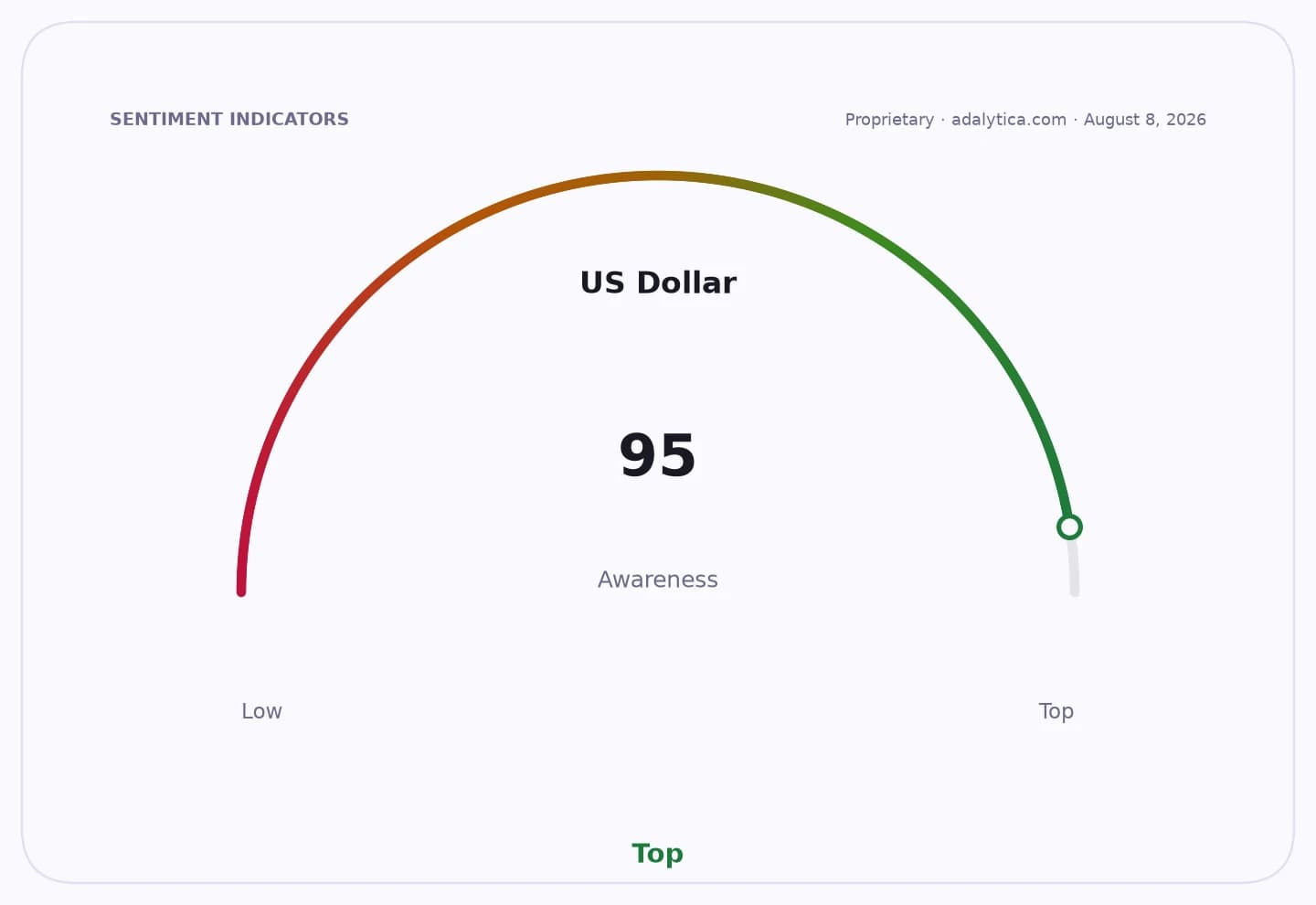
Currency conditions add another layer. Adalytica’s Chinese yuan trade signals show rising attention and neutral sentiment, while the U.S. dollar remains in extreme greed territory, a reminder that dollar strength can tighten financial conditions for import-dependent economies. For Egypt, that raises the cost of imported components, tooling and battery materials, making localization more than a political slogan. It is a balance-sheet issue.
Investors should see the EV drive as a test of whether Egypt can move from consumption-led growth toward a more export-capable industrial model. If Cairo can pair incentives with infrastructure and credible private-sector partners, the payoff could extend beyond cars into batteries, electronics and logistics. If not, the effort risks becoming another costly industrial campaign in a country where capital is scarce and foreign exchange is dear.
The next catalyst will be whether the government can convert ambition into bankable projects: assembly lines, charging networks, fleet purchases and, eventually, local supplier development. Without those, Egypt’s EV push will remain a narrative. With them, it could become one of the few credible paths to a higher-value economy.
| Entity | Gains | Losses |
|---|---|---|
| Egypt government | ▲Industrial diversification | ▼Near-term fiscal pressure |
| Domestic EV suppliers | ▲New investment demand | ▼Import-cost volatility |
| Global automakers | ▲New market access | ▼Lower-margin competition |
| Fuel importers | ▲— | ▼Potential demand erosion |