Egypt Gold Prices Fall as 21-Karat Slips
Gold prices slipped in Egypt’s jewelry market on Thursday, with the country’s most-traded 21-karat coin and bars falling 25 pounds to 6,300 pounds a gram for البيع and 6,250 pounds for purchase, underscoring how quickly local prices are reversing even after an earlier intraday gain.
The move matters because Egyptian consumers and jewelers are tracking not just the global dollar price of bullion but also the domestic pass-through from foreign-exchange moves, inflation expectations and risk sentiment. Gold remains both a hedge against local purchasing-power erosion and a high-frequency gauge of household confidence, so even a small daily drop can affect retail demand, re-stocking decisions and the willingness of buyers to wait for a better entry point.
The price of 24-karat gold fell to 7,200 pounds a gram for sale, while 18-karat slipped to 5,400 pounds. The gold pound, which weighs 8 grams of 21-karat gold, was quoted at 50,400 pounds for sale and 50,000 pounds for purchase. That local pricing came alongside an ounce price of $4,374.17, keeping bullion near elevated levels in global terms even as the Egyptian market softened at the close.
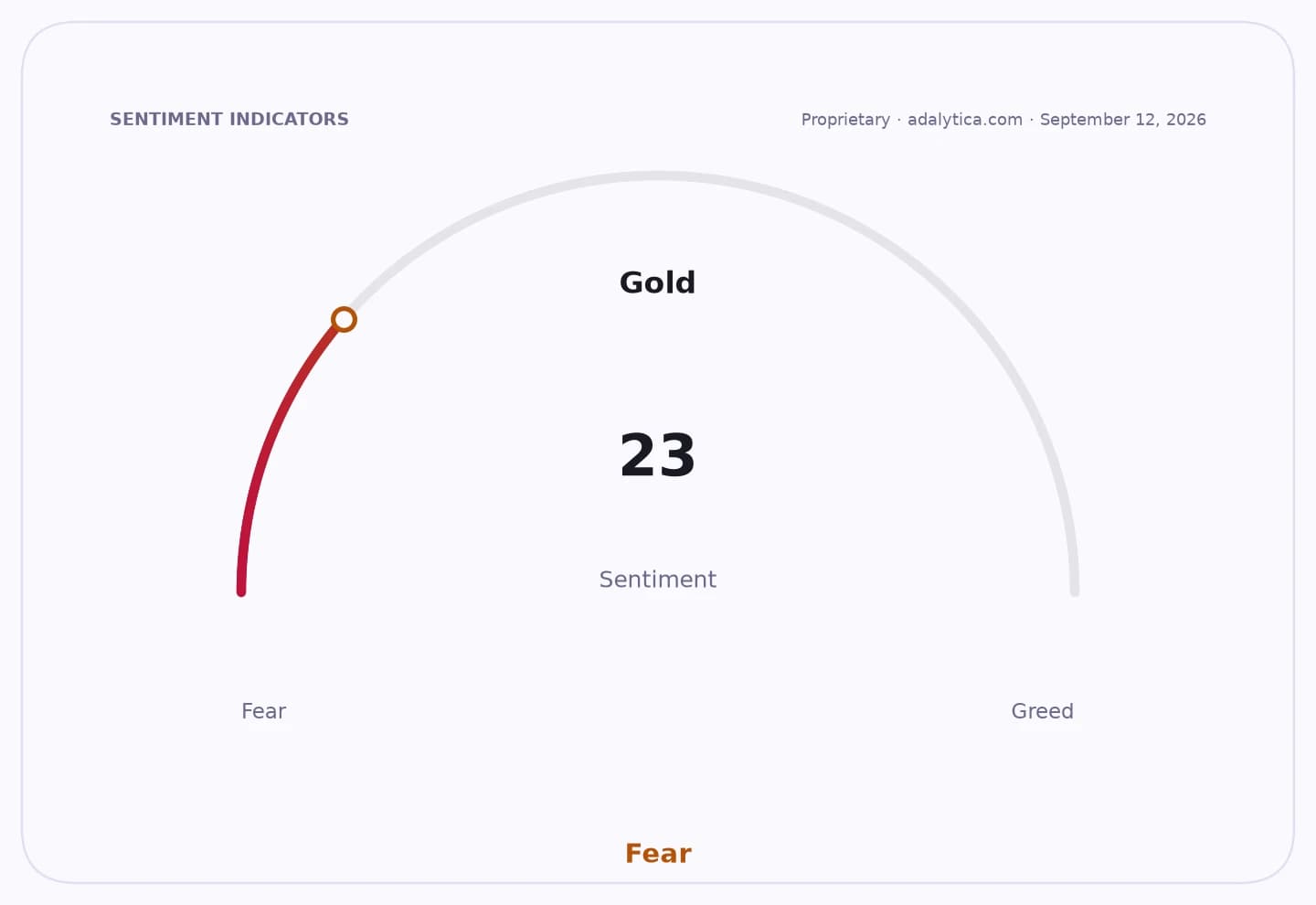
The backdrop remains a strong but volatile gold market. US 10-year Treasury yields have climbed to 4.95%, a level that typically raises the opportunity cost of holding non-yielding assets such as gold. At the same time, Adalytica’s Gold Fear & Greed Index showed extreme fear at 23, suggesting investors remain defensive despite the pullback. Standard technical indicators on the GLD exchange-traded fund show the metal backing off recent highs, with RSI readings easing to 38.4 and the price sitting below its 200-day moving average, a sign that momentum has cooled even if the broader trend is still intact.
For investors, the key question is whether the decline is only a local retail adjustment or the start of a broader correction. Bullish buyers will point to persistent geopolitical risk, sticky inflation and continued demand for gold as a reserve asset. Bears will focus on higher real yields, a firmer dollar backdrop and the possibility that speculative positioning has become crowded after a sharp run-up.
For Egyptian households, the immediate issue is affordability. Higher making charges, typically 150 to 200 pounds a piece, can magnify the effect of bullion swings and keep jewelry demand sensitive to even modest price changes. If global gold steadies while domestic currency conditions remain stable, local prices could consolidate; if risk aversion deepens or inflation pressure returns, 21-karat prices may quickly reassert themselves.
| Entity | Gains | Losses |
|---|---|---|
| Egyptian buyers | ▲Lower entry prices | ▼Waiting risk if gold rebounds |
| Jewelers/sellers | ▲Inventory turnover at close | ▼Margin pressure on recent stock |
| Gold bears | ▲Short-term price relief | ▼Missed upside if safe-haven demand returns |
| Gold bulls | ▲Better re-entry levels | ▼Near-term momentum slowdown |