Egypt inflation eases to 12.7% in August
Egypt’s annual inflation eased to 12.7% in August from 13.0% in July, giving policymakers a bit more room after a month in which price gains were flat overall but driven lower by cheaper food, especially vegetables and meat.
The headline matters because inflation remains the main constraint on Egypt’s economy, shaping household spending, wage demands, borrowing costs and the central bank’s room to cut interest rates. A modest decline in the annual rate suggests the disinflation trend is still intact, even if the monthly reading was only 0.4% and core pressures have not disappeared.
The state statistics agency said the consumer price index for the country stood at 334.131 points in August, unchanged in broad terms from July as falls in food offset increases in housing, utilities and transport-related items. Food and beverages fell 1.2% on the month, led by a 7% drop in vegetables and a 1.5% decline in meat and poultry, while electricity, gas and other fuels rose 4.3% and housing costs climbed 1.9%.
On a yearly basis, food and beverages were still up 6.5%, with vegetables 27.7% higher and fruit up 8.1%, underscoring that inflation is easing from a much higher base rather than disappearing. Housing and utilities remained the biggest driver of the annual basket, rising 33%, followed by transport at 21.7% and education at 20%.
For investors, the reading supports the view that Egyptian inflation is decelerating enough to keep policy expectations alive, but not so quickly that the authorities can declare victory. The central bank has held its benchmark rate at 3.63% in the data set provided, and the latest print should reinforce debate over when easing can begin without reviving price pressure or weakening the currency.
That is the key market narrative: food-led disinflation is helping stabilize the cost of living, but services and administered prices still limit how fast inflation can normalize. The contrast is important for bond investors, who would benefit from a gentler inflation path, and for equity and consumer-focused names, which would gain from stronger real incomes if price pressure keeps coming down.
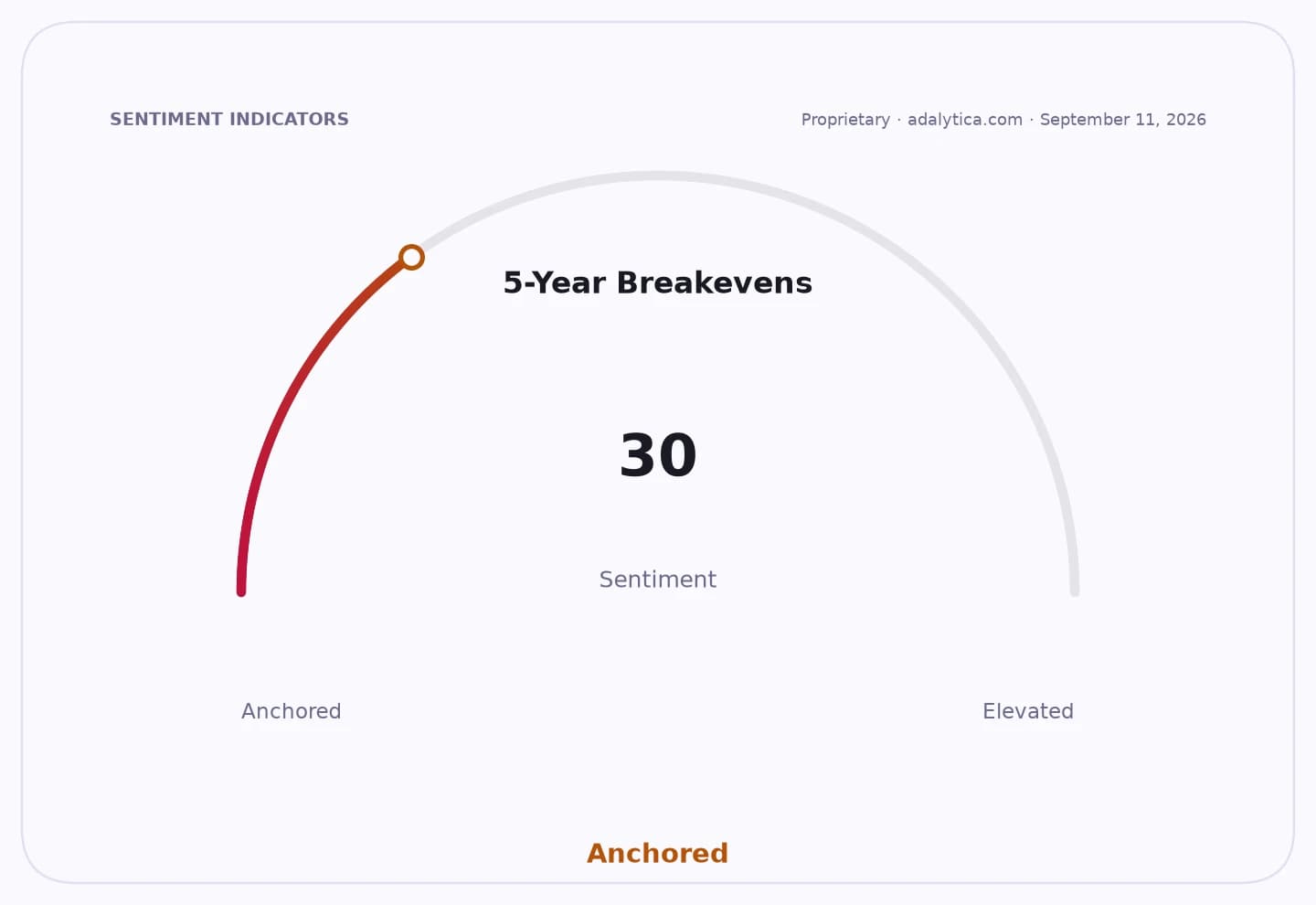
Adalytica’s inflation-expectations gauges show confidence in the Federal Reserve’s 2% target was neutral at 41, while five-year and long-term inflation expectations sat in fear territory at 30, suggesting global inflation anxiety remains elevated even as Egypt’s data improves. That split helps explain why markets are likely to treat the August number as constructive rather than decisive.
Egyptian assets have also reflected a preference for lower inflation, with long-duration bond proxies such as TLT showing a recent pullback in price and gold ETF GLD still elevated, a sign that markets continue to price caution over macro stability. For Egypt, the immediate question is whether another few months of softer food and stable headline prints can open the door to policy relief later in the year.
If that happens, the winners would be consumers, rate-sensitive borrowers and government financing costs. If housing, utilities and education stay sticky, the losers will remain households and domestic demand, even if the headline rate continues to ease.
| Entity | Gains | Losses |
|---|---|---|
| Egyptian consumers | ▲Lower food costs | ▼Real purchasing power still pressured |
| Central bank | ▲More room to cut later | ▼Must guard against sticky services inflation |
| Bond investors | ▲Lower inflation risk | ▼Delayed easing if core prices stay firm |
| Retailers and borrowers | ▲Better demand conditions | ▼High rates if disinflation stalls |