Egypt Pound Near 48.5 as Bidding Round Starts
The dollar is holding near 48.5 Egyptian pounds in banks on Thursday, with traders watching whether Egypt’s latest oil and gas bidding round can help shore up foreign-currency inflows and ease pressure on the pound.
The rate matters because Egypt is still dependent on hard-currency receipts from exports, tourism, remittances and foreign investment to stabilize the currency. Any pickup in exploration spending or future production from new offshore and onshore blocks could improve that flow over time, but the effect is not immediate.
Egypt’s petroleum ministry said on Tuesday it launched a global bidding round for 14 new areas, aiming to bring in international oil and gas companies. The round is part of a broader push to lift domestic output after years of energy strain, and it follows Apache’s five-year plan to expand drilling in the country.
For investors, a firmer pound would help cool imported inflation and support local assets, but the currency still trades under the shadow of higher U.S. yields and persistent demand for dollars. The U.S. 10-year Treasury yield was around 4.65%, while the two-year yield stood near 4.19%, keeping the dollar broadly supported globally.
FXE, the euro-tracking ETF, has been relatively steady near 106.34, but its 50-day moving average sits above the 200-day average, a sign the broader dollar backdrop remains firm even as short-term momentum improves and RSI readings point to elevated trading levels.
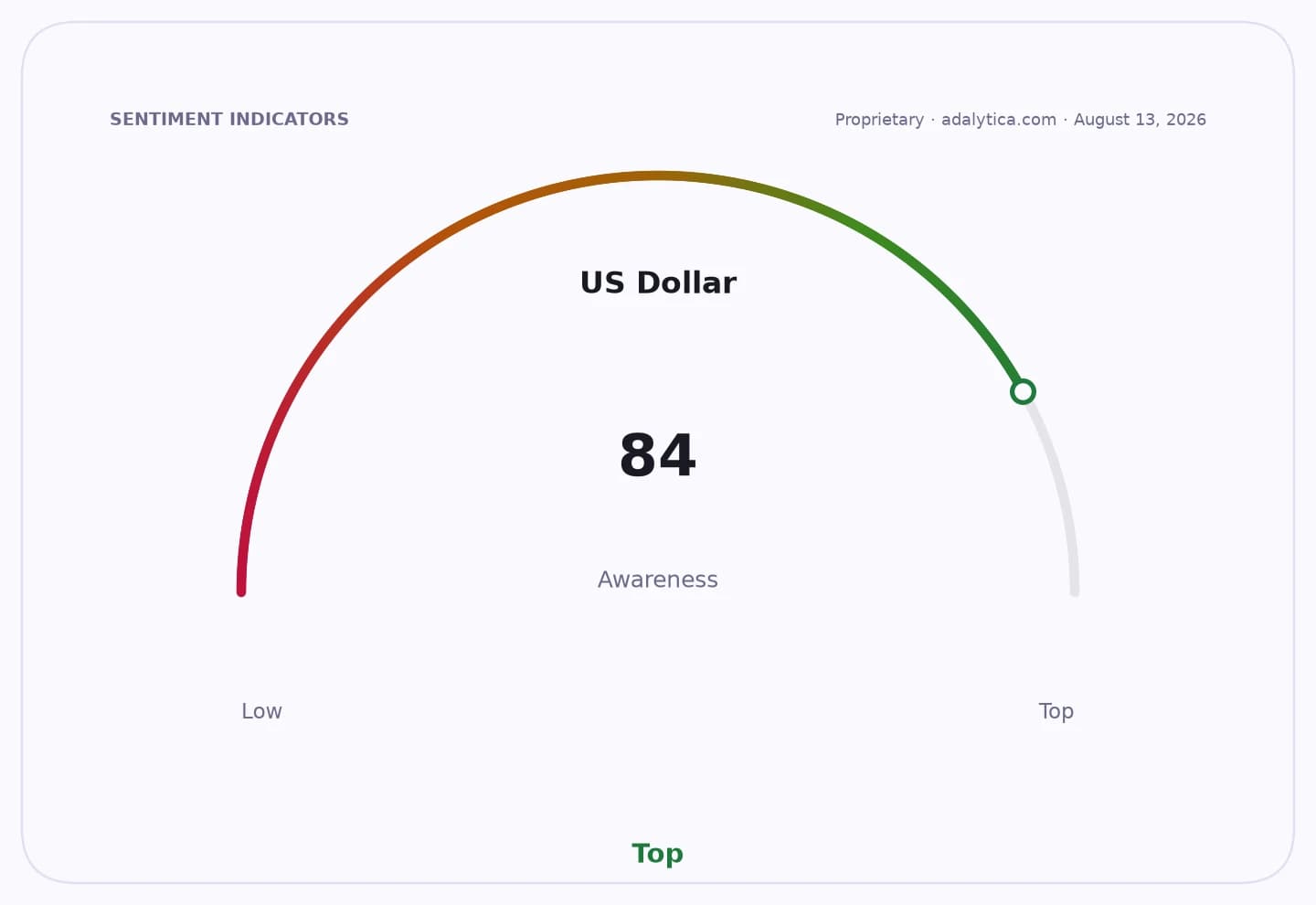
Adalytica’s U.S. dollar trade signals show sentiment at 62, labeled neutral, while awareness remains high at 84, suggesting the currency is still very much on investors’ radar. The next catalyst for the Egyptian pound will be whether the bidding round draws credible foreign capital and whether that converts into production, export growth and stronger reserve inflows later in the year.
| Entity | Gains | Losses |
|---|---|---|
| Egypt government | ▲More FX inflows | ▼Continued currency pressure |
| Foreign oil and gas firms | ▲New exploration access | ▼Higher upfront investment risk |
| Egyptian pound | ▲Potential long-term support | ▼Short-term volatility |
| Dollar holders | ▲Near-term strength | ▼Possible easing if inflows improve |