Egypt, Russia Reaffirm Ties as Projects Continue
Egypt and Russia said they want to keep strengthening bilateral relations, underscoring a partnership that matters for trade, energy, security and investment flows across the Middle East and North Africa.
The message from President Abdel Fattah el-Sisi and President Vladimir Putin comes as both countries lean on a more durable diplomatic and economic axis at a time of elevated regional risk. For Egypt, the relationship offers another channel for financing, tourism, food security and strategic projects; for Russia, it preserves access to a major Arab state despite sanctions pressure and wider geopolitical isolation.
Putin called Egypt a “reliable and close friend” and said major joint projects were moving on schedule, a signal that cooperation is not just symbolic. The two sides have been building ties in areas such as energy, military technology and infrastructure, while also keeping open lines on security issues from Sudan to the Iranian crisis.
That broader backdrop matters because Egypt remains a key regional swing state and a large importer of energy, wheat and capital. Any deepening of Moscow-Cairo cooperation can affect project pipelines, commodity arrangements and defense procurement, while also shaping how Egypt balances relations with the U.S., Gulf states and other major partners.
For investors, the clearest relevance is in the prospect of steadier political support around existing joint ventures and a lower chance of policy surprise in sectors tied to Russian capital, tourism and logistics. The country’s ETF EPOL has also been firm, closing at $45.56 on Sept. 11, above its 50-day average of $42.84 and 200-day average of $38.46, with RSI readings near 60, suggesting markets are not pricing acute stress around Egypt exposure.
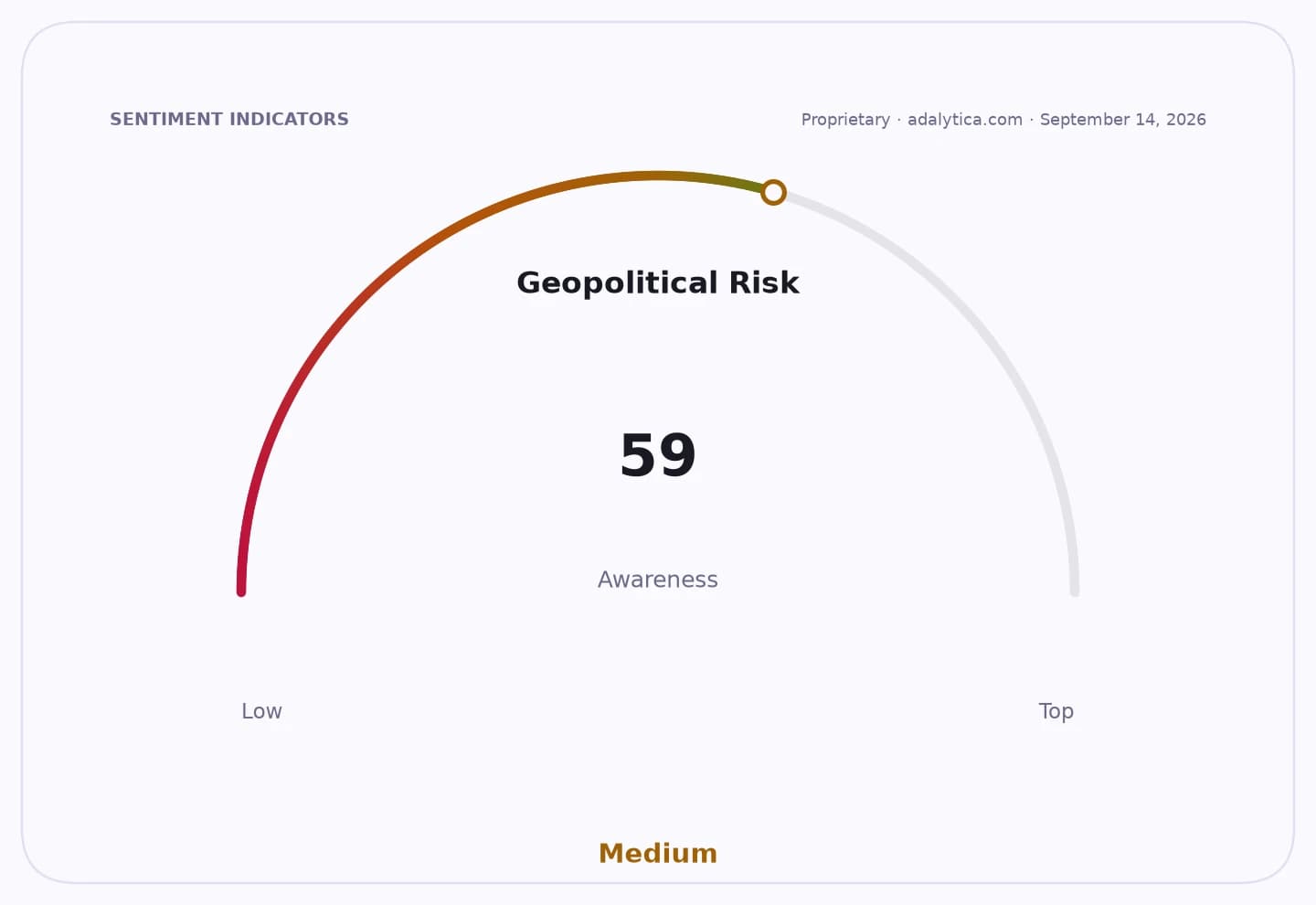
The geopolitical backdrop remains fragile, however. Adalytica’s Global Stability Sentiment gauge is at 30, labeled Fear, down 42% over 30 days, reflecting how quickly regional conditions can deteriorate and why Cairo’s effort to lock in external partnerships carries economic value.
The next test is whether the rhetoric translates into concrete progress on industrial, energy or defense deals, and whether Egypt can keep those ties expanding without disrupting relations with other major powers.
| Entity | Gains | Losses |
|---|---|---|
| Egypt | ▲project support, diversification | ▼dependence risk |
| Russia | ▲regional access, diplomatic cover | ▼isolation from West |
| Investors in EPOL | ▲policy continuity, project visibility | ▼sanctions or geopolitical shocks |
| U.S./Western leverage | ▲none | ▼influence in Cairo |