Egypt wheat subsidy controls and political reform
Egypt’s ruling political order is being pressed to do two things at once: open up politically and repair a leaky bread-and-wheat system that still drains public money even after years of reform.
That is the most important message from Magdy Malek, assistant to the head of the liberal Wafd Party, who argued that Egypt’s fragmented party landscape has weakened political life while saying the country could save about 30% of the losses in its subsidized wheat and flour system if controls were tightened. The comments matter because wheat is not just a food staple in Egypt; it is a fiscal and social pressure point that can quickly spill into inflation, household spending and political stability.
Malek said Egypt has already implemented about 80% of the recommendations from a parliamentary fact-finding committee into wheat corruption, with storage capacity rising to 4.2 million tons from 1.2 million tons. That suggests the state has made progress on reducing bottlenecks and leakage in one of the country’s most sensitive subsidy channels. But his warning that “some gaps remain” also underlines that the system remains vulnerable to misuse at a time when the government is still carrying a heavy subsidy burden.
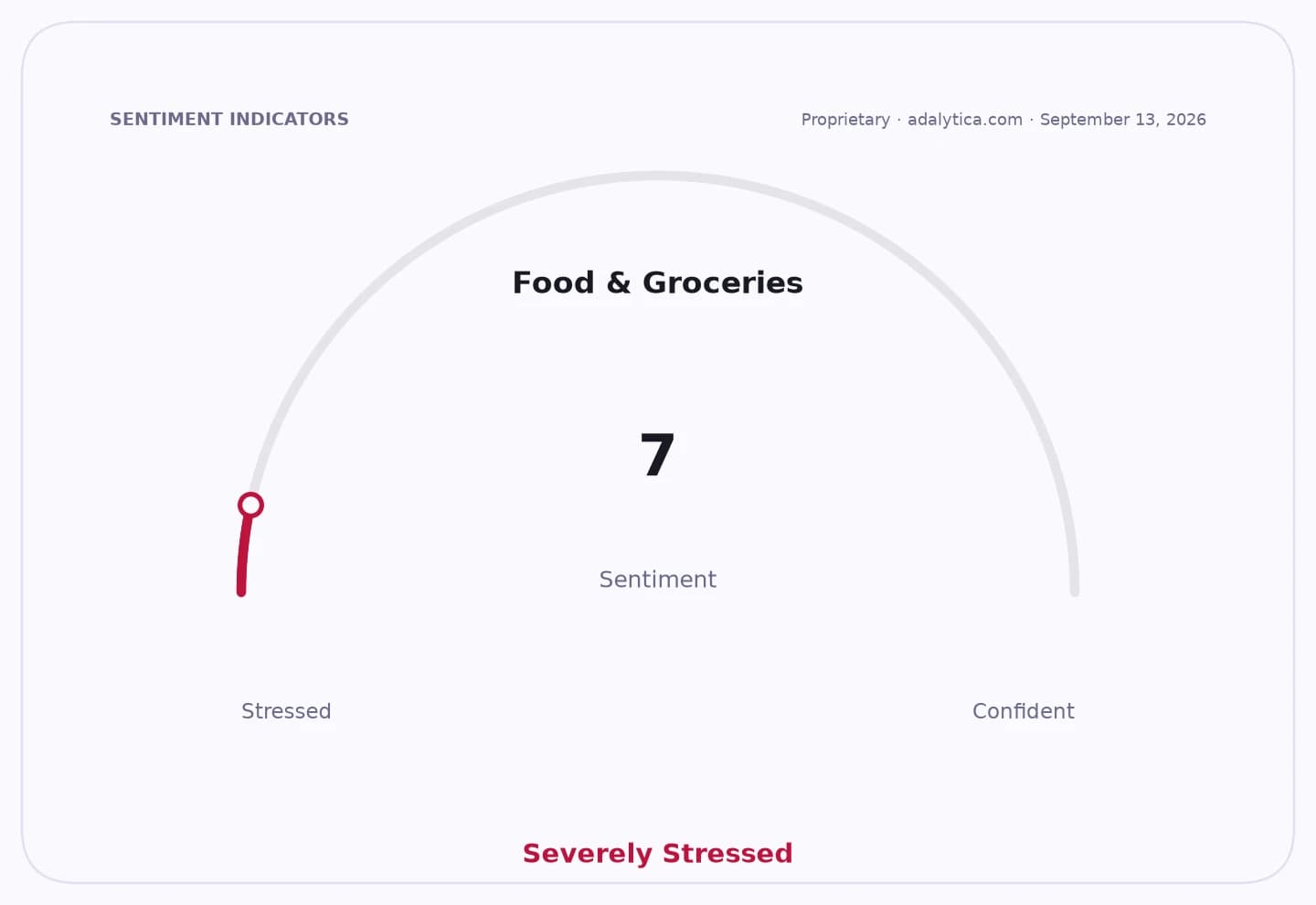
For investors, the economic relevance goes beyond Egyptian politics. Food subsidies are a core part of the state’s social contract, and any improvement in control could ease pressure on the budget and help contain imported inflation. Egypt remains heavily dependent on external food supplies, and Malek’s assertion that the country imports about 55% of its food and nearly all of some items reflects the scale of the vulnerability. The wider backdrop is a still-fragile consumer environment, with food and grocery spending sentiment, tracked by Adalytica, in “Extreme Fear,” consistent with households remaining highly sensitive to price and availability shocks.
The broader macro picture is one of supply constraints meeting demographic pressure. Malek said Egypt cannot realistically reach full self-sufficiency in wheat because of water scarcity and rapid population growth, even though output this year rose by more than 1 million tons from a year earlier. That framing matters for markets because it implies a structural import dependence rather than a temporary shortfall. Any shift in global wheat prices, shipping costs or dollar funding conditions will continue to feed directly into Egypt’s import bill and the state’s subsidy costs.
The wheat issue also has a market dimension outside Egypt. Chicago wheat futures, tracked by the WEAT ETF, have risen sharply in recent months, with the fund trading around $26.25 on Sept. 11, well above its 200-day moving average of about $22.82. Corn and soybeans have also firmed, with CORN and SOYB both holding above their 200-day averages. That keeps the pressure on importing countries such as Egypt, where even modest global price swings can quickly widen the fiscal gap.
Malek also made the case for political consolidation, saying more than 100 parties have weakened Egyptian political life and that 10 to 15 effective parties would be better than a crowded field with little influence. That is politically significant because it ties the debate over governance to the state’s ability to manage subsidy reform and economic adjustment. A more coherent opposition, in his view, would improve accountability and policy debate. For the government, a stronger party system could provide a controlled outlet for public frustration as it pursues difficult reforms.
The bull case is that Egypt is gradually improving the plumbing of its food system: larger storage capacity, tighter oversight and a possible shift toward more targeted support could reduce waste and protect the budget. The bear case is that demographic growth, water scarcity, imported inflation and fiscal constraints continue to outrun incremental reform. For investors, that means Egyptian food inflation, subsidy policy and foreign-exchange demand will remain key watchpoints, with wheat prices and domestic political management both central to the outlook.
| Entity | Gains | Losses |
|---|---|---|
| Egyptian state | ▲Lower subsidy leakage | ▼Higher reform pressure |
| Wafd Party | ▲Opposition credibility | ▼Fragmented political field |
| Egyptian consumers | ▲Better-targeted support | ▼Inflation risk |
| Wheat importers | ▲Improved storage controls | ▼Global price volatility |