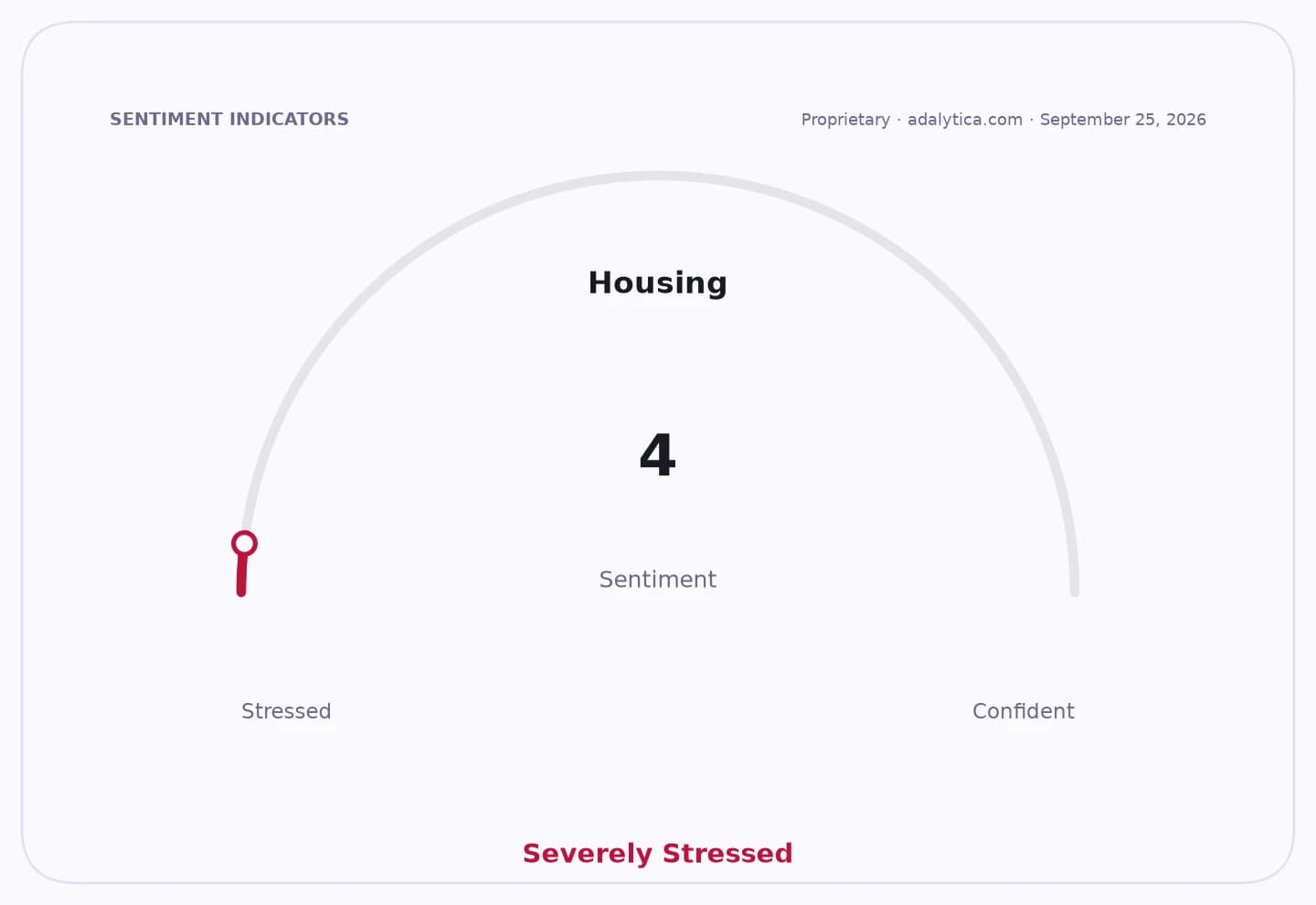
Future home sales fell 5.4% just as the 10-year Treasury yield pushed back above 4.6%, underscoring how stubborn borrowing costs are still shutting buyers out of the market and threatening another leg down in housing activity.
Elevated Yields Keep Pressure on Housing
That matters because housing is one of the most rate-sensitive corners of the economy. When benchmark yields rise, mortgage rates follow, and the result is immediate: fewer qualified buyers, slower turnover, softer pricing power and more pressure on builders to cut incentives to move inventory. The latest drop in future sales is a clean read on demand weakening before it fully shows up in closings.
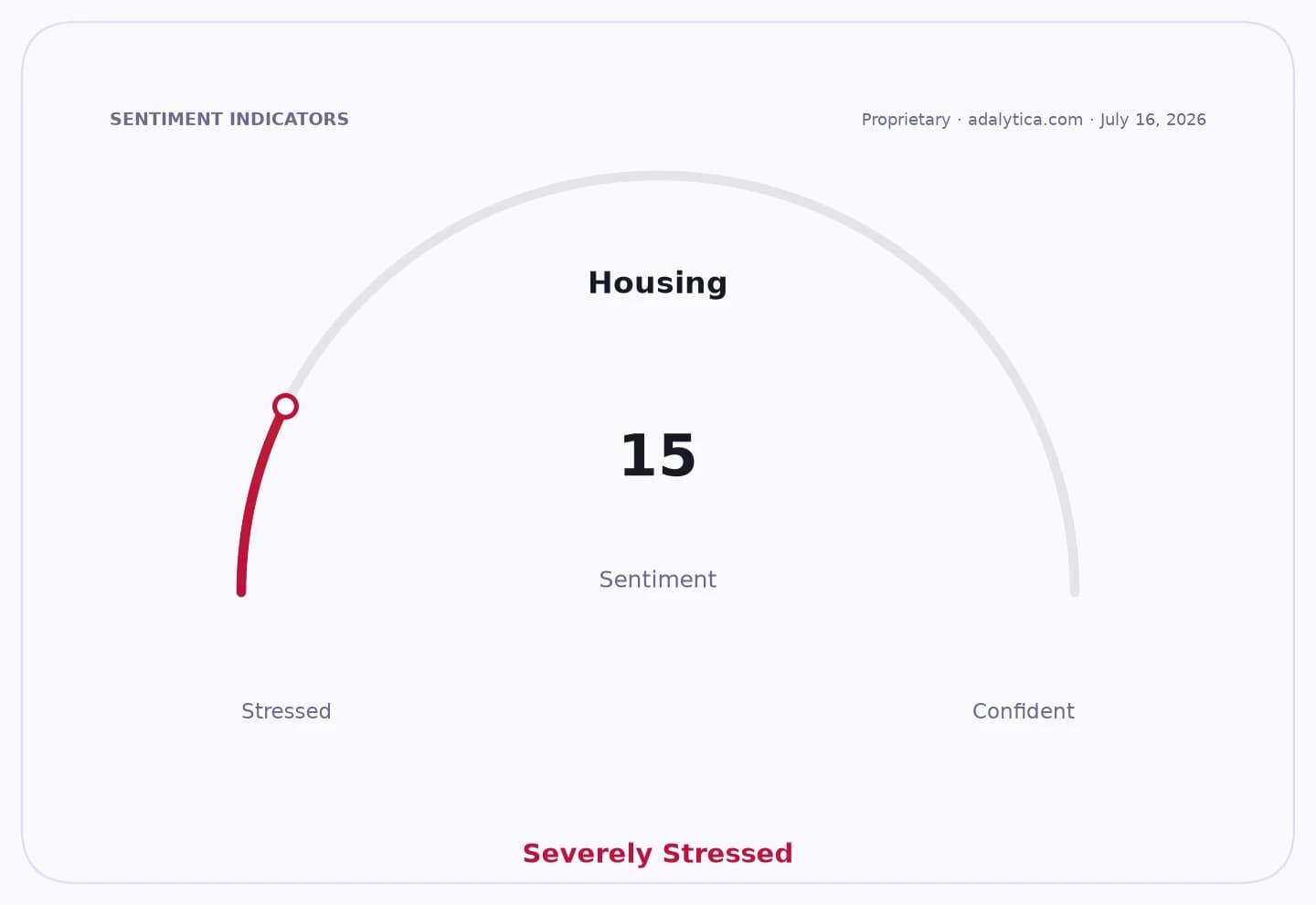
Sentiment IndicatorsⓘProprietary · adalytica.com · July 16, 2026
This is a snapshot — live sentiment, awareness and momentum for 130+ markets update continuously in the dashboard.Open AlphaPulse
The bond market is reinforcing that message. The 10-year Treasury note recently traded around 4.62%, with the forecast still pinned near 4.61%. That is a far cry from the easy-money backdrop that powered the last housing cycle, and it leaves mortgage rates high enough to keep monthly payments elevated even if home prices stop rising. For would-be buyers, the math still does not work.
The strain is showing up in the housing data and in corporate filings. U.S. housing starts have already slipped to 1,177,000 annualized from 1,522,000 in March, while major builders are warning that interest rates and affordability remain a drag on demand. Lennar has cut full-year delivery guidance, D.R. Horton has said it is leaning more heavily on mortgage-rate buydowns, and PulteGroup reported lower gross margin as it sold through homes with more incentives. That is the classic late-cycle housing pattern: volumes weaken first, then margins follow.
Investors should care because this is not just a housing story — it is a pricing story across the entire homeownership ecosystem. Lower transaction volume hits builders, mortgage originators, title insurers and retail banks with mortgage exposure. It also reshapes capital flows toward rental housing and away from for-sale housing, which can support landlords and rental platforms even as it pressures construction and transaction-heavy names.
The market is already sending mixed signals, and that is where the opportunity lies. Homebuilder ETFs have bounced, but technical readings show the rally is losing momentum: both XHB and ITB are sitting just above their 50-day moving averages, while RSI readings have cooled from overbought levels. Rocket Companies remains deeply below its 200-day moving average despite recent rebounds, reflecting how fragile the mortgage origination trade still is when rates stay sticky.
My thesis is straightforward: the market is underestimating how long elevated rates can freeze housing turnover. If the 10-year Treasury holds above 4.5%, future home sales can stay weak longer than consensus expects, and the best risk-reward may not be in chasing homebuilders on temporary rallies. The more attractive trade is in the downstream winners from a still-tight housing market — rental demand, housing scarcity plays and the infrastructure behind affordability — while staying selective on rate-sensitive builders and mortgage lenders.
The next catalyst is simple: until bond yields break lower in a durable way, housing will remain a slow-growth, high-friction market. That is why investors should treat any bounce in builders or mortgage names as tactical, not structural, and position for a longer period of strained affordability, lower turnover and persistent pressure on new home demand.
| Entity | Gains | Losses |
|---|---|---|
| Long-duration Treasurys | ▲Safe-haven demand | ▼Yield-sensitive housing demand |
| Homebuilders | ▲Incentive-led sales volume | ▼Margins and pricing power |
| Mortgage lenders | ▲Refi spikes if rates fall | ▼Purchase-loan volume at high rates |
| Rental owners/platforms | ▲Higher tenant demand | ▼For-sale housing turnover |