Entrepreneurship and Small-Business Platform Demand
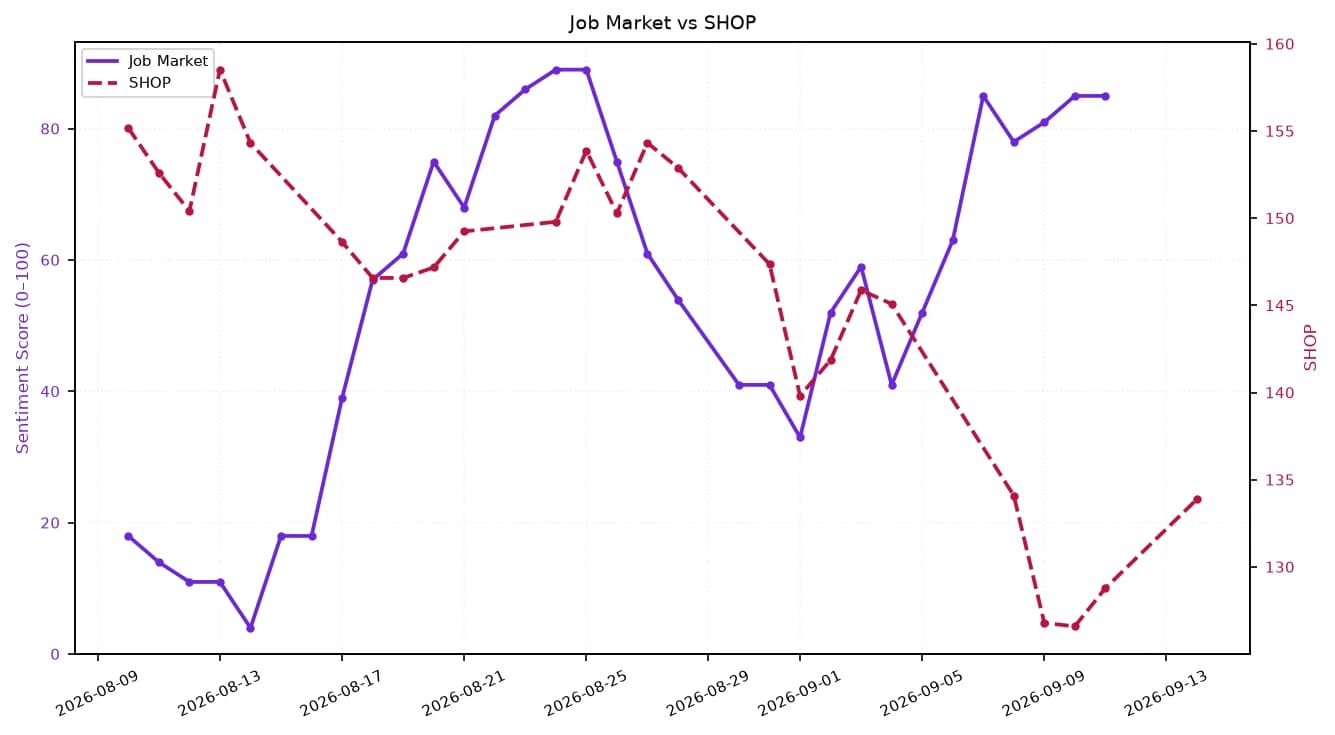
A growing appetite for entrepreneurship is reshaping how investors should think about the job market, consumer demand and the companies built to serve them.
That may sound like a personal career story, but it sits inside a bigger economic shift: more people are willing to leave stable, high-paying employment to start businesses of their own. That matters because new founders are both consumers and creators of demand, and over time they tend to fuel spending on software, payments, logistics, advertising and other tools that public-market investors can own.
The backdrop is encouraging. Adalytica’s job-market sentiment snapshot is sitting in “Greed” territory at 85, while consumer-confidence sentiment is also elevated at 72. In plain English, people feel confident enough to take risks. Meanwhile, nonfarm payroll sentiment has slipped to neutral at 48, a reminder that the labor market is not getting stronger in a straight line. When workers start questioning the durability of salaried paths, entrepreneurship often becomes more attractive.
That is the kind of environment where small businesses multiply, and where the market leaders that power them can compound for years. Payments networks, e-commerce platforms, cloud providers and digital-ad firms all benefit when more independent operators open shop and start spending to win customers. It is a long-duration theme, not a one-quarter trade.
The message for investors is simple: the rise of entrepreneurship is not just a feel-good headline. It is a demand engine. Every new business needs a bank account, checkout tools, payroll software, marketing, shipping and some form of customer acquisition. That creates a wide set of beneficiaries, from fintechs to logistics companies and cloud infrastructure providers.
There are risks, of course. Many startups fail, and a strong labor market can pull founders back into full-time jobs. Valuations also matter, especially in high-growth names that already price in a lot of future success. But for patient investors who think in five- to 10-year stretches, the bigger opportunity is in owning the platforms that make entrepreneurship easier, cheaper and more scalable.
That is why stories like this deserve attention from long-term investors. A single person leaving a Rs 24 lakh-a-year job is not market-moving by itself, but it is part of a broader behavioral shift that can create durable winners. For diversified investors, it is worth keeping an eye on the companies that help new businesses launch and grow.
| Entity | Gains | Losses |
|---|---|---|
| New entrepreneurs | ▲independence and upside | ▼salary certainty |
| Small-business platforms | ▲more customers | ▼higher competition |
| Investors in fintech and cloud | ▲long-term demand growth | ▼near-term valuation risk |
| Large employers | ▲fewer captive workers | ▼talent retention pressure |