Ethena USDe Yield Model Faces Higher-Rate Test
Ethena’s USDe is moving into its next, and most important, phase: the race to prove its yield model can scale beyond crypto-native carry and survive a higher-for-longer rates backdrop while the protocol pivots toward real-world-asset perpetuals.
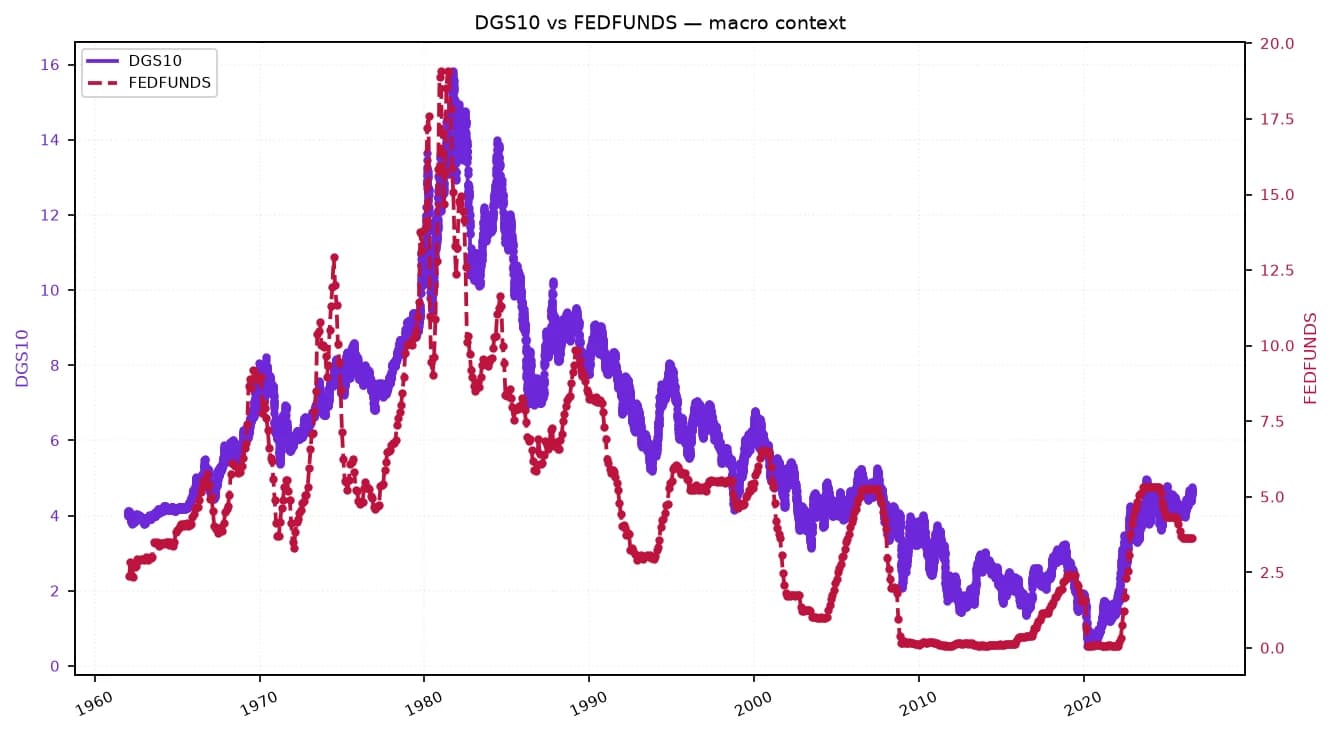
That matters because USDe’s appeal is not the token itself, but the income stream attached to it. In a market where the 10-year Treasury is forecast to sit around 5.017% and the federal funds rate is still expected near 3.626%, Ethena is trying to build a synthetic dollar that can compete with traditional cash yields without depending entirely on one-sided crypto momentum. If it works, it could become one of DeFi’s most powerful distribution engines. If it doesn’t, the market may continue to treat USDe as a clever but cyclical trade rather than durable financial infrastructure.
The investment question is whether Ethena can keep expanding yield as it broadens into RWA perps, a move that would potentially diversify the protocol’s revenue base beyond the core basis-trading machine that has powered USDe so far. That evolution matters because crypto yields are compressible. They rise when leverage, funding rates and volatility are favorable, then weaken when positioning resets. Real-world-asset rails, by contrast, offer a path toward more stable, fee-like cash flows and a larger addressable market if Ethena can package them into a product traders and allocators actually want.
The broader macro backdrop makes the challenge even sharper. CPI is still running hot enough to keep policy restrictive, and Treasury yields remain elevated, which raises the hurdle for any stablecoin-like product promising attractive, dollar-denominated returns. In that environment, USDe does not need to beat every risk asset. It needs to beat or at least match the return on cash after adjusting for liquidity, redemption confidence and platform risk. That is a much harder bar than during periods when rates were near zero.
Ethereum’s own market action shows why the timing matters. ETH has rebounded to $2,569.96 after a steep drawdown earlier this year, with RSI readings back near 58 and price sitting just below the upper Bollinger Band. Bitcoin has also recovered to $79,133.86, but Adalytica’s Bitcoin awareness gauge still shows “Extreme Fear,” underscoring how fragile sentiment remains beneath the surface. Ethena’s model thrives when crypto markets are active enough to generate funding and carry, but not so chaotic that liquidity evaporates. That is an attractive but narrow corridor.
For investors, the real story is not just Ethena. It is the second-order beneficiaries of a world where onchain dollar products begin to look less like speculative wrappers and more like yield-bearing cash substitutes. Coinbase, Ethereum-linked infrastructure, and the broader DeFi rails ecosystem all stand to benefit if protocols like Ethena can keep attracting balances and trading flow. The flip side is equally clear: if USDe yield scales poorly, capital will likely gravitate back toward simpler, regulated yield vehicles and centralized exchanges with stronger distribution.
My view is that the market underestimates how important this test is for the next leg of crypto adoption. The first wave was speculation. The next is balance-sheet migration, where users want programmable dollars that earn. Ethena is trying to sit at the center of that shift. If it can extend USDe with RWA perps and maintain a credible yield spread in a 5% Treasury world, it could become one of the sector’s most important toll roads. Investors should watch whether balance growth, fee revenue and product breadth keep compounding from here — because that is what determines whether USDe becomes infrastructure or just another high-beta yield trade.
| Entity | Gains | Losses |
|---|---|---|
| Ethena / USDe holders | ▲Higher yield optionality | ▼Basis-trade dependence |
| RWA perp expansion | ▲Diversified revenue stream | ▼Pure crypto carry model |
| Coinbase / crypto venues | ▲More trading flow | ▼Lower onchain stickiness |
| Treasury cash / T-bills | ▲Competitive risk-free yield | ▼DeFi adoption momentum |